
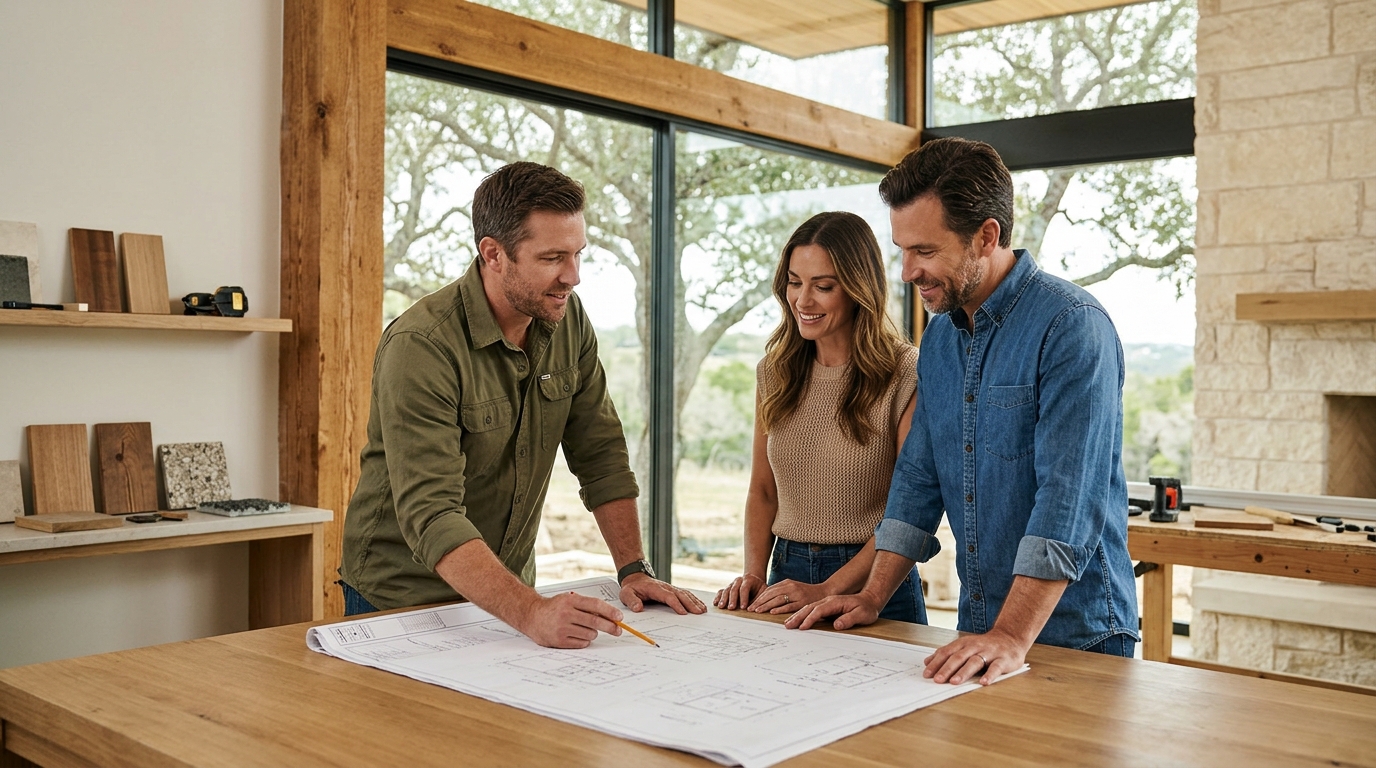
Working with a design build company in Austin means engaging a single entity responsible for both architectural design and construction management. This integrated approach reduces communication gaps and accelerates project delivery compared to traditional separate contracts. For homeowners and developers in the Texas Hill Country, understanding this model is essential for managing expectations, budgets, and site-specific challenges.
The Integrated Workflow Advantage
Design build is a project delivery method where the architect and builder operate under a single contract. This structure eliminates the traditional friction between design intent and construction reality. Research over decades has consistently shown that the innovation and collaboration inherent in design build leads to faster project delivery, with more reliable performance and less cost and schedule growth, according to the Design-Build Institute of America. In Austin, where site conditions vary from limestone bluffs to riverfront lots, this early collaboration allows builders to flag constructability issues before they become costly changes.
The implication for the client is a more predictable timeline. When the design team and construction team share a common goal, decisions are made faster. For example, a firm like Bercy Fadel, which operates as a vertically integrated architecture and construction firm, can align material selections with local supply chains immediately. This ensures that the aesthetic vision does not stall the build schedule.
Site Specificity and Regional Materiality
Austin architecture is deeply tied to its landscape. A design build firm must understand how to integrate structures into the terrain without eroding the site's ecological balance. The firm's approach should prioritize long-term sustainability and material integrity. For instance, the use of locally quarried limestone is a hallmark of Hill Country design. It provides thermal mass and visual continuity with the surrounding environment.
Consider the Cascading Creek House, a project by Bercy Fadel set within a limestone slope. The design draws inspiration from the aquifers and natural basins that shape the region. The roof collects and filters rainwater through a series of shallow pools, while photovoltaic systems harvest energy from the same surface. This level of integration requires a team that thinks in systems, not just in rooms. Clients should ask how a firm handles water management and energy efficiency during the design phase, not after construction begins.
Contractual Clarity and Risk Management
One of the primary concerns with design build is the concentration of responsibility. While it simplifies the client's interface, it requires clear contractual definitions of scope and liability. The client should understand that the single point of contact is accountable for both the design quality and the construction outcome. This reduces the risk of the architect blaming the builder for a design flaw, or the builder blaming the architect for an unbuildable detail.
However, clients must still maintain oversight. They should review the project schedule and budget milestones regularly. The City of Austin's development services require specific plan reviews, which can take 7 to 25 business days depending on the application type. A competent design build firm will manage these regulatory timelines proactively. They will submit plans in a way that minimizes review cycles, ensuring that the project stays on track despite external bureaucratic delays.
Evaluating Firm Expertise and Portfolio
When selecting a design build partner, review their portfolio for projects similar to your site conditions. Look for evidence of successful integration of complex systems, such as geothermal loops or rainwater harvesting. The firm's experience with specific topographies, such as steep slopes or wooded lots, is a strong indicator of their capability. Bercy Fadel's work, including the Edgeland House, demonstrates a commitment to environmental restoration and design innovation. Built on a rehabilitated brownfield site, the home is partially sunken into the earth to draw on the ground's natural thermal stability.
This type of project requires a firm that balances craft and performance. Clients should ask for references from past projects that faced similar challenges. They should also inquire about the firm's approach to sustainability. Is it a marketing buzzword, or is it a core operational principle? A firm that prioritizes spatial quality alongside financial and operational rigor will deliver a home that is both beautiful and efficient. according to What Is Design
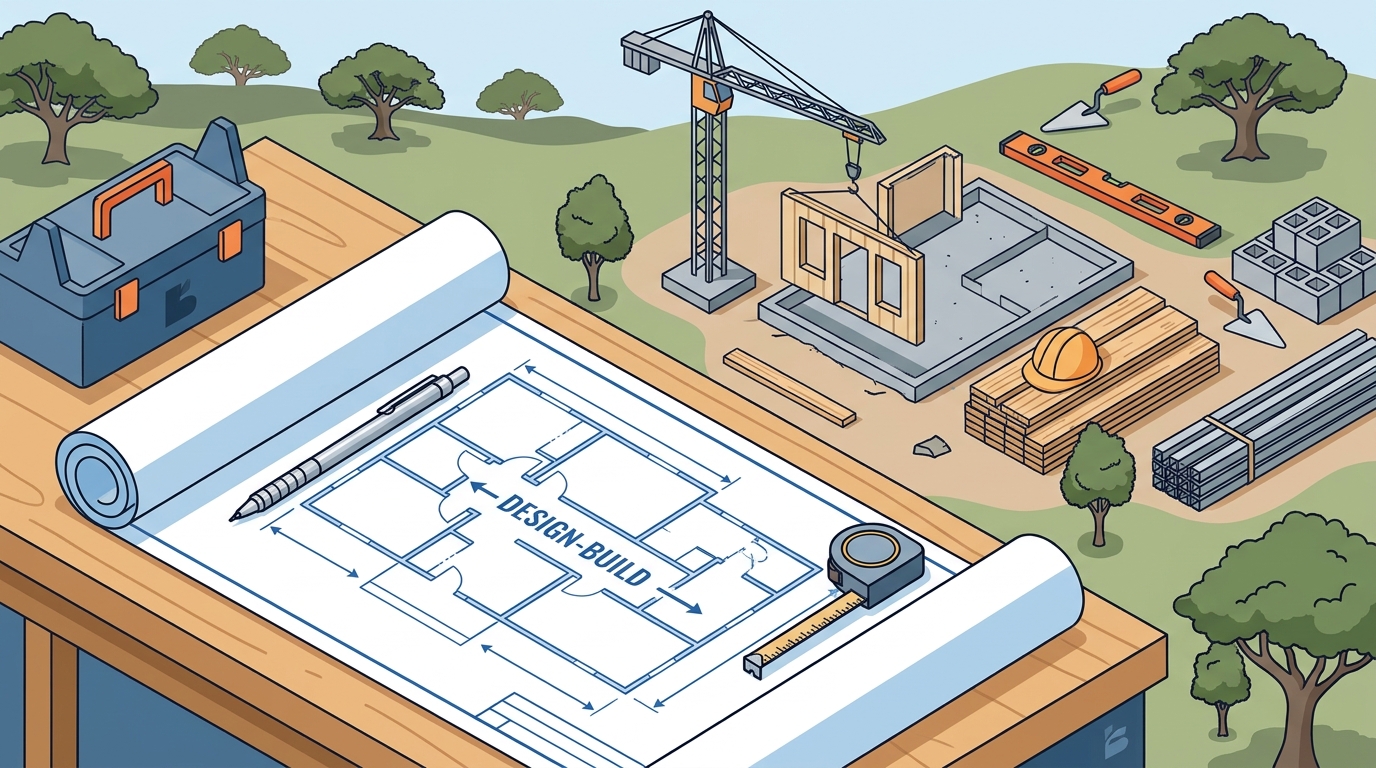
Key Takeaways
- Design build consolidates design and construction under one contract, reducing communication gaps and accelerating delivery.
- Research supports that integrated teams achieve more reliable performance and less cost growth compared to traditional methods. according to Design Build Studio
- Site specificity is critical in Austin; look for firms that prioritize local materials like limestone and sustainable systems.
- Regulatory timelines in Austin can vary; a good firm manages plan reviews proactively to avoid delays.
- Review the firm's portfolio for projects with similar site conditions, such as steep slopes or brownfield sites.
- Clear contractual definitions of scope and liability are essential to manage risk in a single-entity delivery model.
Frequently Asked Questions
What is the main benefit of using a design build firm in Austin?
The main benefit is the seamless integration of design and construction, which leads to faster project delivery and more reliable performance. This approach reduces the risk of cost and schedule growth by aligning the architect and builder from the start.
How does design build handle site-specific challenges in the Hill Country?
Design build firms address site-specific challenges by involving construction experts early in the design process. This allows them to integrate the structure with the terrain, using local materials and sustainable systems that respect the landscape. according to Design Build Effectiveness
Who is responsible for errors in a design build contract?
In a design build contract, the single entity is responsible for both design and construction errors. This eliminates the traditional finger-pointing between architects and builders, providing the client with a single point of accountability.
How long does the plan review process take in Austin?
Depending on the application type, it can take 7 to 25 business days for a permit application to be reviewed in Austin. A competent design build firm will manage this process proactively to minimize delays.
What should I look for in a design build firm's portfolio?
Look for projects that demonstrate successful integration of complex systems and site-specific design. Examples include homes built on steep slopes, brownfield sites, or those featuring advanced sustainability features like geothermal heating or rainwater harvesting.
Does design build cost more than traditional delivery?
While the initial contract may be structured differently, research shows that design build often results in less cost growth and more reliable performance. The savings from reduced change orders and faster delivery often offset any perceived premium. according to Work Exempt from
Conclusion
Working with a design build company in Austin requires a clear understanding of the integrated workflow, site-specific design principles, and contractual implications. By selecting a firm that prioritizes sustainability, local materiality, and operational rigor, you can ensure a project that is both architecturally significant and practically sound. Bercy Fadel offers a vertically integrated approach that balances craft and performance, providing a reliable partner for complex residential and commercial projects. To discuss your project needs, to explore how an integrated design build strategy can bring your vision to life.