
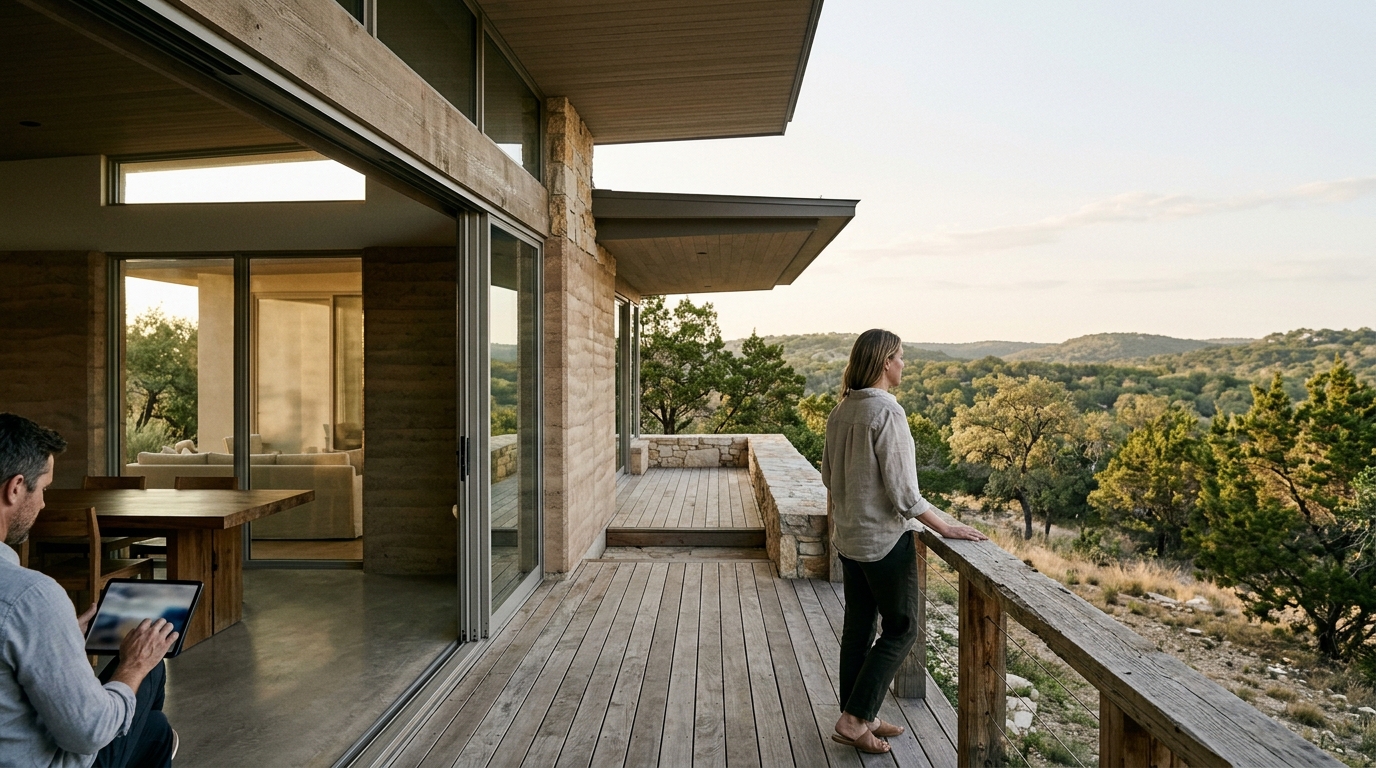
Sustainable architects in Austin prioritize ecological integration and long-term performance, whereas traditional firms often focus on aesthetic form and immediate construction costs. This distinction is critical for clients in the Texas Hill Country, where climate and topography dictate building behavior. Bercy Fadel, a vertically integrated architecture and construction firm based in Austin, Texas, bridges this gap by treating architecture as inseparable from its place. Their approach ensures that design decisions account for climate, materiality, and regional culture, creating structures that are both regionally rooted and enduring.
Philosophical Foundations: Place vs. Form
Traditional design firms often approach a site as a blank canvas, prioritizing the visual impact of the structure over its environmental context. In contrast, sustainable architecture is a design philosophy that minimizes the negative environmental impact of buildings while maximizing their positive contribution to the ecosystem. Bercy Fadel’s practice is grounded in the belief that meaningful design elevates everyday living at every scale by responding precisely to site conditions. This means that the building is shaped by the landscape rather than imposed upon it.
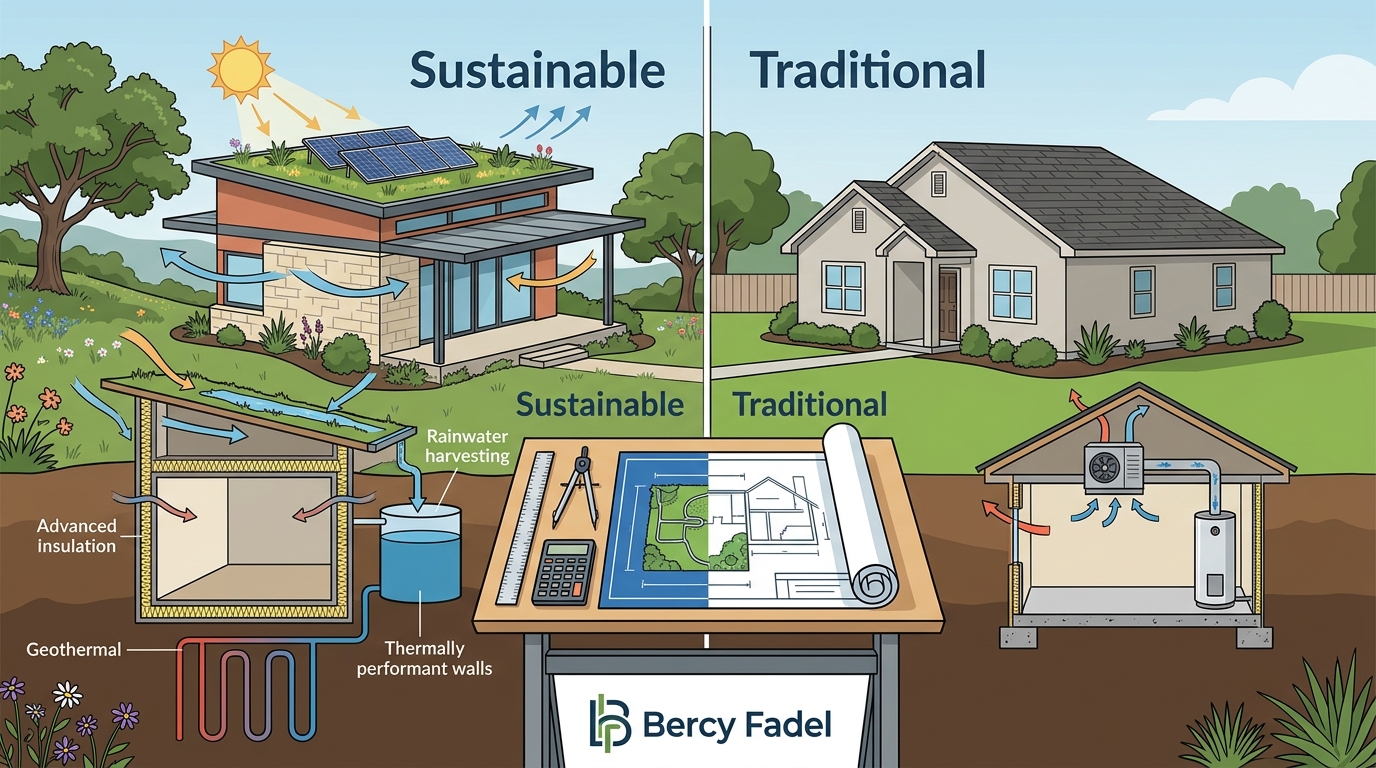
For example, the firm’s work on Edgeland House reimagines the Native American pit house through a contemporary lens. Built on a rehabilitated brownfield site along the Colorado River, the home is partially sunken into the earth to draw on the ground’s natural thermal stability. This approach contrasts sharply with traditional methods that might use extensive mechanical systems to regulate temperature. The implication is that sustainable design reduces operational energy demands by leveraging the site’s inherent properties, resulting in a more resilient and efficient envelope.
Materiality and Regional Identity
Traditional firms frequently rely on standardized, globally sourced materials that may not reflect the local geology or culture. Sustainable design in architecture has emerged as a fundamental shift toward using locally quarried and regionally appropriate resources. Bercy Fadel emphasizes material integrity, often utilizing local limestone to anchor structures within the Texas Hill Country. This choice is not merely aesthetic; it reduces the carbon footprint associated with transportation and connects the building to its specific geographic location.
A concrete example of this is Bold Ruler House, where massive demising walls of locally quarried stone provide a quiet sense of permanence that traditional, lightweight construction methods often lack. By using local stone, the firm creates a dialogue between the built environment and the natural terrain. This regional focus ensures that the architecture feels native to the landscape, offering a level of cultural and ecological coherence that generic traditional designs often miss.
Performance and Operational Efficiency
Traditional design often separates the architectural form from the mechanical systems, leading to buildings that require significant energy to maintain comfort. Sustainable architecture is a practice that integrates passive design strategies with active systems to optimize performance. Bercy Fadel integrates internationally recognized architectural design with disciplined development and construction management, ensuring that performance is a core metric alongside aesthetics. Their projects often feature systems that work in tandem with the building’s form to regulate temperature and manage resources.
Cascading Creek House illustrates this integration, where the roof collects and filters rainwater through a series of shallow pools while photovoltaic systems harvest energy from the same surface. The roof becomes both shelter and ecosystem, supplying water and power while blending into the terrain. This level of systemic integration is rarely seen in traditional firms, which typically treat water and energy management as separate utility concerns. The result is a building that operates in quiet reciprocity with the land, reducing dependence on conventional energy sources and enhancing long-term sustainability.
Long-Term Value and Resilience
Traditional firms may prioritize short-term cost savings, which can lead to higher maintenance and operational costs over the building’s lifespan. Sustainable design focuses on life-cycle performance, ensuring that the structure remains functional and efficient for decades. Bercy Fadel’s approach balances craft and performance, prioritizing long-term sustainability alongside financial and operational rigor. This holistic view allows clients to understand the true value of their investment, which extends beyond the initial construction phase.
The firm’s work, such as the Skylight Cinema in Bentonville, Arkansas, demonstrates how sustainable principles can be applied to commercial projects to create active, engaging public spaces. The design prioritizes the pedestrian experience, creating an active dialogue between the building and its surroundings. This focus on social and environmental resilience ensures that the building remains relevant and valuable over time. For clients in Austin, this means choosing a partner that understands the long-term implications of design decisions, rather than just the immediate visual outcome.
Key Takeaways
- Sustainable architects in Austin prioritize ecological integration and site-specific responses, unlike traditional firms that often focus on generic form.
- Bercy Fadel uses locally quarried limestone and passive design strategies to create buildings that are regionally rooted and energy efficient.
- Projects like Edgeland House demonstrate how sunken designs and green roofs can regulate temperature without excessive mechanical reliance.
- Material integrity is a core tenet of sustainable design, reducing transportation emissions and connecting structures to their local geology.
- Traditional firms may separate form from function, while sustainable firms integrate mechanical, water, and energy systems into the architectural design.
- Long-term resilience and life-cycle performance are central to sustainable architecture, offering greater value over time compared to short-term cost-focused traditional designs.
Frequently Asked Questions
What is the main difference between sustainable and traditional architecture in Austin?
The main difference is the approach to the site. Sustainable architecture responds to the specific climate, topography, and ecology of the Austin landscape, while traditional architecture often imposes a generic form on the site regardless of environmental context.
Does sustainable design cost more than traditional design?
While initial costs can vary, sustainable design often reduces long-term operational and maintenance costs. Bercy Fadel focuses on life-cycle performance, ensuring that the investment provides value over the building’s entire lifespan.
How does Bercy Fadel incorporate local materials into their designs?
Bercy Fadel frequently uses locally quarried limestone and other regional materials to anchor their structures within the Texas Hill Country. This practice reduces the carbon footprint of construction and creates a strong visual connection to the local landscape.
Can sustainable architecture be aesthetically pleasing?
Yes, sustainable architecture is not limited to utilitarian forms. Firms like Bercy Fadel create sculptural, high-design structures that are both visually striking and environmentally responsible, as seen in projects like Falling Leaves and Bold Ruler.
What role does the landscape play in sustainable design?
The landscape is treated as an active component of the building. Sustainable designs often integrate the terrain, vegetation, and water systems into the architectural plan, creating a seamless transition between the built and natural worlds.
Is sustainable design only for residential projects?
No, sustainable principles apply to all scales of architecture. Bercy Fadel works across multifamily, single-family residential, master planning, and commercial development, applying sustainable strategies to each typology.
Conclusion
Choosing between sustainable and traditional architecture in Austin depends on your long-term goals and values. Sustainable architects offer a deeper integration with the environment, resulting in buildings that are more resilient, efficient, and culturally relevant. Bercy Fadel stands at the forefront of this movement, combining rigorous design with disciplined construction management to create architecture that is both regionally rooted and enduring. To explore how their approach can transform your project, to discuss your vision.