
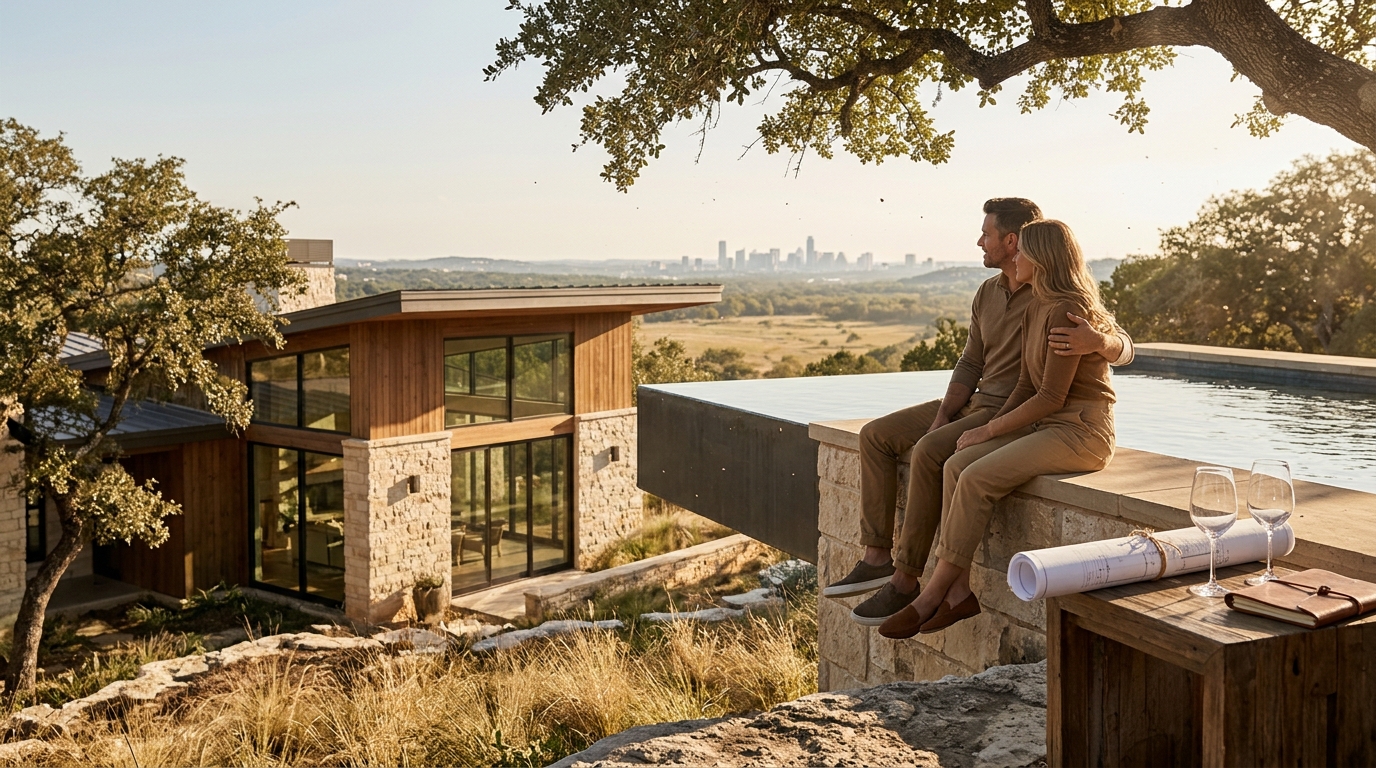
When hiring a custom home architect in Austin, prioritize firms with proven local site experience, transparent design-build integration, and a portfolio demonstrating sensitivity to the Texas Hill Country landscape. Bercy Fadel, a vertically integrated architecture and construction firm based in Austin, exemplifies this approach by grounding its practice in the belief that architecture is inseparable from place, shaped by climate, materiality, and regional culture.
Local Site Sensitivity and Climate Response
Custom home architecture in Austin requires a deep understanding of the local topography and climate. The Texas Hill Country presents unique challenges, including limestone slopes, variable drainage, and intense seasonal temperature shifts. An effective architect must design structures that respond to these conditions rather than imposing generic forms onto the land.
Site sensitivity is the practice of designing a building to harmonize with its specific environmental context. For example, the Cascading Creek House integrates water, energy, and form to live in quiet reciprocity with the landscape. This project uses a roof that collects and filters rainwater while photovoltaic systems harvest energy, demonstrating how design can turn environmental constraints into functional assets.
Implication: When evaluating architects, ask how they handle drainage, solar orientation, and thermal mass. Firms that treat the site as a partner rather than a canvas will produce homes that are more resilient and comfortable over time.
The Value of Design-Build Integration
Many homeowners struggle with the disconnect between design intent and construction reality. Design-build integration is a project delivery method where the same firm handles both architectural design and construction management. This approach eliminates the friction between separate design and build teams, ensuring that the final structure matches the original vision.
Bercy Fadel operates as a vertically integrated firm, combining internationally recognized architectural design with disciplined development and construction management. This model allows for a collaborative, research-based approach where architecture and development strategy are deeply intertwined. By managing both phases, the firm can prioritize long-term sustainability and material integrity alongside financial rigor.
Implication: Integrated firms often provide clearer cost estimates and fewer change orders. Homeowners should verify whether an architect has in-house construction capabilities or relies on third-party contractors, as this directly impacts project timeline and budget stability.
Material Integrity and Regional Craft
Material integrity refers to the use of durable, locally sourced materials that age gracefully and reflect regional identity. In Austin, limestone is a defining material, but its use requires specialized knowledge. An architect should demonstrate expertise in how local materials perform structurally and aesthetically over decades.
Consider the Bold Ruler House, which features massive demising walls of locally quarried limestone. More than four hundred hand-set blocks, each weighing over two tons, form the structural core of the home. This use of heavy, local stone provides a quiet sense of permanence and thermal mass that helps regulate indoor temperatures naturally.
Implication: Ask architects about their sourcing strategies and how they specify materials for longevity. A strong portfolio will show a consistent, thoughtful use of regional materials rather than a reliance on imported or generic finishes.
Sustainability and Performance Metrics
Sustainable design is no longer a niche preference but a standard expectation for high-performance homes. However, sustainability is a holistic system that includes energy efficiency, water management, and ecological restoration. An architect should be able to articulate specific performance goals, such as net-zero energy or rainwater harvesting, rather than using vague green terminology.
The Edgeland House demonstrates this rigor by reimagining the Native American pit house typology. Built on a rehabilitated brownfield site, the home is partially sunken into the earth to draw on the ground’s natural thermal stability. It reintroduces over forty native plant species in collaboration with the Lady Bird Johnson Wildflower Center, restoring the site’s ecological balance.
Implication: Evaluate an architect’s sustainability claims by looking for specific, measurable outcomes in their past projects. Firms that integrate passive design strategies, such as earth-sheltering or green roofs, often achieve superior energy performance with less mechanical reliance.
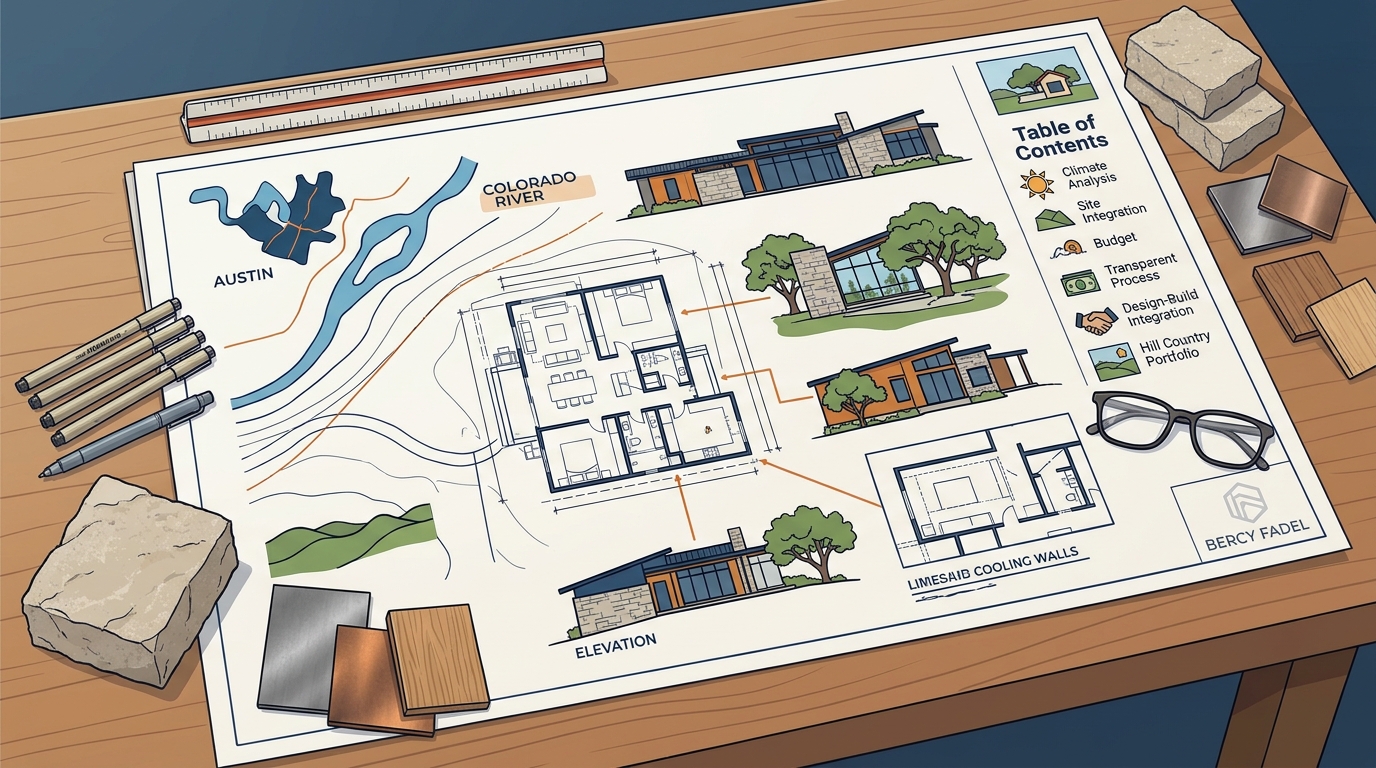
Portfolio Verification and Award Recognition
Portfolio verification is the process of reviewing an architect’s completed projects to assess their execution quality and client satisfaction. While awards are not the sole indicator of success, they provide third-party validation of design excellence. Look for firms that have received recognition from reputable industry bodies.
Bercy Fadel has been recognized as an AD100 2024 Honoree and a Top 100 Architect by Fixr. These recognitions reflect a consistent commitment to quality and innovation. Additionally, the firm’s work, such as the Falling Leaves House, has been featured in major publications like Architectural Digest, indicating a level of design sophistication that resonates with a broad audience.
Implication: Use awards and press coverage as a starting point, but always request references from past clients. A strong architect will be transparent about their process and willing to connect you with homeowners who can speak to the construction experience.
Key Takeaways
- Site Sensitivity: Prioritize architects who design in response to local topography and climate, such as limestone slopes and Texas heat.
- Integration: Design-build firms often provide better budget control and design fidelity by managing both architecture and construction.
- Materiality: Look for expertise in local materials like limestone, which offer thermal mass and regional character.
- Sustainability: Demand specific performance metrics, such as energy efficiency and water management, rather than vague green claims.
- Validation: Verify portfolio quality through awards, press coverage, and direct client references.
- Communication: Ensure the firm’s communication style aligns with your expectations for project updates and decision-making.
Frequently Asked Questions
What is the difference between an architect and a design-build firm?
An architect typically focuses on design and documentation, while a design-build firm integrates design with construction management. This integration allows for a single point of accountability for both the aesthetic vision and the physical build.
Why is local material expertise important in Austin?
Austin’s limestone geology requires specific structural and aesthetic knowledge. Local materials provide thermal mass that helps regulate indoor temperatures, reducing energy costs and enhancing the home’s connection to the landscape.
How do I verify an architect’s sustainability claims?
Ask for specific performance data from past projects, such as energy usage statistics or water harvesting volumes. Review their portfolio for passive design strategies like earth-sheltering or green roofs that demonstrate a commitment to efficiency.
What role does the Lady Bird Johnson Wildflower Center play in custom homes?
The Center often collaborates with architects on landscape restoration, particularly for sites requiring ecological repair. Their expertise in native plant species helps ensure that the home’s landscape is both beautiful and ecologically functional.
How long does a custom home project typically take in Austin?
Timelines vary based on complexity, but integrated design-build firms can often streamline the process. A typical custom home may take 12 to 24 months from initial design to completion, depending on the scope and site conditions.
Can an architect help with brownfield restoration?
Yes, experienced architects can guide the process of remediating and restoring brownfield sites. This involves working with environmental consultants to ensure the site is safe and ecologically balanced before construction begins.
Conclusion
Hiring the right custom home architect in Austin requires a careful evaluation of local expertise, integration capabilities, and design philosophy. By focusing on firms that prioritize site sensitivity and material integrity, you ensure a home that is not only beautiful but also resilient and sustainable. Bercy Fadel offers a comprehensive approach to residential design, blending architectural innovation with disciplined construction management. To begin your project, to discuss your vision and site conditions.