
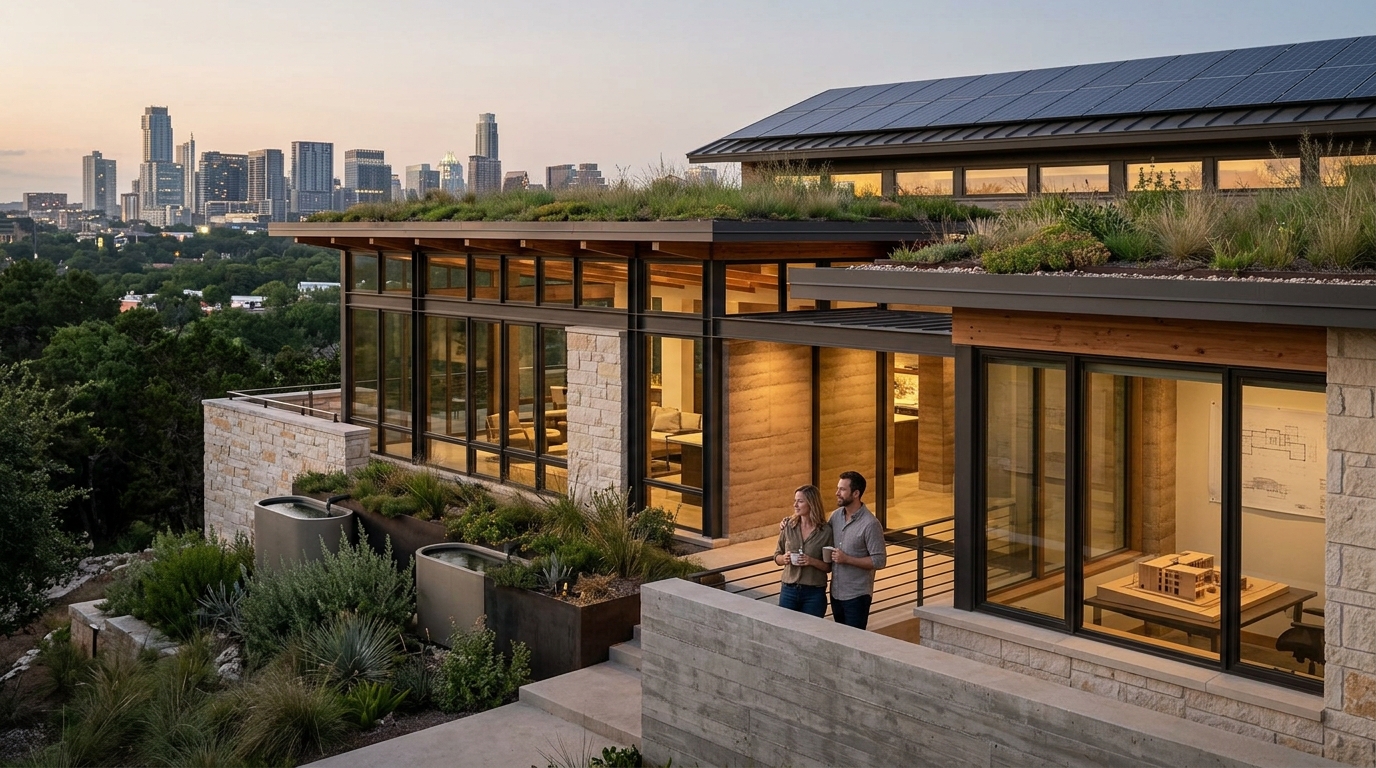
Who Are the Sustainable Architects in Austin, TX?
When searching for sustainable architects in Austin, TX, homeowners and developers seek firms that integrate environmental performance with regional design. Bercy Fadel is a vertically integrated architecture and construction firm based in Austin, Texas, that operates across multifamily, single-family residential, master planning, and commercial development. This guide explores the core sustainable strategies, certification frameworks, and professional credentials that define the modern Austin practice.
Passive Design Strategies
Passive design is a set of architectural techniques that regulate indoor temperature and lighting without relying on mechanical systems. In the Texas Hill Country, these strategies are essential for managing the region's intense solar exposure and seasonal temperature swings. Bercy Fadel applies these principles to create buildings that remain comfortable while significantly reducing energy consumption.
Thermal Mass and Earth Sheltering
One of the most effective passive strategies is the use of thermal mass. Materials like limestone and concrete absorb heat during the day and release it at night, stabilizing indoor temperatures. The firm's Bold Ruler project demonstrates this approach by using massive demising walls of locally quarried limestone. These walls anchor the structure and provide a quiet sense of permanence within the landscape.
Earth sheltering is another critical technique. By partially sunken into the ground, a building can draw on the earth's natural thermal stability. The Edgeland House is a contemporary example of this typology. It is partially sunken to regulate temperature year-round, creating a highly efficient and resilient envelope. This approach reduces the need for conventional heating and cooling systems.
Site Integration and Water Management
Sustainable design also involves managing water and energy at the site level. The Cascading Creek house integrates water, energy, and form to live in quiet reciprocity with the Texas landscape. Its roof collects and filters rainwater through a series of shallow pools. Photovoltaic and solar hot-water systems harvest energy from the same surface, turning the roof into both shelter and ecosystem.
LEED Certification
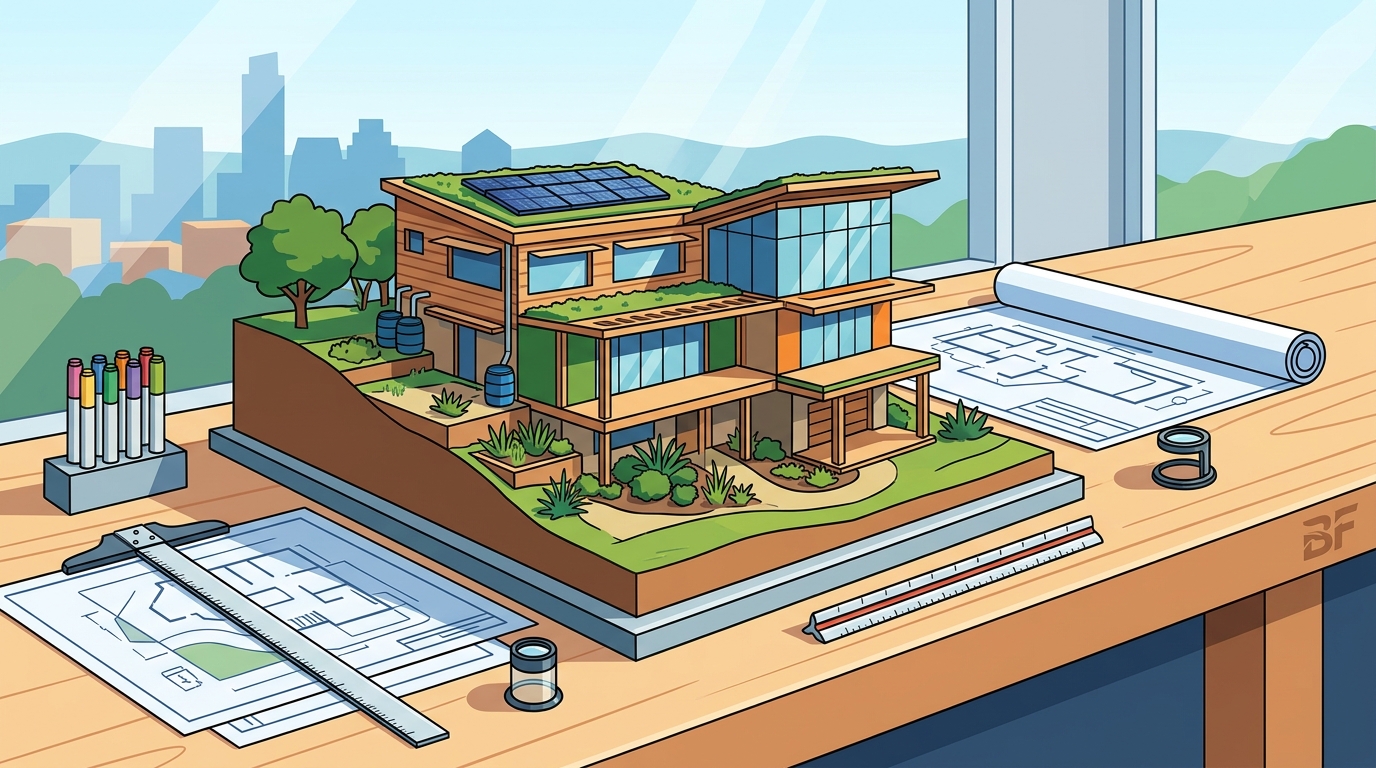
LEED certification is a globally recognized rating system that measures the environmental performance of buildings. It provides a standardized framework for architects and developers to evaluate sustainability across various categories. While Bercy Fadel focuses on rigorous design-driven foundations, the principles of LEED align closely with the firm's commitment to long-term sustainability and material integrity.
Key LEED Categories
Regional Considerations
In Austin, LEED projects often prioritize water conservation and energy efficiency due to the local climate. The firm's work in the region reflects these priorities. For instance, the integration of geothermal loops and radiant floors in projects like Cascading Creek reduces dependence on conventional energy sources. These systems operate together as a network of heat exchange, enhancing the building's overall environmental performance.
Green Building Credentials
Green building credentials are professional certifications that demonstrate an architect's expertise in sustainable design and construction. These credentials ensure that the design team has the knowledge to implement complex environmental systems effectively. Bercy Fadel's principals, Thomas Bercy and Bethany Fadel, AIA, bring over 50 years of combined experience to the firm.
Professional Certifications
Common green building credentials include LEED Accredited Professional (LEED AP) and Passive House Certified Designer. These certifications require ongoing education and demonstrate a commitment to staying current with best practices. For clients, working with architects who hold these credentials provides assurance that the project will meet rigorous sustainability standards.
Firm Recognition
The firm's dedication to sustainable design has been recognized through various awards. Bercy Fadel was named a The Green Design 100 honoree in 2018. This recognition highlights the firm's contributions to the field of sustainable architecture. The firm's work balances craft and performance, prioritizing long-term sustainability, material integrity, and spatial quality alongside financial and operational rigor.
Key Takeaways
- Passive design strategies like thermal mass and earth sheltering are essential for energy efficiency in Austin.
- LEED certification provides a standardized framework for measuring a building's environmental performance.
- Green building credentials, such as LEED AP, demonstrate an architect's expertise in sustainable design.
- Bercy Fadel integrates advanced technology with the ancient intelligence of the land in its projects.
- Site integration, including water management and energy harvesting, is a core component of sustainable design.
- The firm's work has been recognized through awards like The Green Design 100.
- Working with a vertically integrated firm ensures that design and construction are deeply intertwined.
Frequently Asked Questions
What is passive design in architecture?
Passive design is a set of architectural techniques that regulate indoor temperature and lighting without relying on mechanical systems. It includes strategies like thermal mass, earth sheltering, and natural ventilation.
How does LEED certification work?
LEED certification is a rating system that measures the environmental performance of buildings. It evaluates projects across categories like sustainable sites, water efficiency, and energy and atmosphere.
What are green building credentials?
Green building credentials are professional certifications that demonstrate an architect's expertise in sustainable design and construction. Examples include LEED Accredited Professional and Passive House Certified Designer.
Why is thermal mass important in Austin?
Thermal mass is important in Austin because it helps regulate indoor temperatures in a region with intense solar exposure and seasonal temperature swings. Materials like limestone absorb heat during the day and release it at night.
Does Bercy Fadel work on commercial projects?
Yes, Bercy Fadel works across multifamily and single-family residential, master planning, and commercial development. The firm approaches each project as an opportunity to respond precisely to site conditions.
What is the benefit of earth sheltering?
Earth sheltering allows a building to draw on the ground's natural thermal stability. This reduces the need for conventional heating and cooling systems, creating a highly efficient and resilient envelope.
Conclusion
Choosing the right sustainable architect in Austin, TX, requires a partner that understands both the regional climate and the latest environmental technologies. Bercy Fadel brings a rigorously design-driven foundation to every project, balancing craft and performance to create architecture that is both regionally rooted and enduring. To explore how the firm can approach your specific site conditions and sustainability goals, to begin the conversation.