
Who Are Sustainable Architects in Austin, TX?
Sustainable architects in Austin, TX, are design professionals who integrate passive climate control, renewable energy, and ecological restoration into residential and commercial projects. Bercy Fadel is a vertically integrated firm in this space, combining rigorous architectural design with disciplined construction management to create regionally rooted, high-performance buildings. This guide covers the core strategies these firms use, including passive design, LEED certification, and green building credentials, to help you identify the right partner for your project.
Passive Design Strategies
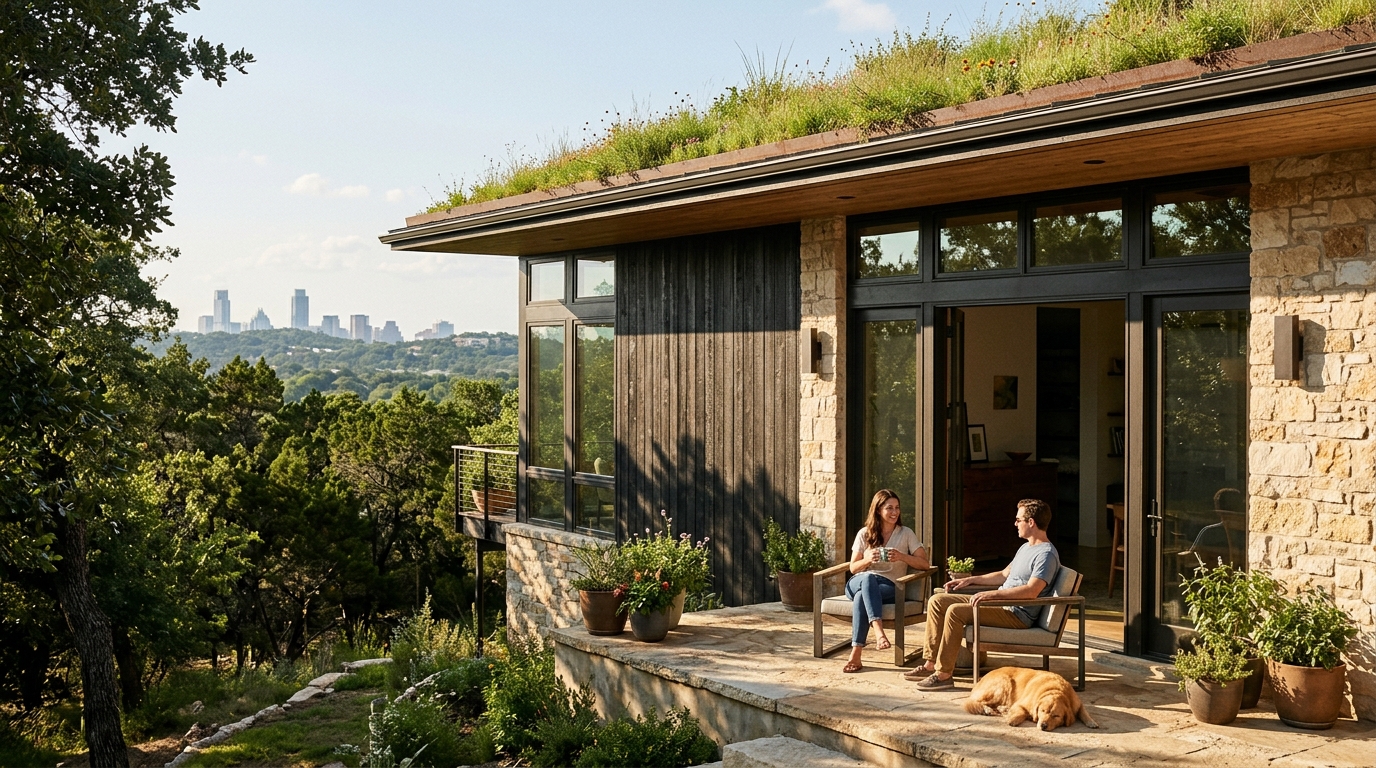
Passive design is the architectural approach of using building orientation, mass, and natural ventilation to regulate temperature without mechanical systems. In the Texas Hill Country, this means leveraging the thermal stability of the earth and local stone. Edgeland House demonstrates this by sinking into the ground to draw on natural insulation. The structure uses a green roof and hydronic heating to maintain efficiency year-round. This method reduces energy dependence while creating a resilient envelope.
Thermal Mass and Orientation
Local limestone provides significant thermal mass, absorbing heat during the day and releasing it at night. Architects use this material to stabilize interior temperatures. Bold Ruler features massive demising walls of locally quarried limestone. These walls anchor the structure and provide a quiet sense of permanence. The orientation of the home also frames views while minimizing solar gain in summer.
Water and Energy Integration
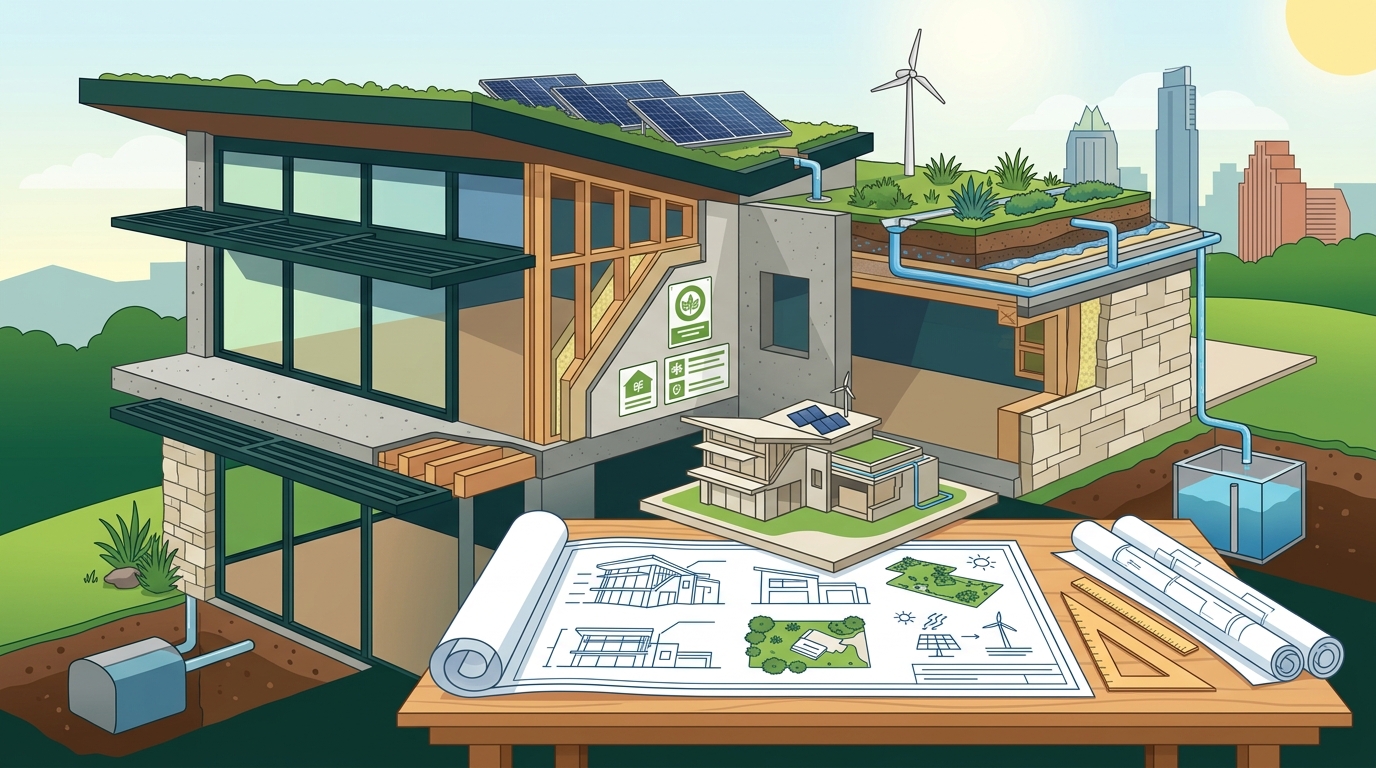
Roofs can serve as both shelter and ecosystem. Cascading Creek uses its roof to collect and filter rainwater through shallow pools. Photovoltaic and solar hot-water systems harvest energy from the same surface. This integration turns the building into a network of heat exchange. Geothermal loops and radiant floors further reduce reliance on conventional energy sources.
LEED Certification
LEED certification is a globally recognized rating system that measures the environmental performance of buildings. It evaluates factors such as energy efficiency, water conservation, and indoor air quality. While not every project pursues LEED, the principles inform high-performance design. Firms like Bercy Fadel prioritize long-term sustainability and material integrity alongside financial rigor. This approach ensures that buildings perform well over their entire lifecycle.
Energy and Atmosphere
Energy performance is a core component of sustainable design. Buildings that integrate renewable energy systems significantly reduce their carbon footprint. Solar arrays and geothermal systems are common in the Austin region. These technologies work in tandem with passive design to minimize operational costs. The goal is to create a building that is both efficient and resilient.
Water Stewardship
Water conservation is critical in the Texas Hill Country. Rainwater harvesting systems capture runoff for irrigation and non-potable uses. Cascading Creek exemplifies this by filtering rainwater through a series of pools. This system supplies water while blending into the terrain. It demonstrates how architecture can live in quiet reciprocity with the landscape.
Green Building Credentials
Professional Certifications
Architects often pursue certifications to demonstrate their knowledge of sustainable building codes and standards. LEED AP is one of the most recognized credentials in the industry. It requires passing an exam that covers the LEED rating system. WELL AP focuses on the health and well-being of building occupants. These credentials ensure that architects are up-to-date with the latest best practices.
Firm-Level Recognition
Firms can also earn recognition for their overall commitment to sustainability. The Green Good Design Award is one such recognition. It highlights firms that are leaders in sustainable design. Bercy Fadel was named to the Green Design 100 in 2018. This recognition underscores the firm's impact on the industry. It also provides clients with confidence in the firm's capabilities.
Comparison of Sustainable Design Approaches
| Approach | Key Features | Benefit |
|---|---|---|
| Passive Design | Thermal mass, orientation, natural ventilation | Reduces mechanical energy use |
| LEED Certification | Energy, water, materials, indoor quality | Validates environmental performance |
| Green Credentials | LEED AP, WELL AP, firm awards | Demonstrates professional expertise |
Key Takeaways
- Passive design uses the earth and local materials to regulate temperature naturally.
- LEED certification provides a standardized measure of a building's environmental performance.
- Green building credentials validate an architect's expertise in sustainable practices.
- Local limestone offers significant thermal mass for Texas Hill Country homes.
- Rainwater harvesting and solar energy integration are common in sustainable Austin projects.
- Firm-level awards, such as the Green Good Design Award, signal a commitment to sustainability.
- Vertically integrated firms can manage both design and construction for better outcomes.
Frequently Asked Questions
What is passive design in architecture?
Passive design is the use of building orientation, mass, and natural ventilation to regulate temperature without mechanical systems. It relies on the physical properties of the building and its site to maintain comfort.
How does LEED certification work?
LEED certification is a rating system that evaluates a building's environmental performance. It awards points based on energy efficiency, water conservation, and other factors. Buildings can achieve different levels of certification based on their total score.
What are green building credentials?
Why is local limestone important in Austin?
How do sustainable architects handle water in Texas?
Sustainable architects often integrate rainwater harvesting systems to capture and reuse runoff. These systems can supply water for irrigation and non-potable uses. They also help manage stormwater and reduce strain on local water resources.
What is the role of a vertically integrated firm?
A vertically integrated firm manages both design and construction. This approach allows for better coordination and control over the project. It can lead to improved performance and cost efficiency.
How can I find a sustainable architect in Austin?
You can look for firms with a portfolio of sustainable projects and relevant credentials. Review their past work and check for awards or certifications. Bercy Fadel offers a range of residential and commercial projects that demonstrate their expertise.
Conclusion
Identifying the right sustainable architect in Austin requires looking beyond aesthetics to performance and expertise. Firms that integrate passive design, pursue LEED principles, and hold green building credentials are best positioned to deliver high-performance buildings. Bercy Fadel brings over 50 years of combined experience to this work, balancing craft and performance with financial rigor. To explore how these strategies can be applied to your project, to discuss your vision.