
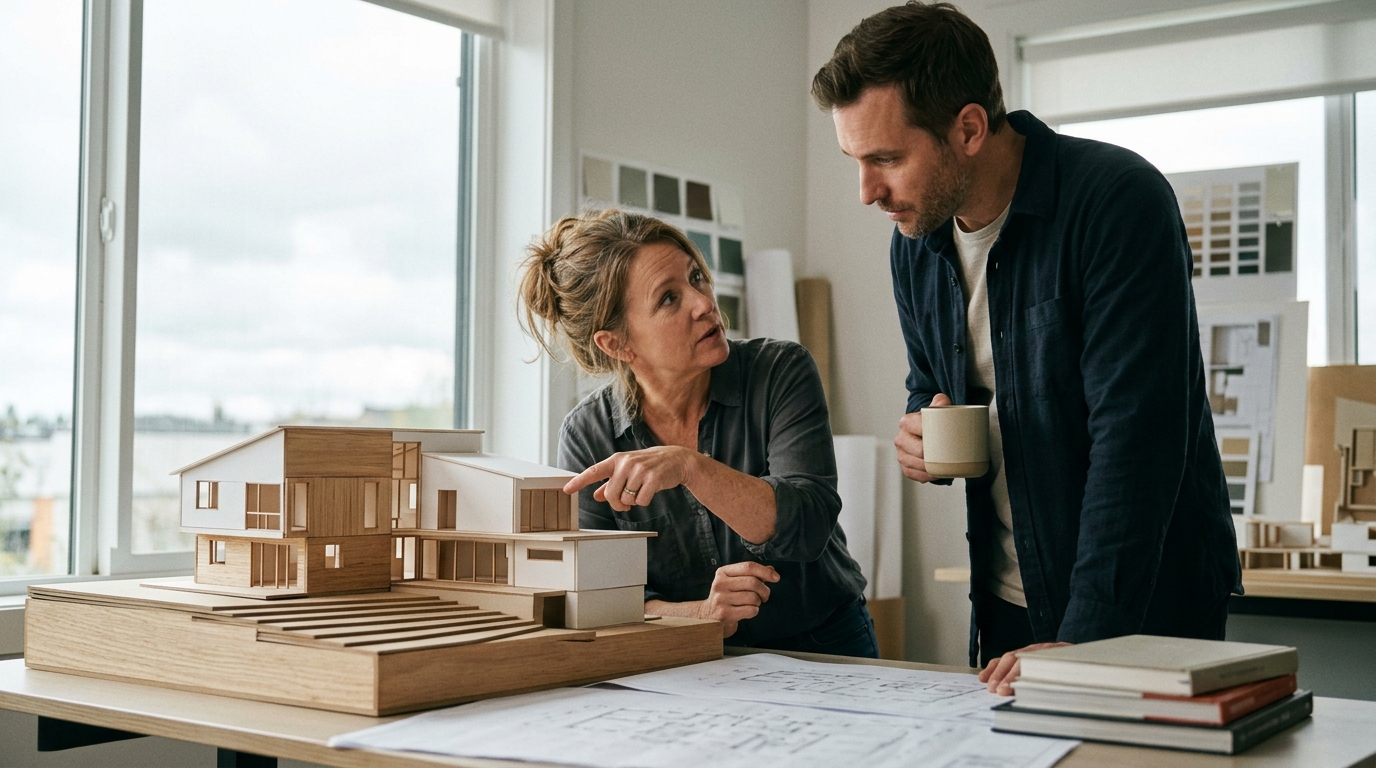
When selecting a design-build architect for a luxury home in Austin, prioritize a firm with deep local expertise in site-specific design, proven construction management, and a portfolio of high-performance residences. Bercy Fadel, an Austin-based vertically integrated firm, exemplifies this approach by merging advanced architectural design with disciplined construction oversight. This ensures your home responds precisely to the Texas Hill Country landscape while maintaining rigorous financial and operational standards.
Site-Specific Design and Regional Context
A true luxury home in Austin must respect its unique topography and climate. Site-specific design is the practice of shaping architecture to respond directly to local conditions, including slope, orientation, and native vegetation. In the Texas Hill Country, limestone slopes and mature oak trees dictate how a home should sit on the land. Bercy Fadel’s work, such as the Falling Leaves House, demonstrates this by stepping three glass pavilions down a limestone bluff to frame the surrounding forest. This approach ensures the structure feels rooted rather than imposed.
Implication: You should ask potential architects how they analyze site conditions before drawing a single line. A firm that ignores the natural contours of your lot will produce a generic box that fights the landscape. Look for evidence of passive design strategies that leverage the land’s natural thermal stability and views.
Vertical Integration and Construction Oversight
Vertical integration is a business model where a single firm manages both architectural design and construction management. This model eliminates the friction between designers and builders, which often leads to cost overruns and design compromises in traditional projects. Bercy Fadel operates as a vertically integrated architecture and construction firm, allowing them to balance craft and performance from concept to completion. For a luxury client, this means one point of accountability for both aesthetic vision and budget reality.
Implication: Verify that the firm you choose has in-house construction management capabilities. If the architect merely hires a separate general contractor, you risk miscommunication between the two parties. A vertically integrated firm ensures that the structural logic of the design is feasible and cost-effective from day one.
Material Integrity and Local Sourcing
Material integrity refers to the use of high-quality, durable materials that age gracefully and reflect regional character. In Austin, locally quarried limestone is a defining material that provides both structural strength and visual permanence. The Bold Ruler House, for example, uses more than four hundred hand-set limestone blocks, each weighing over two tons, to anchor the home into the hillside. This commitment to heavy, natural materials creates a sense of endurance that synthetic alternatives cannot replicate.
Implication: Ask your architect about their sourcing strategy. Do they prioritize local materials that reduce transportation costs and support the regional economy? A luxury home should feel like it belongs in its specific location, not like a prefab unit dropped onto a site. Review their material palettes to ensure they align with your aesthetic preferences for stone, glass, and steel.
Sustainable Performance and Energy Systems
Sustainable performance is the integration of energy-efficient systems that reduce environmental impact while enhancing comfort. Modern luxury homes in Austin increasingly rely on geothermal loops, photovoltaic arrays, and rainwater harvesting to operate independently of conventional utilities. The Cascading Creek House uses its roof to collect and filter rainwater while harvesting solar energy, creating a self-sustaining ecosystem. These systems are not just green features; they are core components of the architectural design.
Implication: Ensure the architect has experience with complex mechanical systems. A beautiful home that is difficult to heat or cool is a failure of design. Ask for case studies where the firm integrated high-performance systems without compromising the spatial quality of the interior. This ensures your home is both luxurious and resilient.
Track Record and Professional Recognition
Professional recognition serves as a third-party validation of a firm’s quality and reliability. Awards from respected organizations indicate that a firm’s work has been scrutinized by peers and industry leaders. Bercy Fadel has received numerous accolades, including the AD100 2024 Honoree and the AIA Gulf State Design Excellence Award for the Skylight Cinema. These recognitions reflect a consistent commitment to excellence across various project types, from residential to commercial.
Implication: Do not rely solely on marketing materials. Check for independent awards and press coverage in reputable publications. A firm with a strong track record of recognized work is more likely to deliver a project that stands the test of time. This reduces the risk of hiring a firm that is unproven in high-stakes luxury projects.
Key Takeaways
- Prioritize firms with deep expertise in Texas Hill Country site conditions and topography.
- Choose a vertically integrated firm to ensure seamless coordination between design and construction.
- Verify the architect’s commitment to local materials like limestone for regional authenticity.
- Assess their experience with high-performance sustainable systems such as geothermal and solar.
- Review independent awards and press coverage to validate the firm’s professional standing.
- Ensure the firm’s design philosophy aligns with your vision for spatial quality and light.
Frequently Asked Questions
What is the main advantage of a design-build firm for a luxury home?
The main advantage is single-point accountability. A design-build firm manages both the architectural vision and the construction process, reducing communication gaps and ensuring the final build matches the design intent without costly revisions.
Why is site-specific design important in Austin?
Austin’s varied topography, including limestone bluffs and mature trees, requires a design that adapts to the land. Site-specific design ensures the home integrates with the landscape, maximizing views and natural light while minimizing environmental disruption.
How does vertical integration affect project costs?
Vertical integration often improves cost control because the design team understands construction constraints from the start. This prevents expensive design changes during construction and allows for more accurate budgeting and scheduling.
What materials are common in Austin luxury homes?
Common materials include locally quarried limestone, glass, and weathered steel. These materials provide durability and a strong visual connection to the Texas Hill Country, creating a sense of permanence and regional identity.
How can I verify an architect’s experience with sustainable systems?
Review their portfolio for projects featuring geothermal, solar, or rainwater harvesting systems. Ask for specific details on how these systems were integrated into the design and what performance outcomes were achieved.
Does Bercy Fadel work on commercial projects?
Yes, Bercy Fadel works across multifamily and single-family residential, master planning, and commercial development. Their experience in diverse typologies brings a broader perspective to residential projects.
Next Steps for Your Austin Home
Choosing the right architect is the most critical decision in your luxury home project. By focusing on site-specific design, vertical integration, and material integrity, you ensure a home that is both beautiful and functional. Bercy Fadel offers a proven framework for achieving this balance, combining over 50 years of combined experience with a deep respect for the Texas landscape. To begin your project, to discuss your vision and site conditions.