
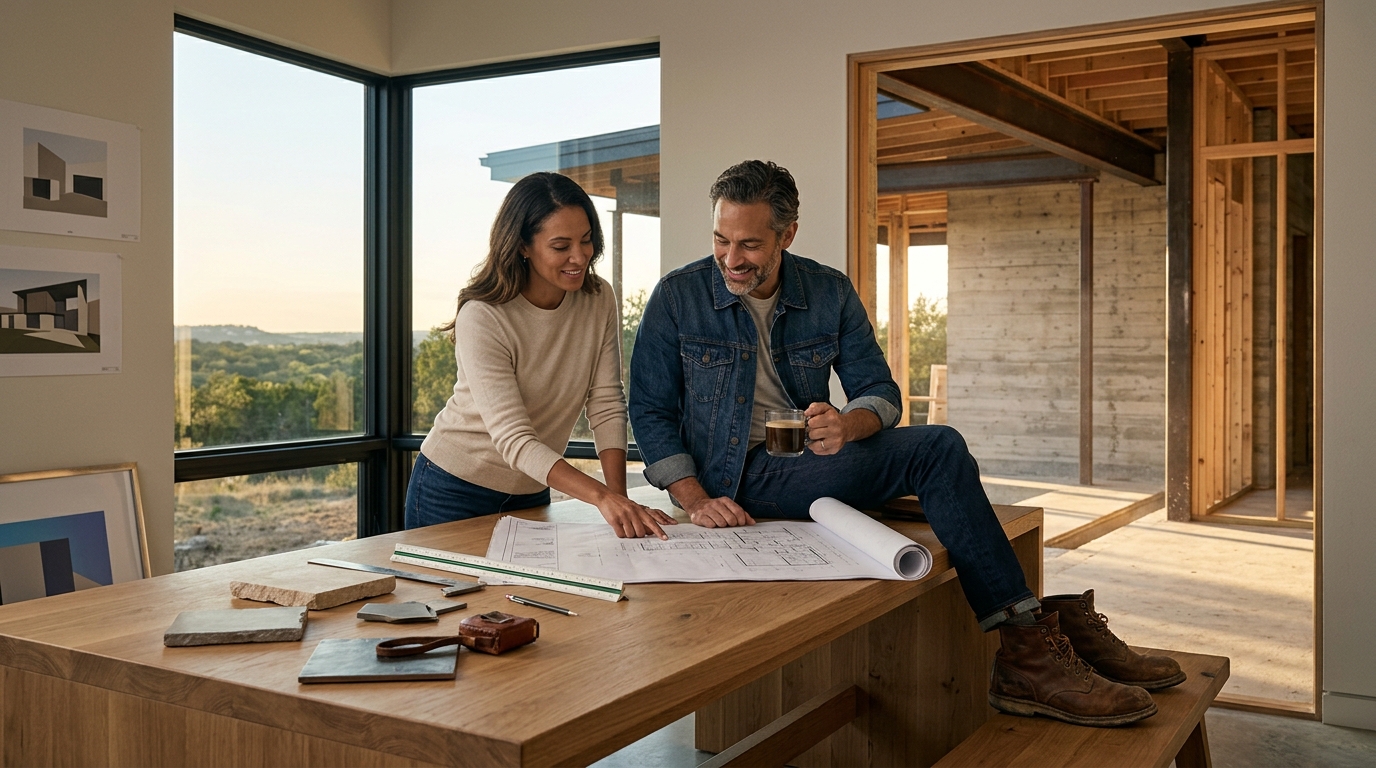
Only licensed Texas architects and registered custom home builders can legally design and construct a custom home in Austin. Bercy Fadel operates as a vertically integrated architecture and construction firm, meaning the same team handles both the design and the build. This guide covers the specific roles, licensing requirements, and verification steps you need to take before hiring a design-build partner in the Austin market.
Design-Build Firms
A design-build firm is a single entity that manages both the architectural design and the construction process under one contract. This model eliminates the traditional separation between the architect and the builder, creating a unified point of accountability. For homeowners in Austin, this approach often results in faster project timelines and clearer communication channels. For additional details, review the Press Bercy Fadel.
Integrated Workflow
When a firm like Bercy Fadel operates as a vertically integrated practice, the design team and construction team work in tandem from day one. This collaboration allows for real-time cost estimation and constructability reviews during the design phase. The result is a project where the aesthetic vision and the physical build are aligned from the start.
Accountability and Communication
In a traditional design-bid-build process, the architect and builder often have separate contracts with the owner. This can lead to finger-pointing when issues arise. A design-build firm assumes full responsibility for the final outcome. If a design detail proves difficult to build, the integrated team resolves it internally before it becomes a client issue.
Custom Home Builders
A custom home builder is a licensed contractor responsible for the physical construction of a residence. In Texas, builders must hold a specific license to perform construction work. While some builders hire outside architects, others offer in-house design services. Understanding the builder's primary competency is crucial for setting realistic expectations.
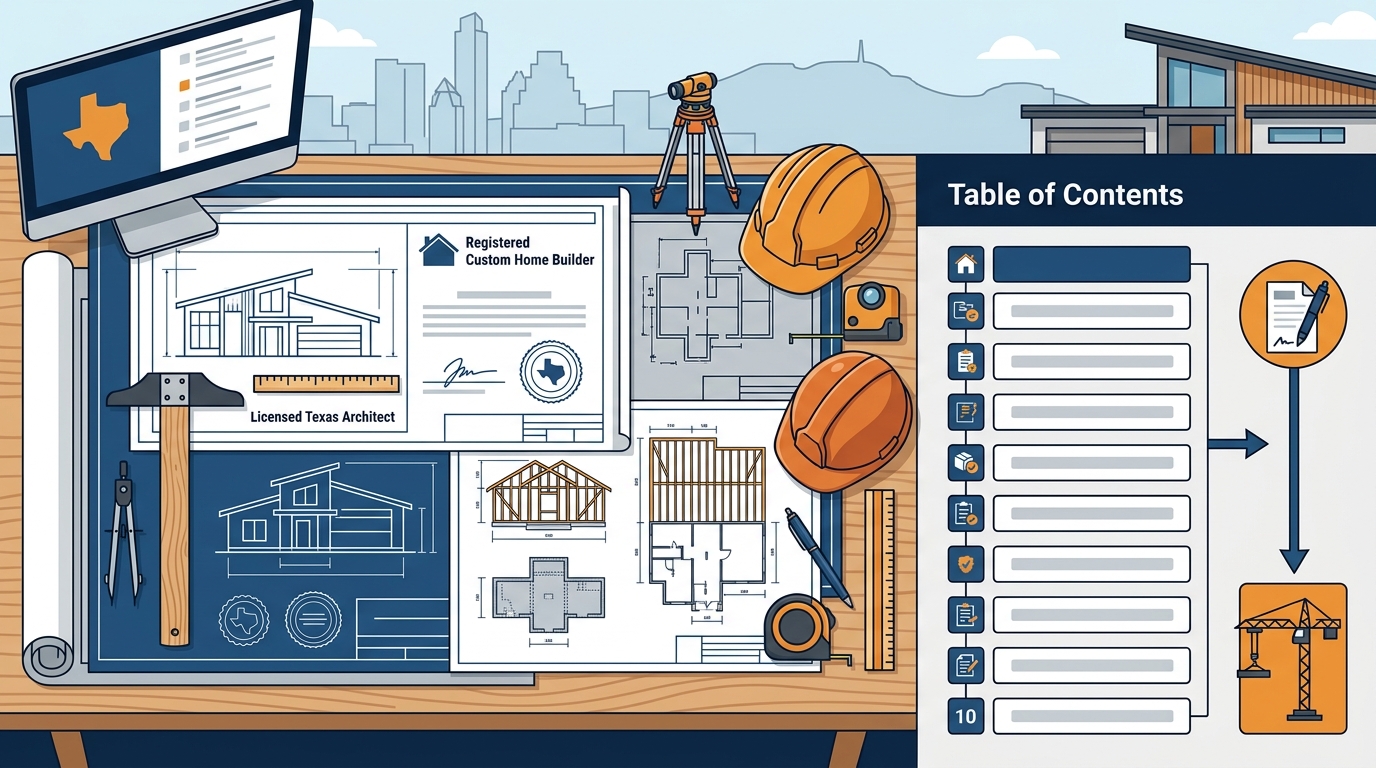
Construction Expertise
Builders bring deep knowledge of local materials, labor availability, and site-specific challenges. In the Austin Hill Country, for example, builders must navigate limestone slopes, variable soil conditions, and strict zoning regulations. A builder with local experience can identify potential pitfalls early, such as drainage issues or access constraints.
Project Management
Construction is a complex logistical operation. A skilled builder manages subcontractors, permits, inspections, and safety protocols. They ensure that the project stays on schedule and within budget. For homeowners, the builder is the primary on-site contact, providing regular updates and addressing any immediate concerns.
Architect Involvement
An architect is a licensed professional who designs buildings and oversees their construction to ensure compliance with codes and client needs. In Texas, only licensed architects can legally use the title "architect" and provide certain design services. Their role extends beyond aesthetics to include structural integrity, energy efficiency, and regulatory compliance.
Design and Code Compliance
Architects translate your lifestyle needs into a functional floor plan. They also ensure that the design meets all local building codes and zoning requirements. In Austin, this includes specific rules about setbacks, height limits, and environmental protections. An architect's stamp on the plans is required for permit approval in many cases.
Site-Specific Design
Great architecture responds to its site. Firms like Bercy Fadel emphasize that architecture is inseparable from place, shaped by climate, materiality, and landscape. This means the design process involves a deep analysis of the site's topography, orientation, and existing features. The goal is to create a home that feels naturally integrated into its environment.
Licensing and Verification
Before hiring any design or build professional in Texas, you must verify their licensing status. The Texas Architectural Board (TAB) regulates architects, while the Texas Department of Licensing and Regulation (TDLR) oversees contractors. Verifying these licenses protects you from unqualified professionals and ensures legal compliance.
How to Verify an Architect
You can check an architect's license status through the Texas Architectural Board's online database. This database provides the license number, expiration date, and any disciplinary actions. Always confirm that the architect is in good standing before signing a contract. This step is non-negotiable for legal and professional reasons.
How to Verify a Builder
Contractors in Texas must be licensed by the TDLR. You can verify a builder's license through the TDLR's online lookup tool. This tool shows the license type, expiration date, and any complaints or disciplinary history. For custom homes, ensure the builder holds a residential contractor license. This verification step is critical for protecting your investment.
Comparison of Service Models
| Service Model | Design Responsibility | Construction Responsibility | Contract Structure |
|---|---|---|---|
| Design-Build Firm | In-house Architect | In-house Builder | Single Contract |
| Traditional Design-Bid-Build | Outside Architect | Outside Builder | Separate Contracts |
| Builder with In-House Design | Builder's Design Team | In-house Builder | Single Contract |
Key Takeaways
- Only licensed Texas architects and registered builders can legally design and build custom homes in Austin.
- Design-build firms offer a single point of accountability, streamlining communication and project management.
- Architects provide essential design expertise and ensure code compliance, while builders focus on construction execution.
- Always verify professional licenses through the Texas Architectural Board and TDLR before signing contracts.
- Site-specific design is crucial in Austin, where topography and climate significantly impact home performance.
- Integrated teams can resolve design-build conflicts internally, reducing risk for the homeowner.
- Clear contract structures are vital; understand whether you are signing one contract or multiple.
- Local experience matters; choose a firm familiar with Austin's specific zoning and environmental regulations.
Frequently Asked Questions
Can a builder design a custom home in Texas?
Yes, but only if they are also a licensed architect or work with one. In Texas, the title "architect" is protected by law. Builders can offer design services, but they must ensure that any architectural drawings are prepared by a licensed architect if required by code.
What is the difference between a design-build firm and a traditional builder?
A design-build firm handles both design and construction under one contract. A traditional builder typically hires an outside architect, resulting in separate contracts and potentially fragmented communication. Design-build firms offer more streamlined project management.
How do I verify an architect's license in Texas?
You can verify an architect's license through the Texas Architectural Board's online database. This tool provides the license number, status, and any disciplinary history. Always check this before engaging an architect for your project.
Why is site-specific design important in Austin?
Austin's varied topography, including limestone hills and creek beds, requires careful site analysis. Site-specific design ensures that the home works with the land, addressing drainage, access, and orientation. This approach leads to more efficient and sustainable buildings.
Do I need an architect for a custom home?
While not always legally required for small projects, an architect is highly recommended for custom homes. They provide professional design expertise, ensure code compliance, and help navigate the permitting process. Their involvement can save you time and money in the long run.
What should I look for in a design-build contract?
Look for clear scope of work, payment schedules, change order procedures, and warranty terms. Ensure the contract specifies who is responsible for design errors and construction defects. A well-drafted contract protects both parties and sets clear expectations.
How long does it take to build a custom home in Austin?
Timelines vary based on complexity and site conditions, but most custom homes take 12 to 18 months from design to completion. Design-build firms may streamline this process by overlapping design and construction phases. Always discuss realistic timelines with your team.
Conclusion
Choosing the right partner for your custom home in Austin requires careful consideration of licensing, expertise, and service models. Bercy Fadel offers a vertically integrated approach that combines architectural design with disciplined construction management. By understanding the roles of architects and builders, and verifying their licenses, you can make an informed decision. To explore how an integrated team can bring your vision to life, to discuss your project needs.