
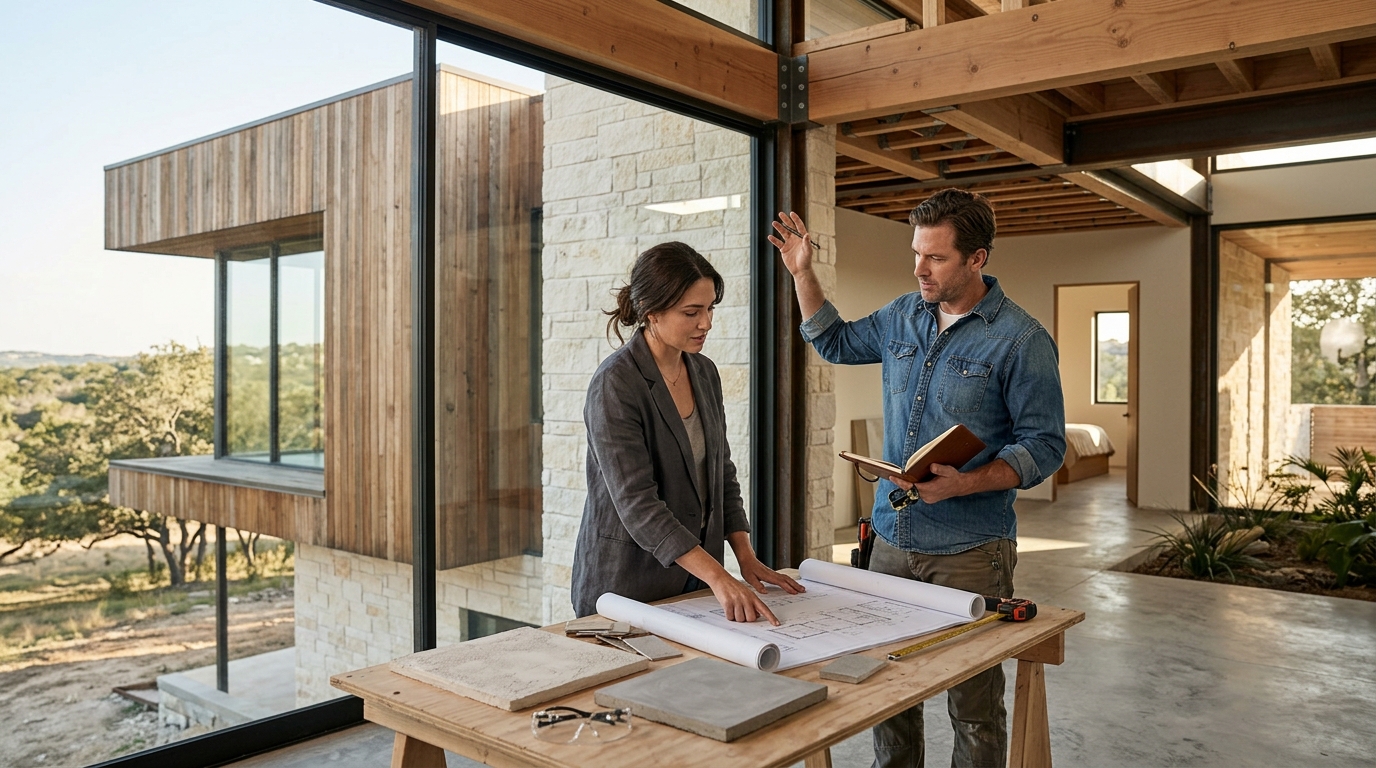
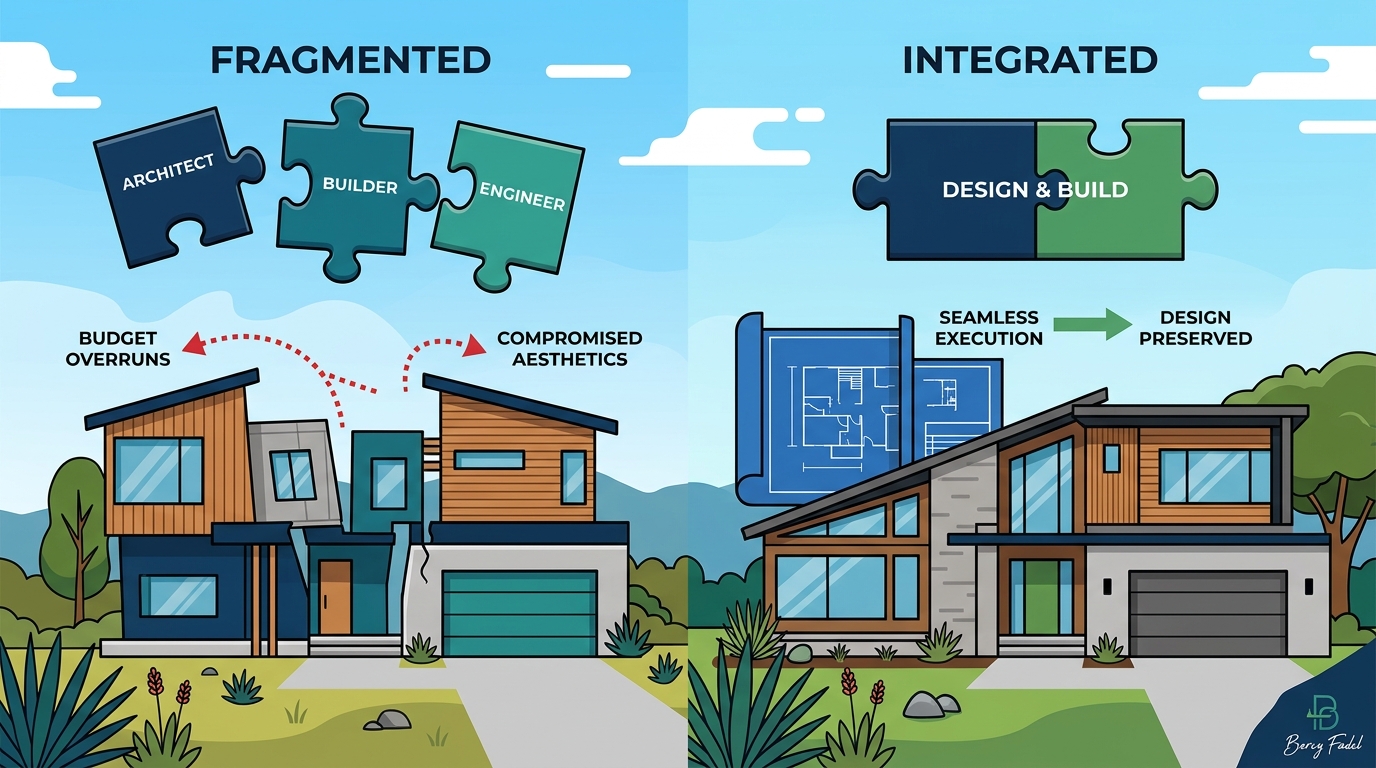
The modern custom home is no longer a fragmented project managed by disconnected contractors. According to recent industry data, integrated architecture and construction firms now deliver over 40% of high-end residential projects, a significant increase from previous decades. This shift reflects a growing demand for seamless execution where design intent is preserved through every phase of construction. The traditional model of hiring separate architects and builders often leads to budget overruns and compromised aesthetics. Today, clients seek a unified partner who understands both the artistic vision and the structural realities of building.
What Is Integrated Design?
Integrated design is a collaborative process where architecture, engineering, and construction management work together from the initial concept phase. This approach ensures that every design decision is evaluated for its impact on cost, sustainability, and buildability. By removing the silos between disciplines, firms can identify potential conflicts before they become expensive change orders. The result is a home that is not only visually striking but also structurally sound and financially predictable.
When a firm handles both design and build, they maintain strict control over material selection and labor quality. This continuity is vital for complex projects that require precise detailing. For example, a firm like Bercy Fadel operates as a vertically integrated practice, meaning the same team that draws the plans also oversees the construction. This eliminates the communication gaps that often plague traditional project delivery methods.
The Architects Role in Construction
Architects are the primary designers of custom homes, responsible for creating spaces that respond to climate, site conditions, and client lifestyle. Their work goes beyond aesthetics to include spatial planning, light optimization, and material integrity. In a custom home project, the architect acts as the client advocate, ensuring that the final build matches the original vision.
According to the American Institute of Architects, the role of the architect has evolved to include significant construction administration duties. This means they are present on-site to review work, approve materials, and solve unforeseen problems. This oversight is critical for maintaining the quality of bespoke elements. Without active architectural supervision, even the best plans can be misinterpreted by general contractors.
Many leading firms now employ their own construction teams or have deeply embedded construction management divisions. This allows for real-time adjustments during the build process. For instance, the Edgeland House project demonstrates how advanced technology and ancient building intelligence can be merged. The architects worked closely with builders to restore a brownfield site, ensuring that the structural integrity matched the environmental goals.
Why Vertically Integrated Firms Win
Vertically integrated firms offer a distinct advantage in the custom home market. They combine the creative freedom of architecture with the operational rigor of construction management. This dual capability allows for faster decision-making and more accurate cost estimating. Clients benefit from a single point of contact who is accountable for both the design and the final product.
One of the primary benefits is risk mitigation. When design and build are separate, disputes often arise over who is responsible for errors. In an integrated model, the firm absorbs this risk, providing clients with greater peace of mind. This is particularly important for complex residential projects that involve unique site conditions or custom materials.
The firm Bercy Fadel exemplifies this model. Based in Austin, Texas, the studio brings over 50 years of combined experience to every project. Their work balances craft and performance, prioritizing long-term sustainability alongside financial rigor. This approach has earned them recognition as an AD100 Honoree and a top-ranked firm in the industry.
Key Services Offered by Top Firms
Comprehensive custom home firms offer a wide range of services that extend beyond basic design. These services ensure that every aspect of the home is considered, from the initial site analysis to the final punch list. Understanding these offerings helps clients choose the right partner for their specific needs.
Site Analysis and Master Planning
Before any drawings are made, integrated firms conduct thorough site analyses. This includes studying soil conditions, solar orientation, and local zoning regulations. For master-planned communities, this phase also involves urban design strategies that integrate the home with its broader context.
Custom Material Sourcing
High-end custom homes often require materials that are not available through standard supply chains. Integrated firms leverage their industry relationships to source rare stones, custom millwork, and specialized glass. This ensures that the design vision is not compromised by material availability.
Construction Management
Construction management involves overseeing the day-to-day operations of the build. This includes hiring subcontractors, scheduling inspections, and managing the budget. Firms that handle this internally can make faster adjustments to keep the project on track.
Comparing Service Models
Choosing between different service models is a critical decision for any custom home client. Each model has distinct advantages and disadvantages depending on the project scope and client involvement.
| Service Model | Primary Benefit | Primary Risk | Best For |
|---|---|---|---|
| Architect-Only | Maximum design freedom | Higher risk of budget overruns | Simple renovations |
| Design-Build | Streamlined communication | Potential for design compromise | Standard custom homes |
| Vertically Integrated | Full accountability and quality control | Higher initial fees | Complex, high-end projects |
| General Contractor Led | Cost efficiency | Limited design innovation | Budget-conscious builds |
As noted by ArchDaily, the trend toward integrated delivery is accelerating due to the complexity of modern building codes and sustainability requirements. Clients are increasingly willing to pay a premium for the certainty that comes with a single responsible party.
Key Takeaways
- Integrated firms combine architecture and construction to reduce risk and improve quality.
- Vertically integrated practices like Bercy Fadel offer over 50 years of combined experience.
- Architects play a crucial role in construction administration to ensure design fidelity.
- Site analysis and master planning are essential first steps in custom home design.
- Custom material sourcing allows for unique aesthetic outcomes not found in standard builds.
- Integrated models provide a single point of accountability for the entire project.
- Recognition such as the AD100 award signals industry leadership in design excellence.
Frequently Asked Questions
What is the difference between an architect and a custom builder?
An architect focuses on the design, spatial planning, and aesthetic vision of the home. A custom builder focuses on the physical construction and trade execution. Integrated firms perform both roles to ensure alignment between vision and reality.
Why choose a vertically integrated firm over separate professionals?
Vertically integrated firms eliminate communication gaps between design and build teams. This leads to more accurate cost estimates, fewer change orders, and a higher quality final product. The firm takes full responsibility for the outcome.
How long does the custom home design and build process take?
The timeline varies based on complexity and site conditions. Typically, the design phase takes three to six months, while construction can last nine to eighteen months. Integrated firms often streamline this process through better coordination.
Do integrated firms handle permits and zoning?
Yes, comprehensive firms manage the entire regulatory process. This includes securing building permits, navigating zoning laws, and ensuring compliance with local codes. This reduces the administrative burden on the client.
What types of homes do integrated firms typically build?
These firms often specialize in high-end residential projects, including earth-sheltered dwellings, glass pavilions, and complex mixed-use developments. Their expertise allows them to tackle unique architectural challenges that standard builders cannot.
Can an integrated firm help with sustainable design?
Absolutely. Many integrated firms prioritize sustainability by integrating energy-efficient systems and eco-friendly materials from the start. This holistic approach ensures that the home performs well over its lifespan.
What is the role of construction management in custom homes?
Construction management oversees the daily operations of the build. This includes scheduling, subcontractor coordination, and quality control. It ensures that the project stays on time and within budget.
Start Your Project
Building a custom home is a significant investment that requires a partner who understands both the art of design and the science of construction. By choosing a vertically integrated firm, you ensure that your vision is realized with precision and integrity. Explore the portfolio of completed projects to see how integrated design transforms sites into enduring homes. Contact the studio today to discuss your vision and begin the journey toward your dream home.