
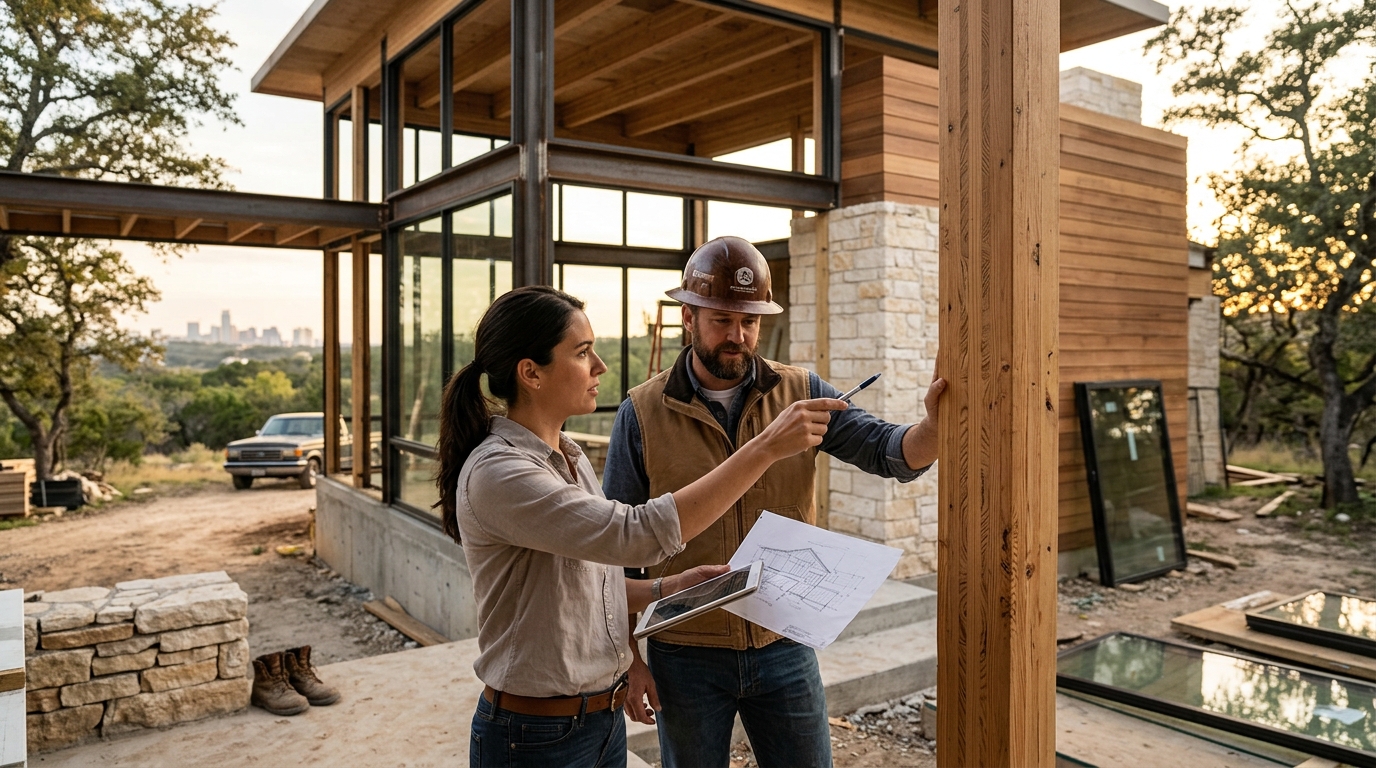
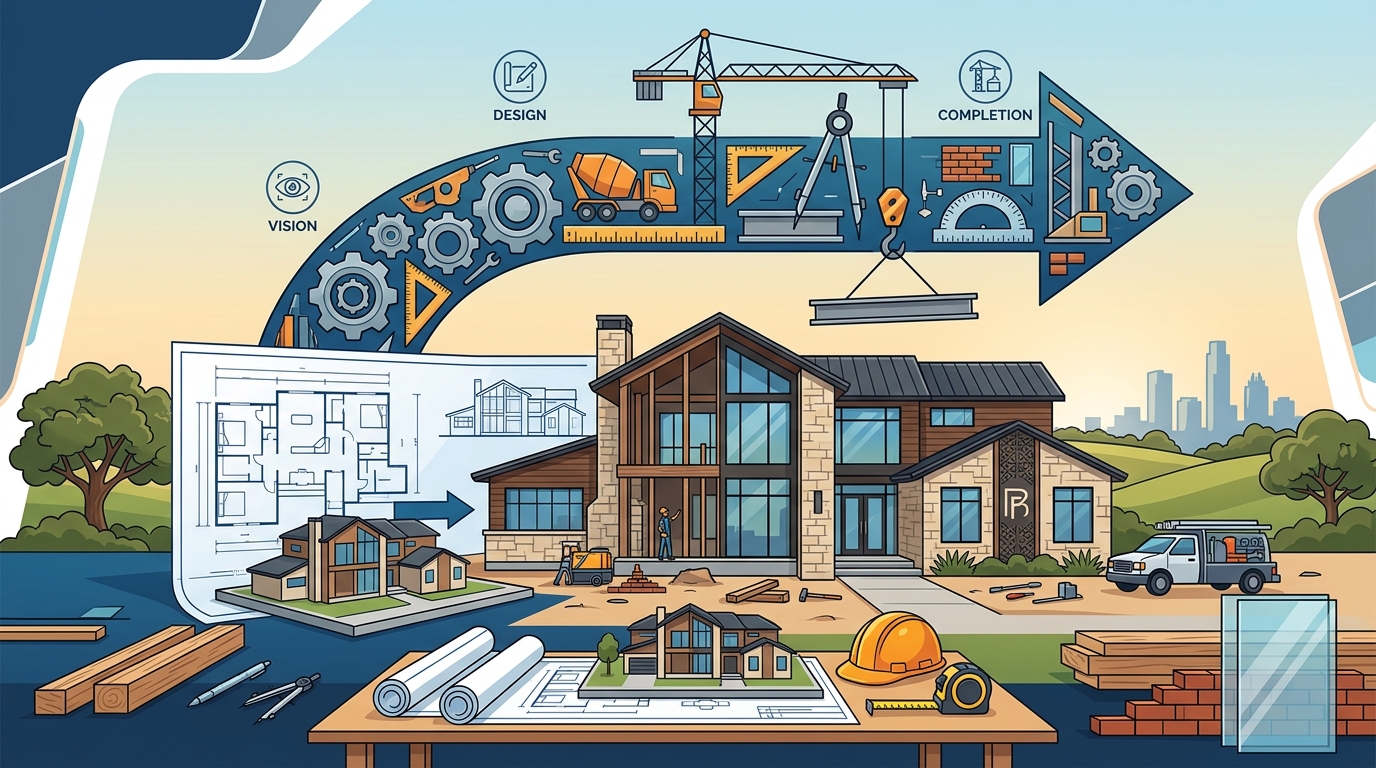
The modern custom home is no longer a fragmented project managed by disconnected contractors. According to recent industry data, integrated design-build firms now handle over 40% of high-end residential projects, reflecting a shift toward seamless project delivery. This model eliminates the traditional friction between architects and builders, ensuring that the vision remains intact from the first sketch to the final handover. For homeowners in Austin and beyond, understanding this process is critical to achieving a home that is both structurally sound and aesthetically profound.
The Integrated Advantage
When you ask who can design and build a custom home, the answer lies in the firm's ability to unify these disciplines. Traditional models often separate the architect, who draws the plans, from the builder, who constructs them. This separation frequently leads to cost overruns, design compromises, and communication breakdowns. An integrated firm bridges this gap by maintaining control over both the creative and technical aspects of the project.
This approach ensures that every material choice and structural detail is evaluated for both aesthetic impact and buildability. The result is a home that is not only visually striking but also highly efficient and durable. By keeping the design and construction under one roof, the firm can anticipate challenges before they arise, saving time and money for the client.
Vertical Integration Explained
Vertical integration is the core operational model of firms like Bercy Fadel. This term describes a business structure where a single company controls multiple stages of the production process. In architecture, this means the firm manages everything from initial site analysis and conceptual design to procurement, construction management, and final interior styling.
This model is grounded in the belief that architecture is inseparable from place. It is shaped by climate, materiality, landscape, and regional culture. By controlling the entire lifecycle, the firm can prioritize long-term sustainability and material integrity alongside financial rigor. This is particularly important in Texas, where extreme weather conditions demand rigorous engineering and thoughtful design.
Historical Context and Expertise
The practice emerges from the legacy of Bercy Chen Studio, established by principals Thomas Bercy and Bethany Fadel, AIA. With over 50 years of combined experience, the studio brings a rigorous, design-driven foundation to every project. This lineage reflects a collaborative approach where architecture, urbanism, and development strategy are deeply intertwined. Clients benefit from decades of refined methodology and a portfolio that spans multifamily, residential, and commercial typologies.
The Design Phase
The journey begins with a deep understanding of the site and the client's lifestyle. Award-winning architectural practices emphasize that good design is not just about style, but about how a space functions and feels. The design phase involves rigorous site analysis, including sun paths, wind patterns, and topography.
For example, in the Edgeland House project, the design team created a contemporary earth-sheltered dwelling that restores a brownfield site. This approach merges advanced technology with the ancient intelligence of the land itself. The result is a home that is energy-efficient, environmentally restorative, and visually stunning.
Materiality and Sustainability
Material selection is a critical component of the design process. The firm prioritizes materials that offer durability, aesthetic beauty, and environmental responsibility. This might include locally sourced limestone, reclaimed wood, or high-performance glass systems. Each material is chosen for its ability to age gracefully and contribute to the home's overall performance.
Sustainability is not an add-on but a foundational principle. The firm's work has been recognized by Green Good Design Awards for its commitment to environmentally responsible architecture. This includes strategies for passive heating and cooling, water conservation, and energy efficiency.
Construction and Craft
Once the design is finalized, the construction phase begins. This is where the vision is translated into physical reality. The integrated model allows for continuous feedback between the design team and the construction crew, ensuring that every detail is executed to the highest standard.
Consider the Falling Leaves project, where three sculpted glass pavilions were nestled into a wooded hillside. The folded roofs were designed to capture light, motion, and the quiet rhythm of nature. This level of detail requires a construction team that is not only skilled but also deeply committed to the design intent.
Quality Control and Oversight
Quality control is maintained through rigorous oversight at every stage of construction. The firm's project managers work closely with subcontractors to ensure that materials are installed correctly and that the timeline is adhered to. This hands-on approach minimizes errors and ensures that the final product matches the design specifications.
The firm's reputation for excellence is reflected in its industry awards, including recognition from the AIA and Luxury Lifestyle Awards. These accolades are a testament to the firm's commitment to craft and performance.
Comparing Delivery Models
Understanding the differences between traditional and integrated delivery models is essential for homeowners. The table below summarizes the key distinctions.
| Feature | Traditional Design-Bid-Build | Integrated Design-Build |
|---|---|---|
| Contractual Structure | Separate contracts for architect and builder | Single contract for design and construction |
| Cost Predictability | Lower initial bids, higher risk of change orders | Higher initial accuracy, fewer surprises |
| Communication | Fragmented between multiple parties | Unified team with shared goals |
| Design Integrity | Compromises often made for cost | Vision preserved through construction |
| Timeline | Longer due to sequential phases | Faster due to overlapping phases |
As noted by industry analysts, integrated firms often deliver projects faster and with higher client satisfaction. This is because the design team is involved in the construction process, allowing for real-time problem solving and optimization.
Key Takeaways
- Integrated firms unify design and construction, reducing risk and improving outcomes.
- Vertical integration allows for greater control over material selection and quality.
- Bercy Fadel has over 50 years of combined experience in high-end residential design.
- Sustainability is a core principle, reflected in awards like the Green Good Design Awards.
- Site-specific design ensures that each home responds to its unique environmental context.
- Award-winning work includes projects like the Edgeland House and Falling Leaves.
- Client collaboration is essential for creating a home that reflects personal values and lifestyle.
Frequently Asked Questions
What is the difference between an architect and a design-build firm?
An architect typically focuses solely on the design phase, while a design-build firm manages both the design and construction processes. This integrated approach ensures better coordination and fewer errors.
How long does it take to build a custom home?
The timeline varies based on the project's complexity and size. However, integrated firms often complete projects faster due to overlapping design and construction phases. On average, a custom home can take 12 to 18 months to complete.
Can a firm design a home on a difficult site?
Yes, specialized firms excel at designing for challenging sites. For example, the Cascading Creek project was carved into a limestone hillside, requiring innovative engineering and design solutions.
What materials are best for Texas homes?
Materials must withstand extreme heat and humidity. Limestone, concrete, and high-performance glass are popular choices due to their durability and thermal properties. Local sourcing also reduces environmental impact.
How do I choose the right firm for my project?
Look for a firm with a strong portfolio, relevant awards, and a collaborative approach. Review their past projects to see if their style aligns with your vision. Also, consider their experience with similar site conditions.
Is custom home building more expensive than production homes?
Custom homes generally have a higher cost per square foot due to unique design and materials. However, the value lies in the quality, durability, and personalization. Integrated firms help manage costs through efficient design and construction practices.
What role does technology play in custom home design?
Technology enables precise modeling, energy analysis, and fabrication. Tools like BIM (Building Information Modeling) allow for better coordination and visualization. This leads to more accurate cost estimates and fewer construction errors.
Start Your Project
Ready to bring your vision to life? Contact Bercy Fadel today to schedule a consultation. Our team is ready to guide you through every step of the design and build process, ensuring a home that is both beautiful and enduring.