
Who Can Design and Build a Custom Home From Start to Finish?
Building a custom home is one of the most rewarding investments you can make, but the process raises a critical question: who actually handles everything from the first sketch to the final walkthrough? The answer is a design-build firm. Design-build is a project delivery method in which a single entity provides both architectural design and construction under one contract. For homeowners in Austin, Texas, and beyond, choosing a vertically integrated practice like Bercy Fadel means your architect and builder share one vision, one timeline, and one commitment to quality from day one.
What Is Design-Build and Why Does It Matter?
Design-build is a project delivery method that consolidates design and construction services under a single contract between the homeowner and one integrated team. According to the Design-Build Institute of America (DBIA), design-build is now the fastest-growing and most commonly used project delivery method in the United States, projected to represent over 47% of construction spending by 2028.
In contrast, the traditional design-bid-build approach separates the architect and the contractor into independent contracts. This fragmentation often leads to communication gaps, budget overruns, and finger-pointing when problems arise. A vertically integrated firm is a practice that handles architecture and construction internally, eliminating that disconnect entirely.
Traditional Method vs. Design-Build: A Side-by-Side Look
Understanding the structural differences between delivery methods helps you make a more informed decision. The table below compares the two most common approaches.
| Factor | Design-Bid-Build (Traditional) | Design-Build (Integrated) |
|---|---|---|
| Number of Contracts | Two or more (architect + builder) | One unified contract |
| Accountability | Split between parties | Single-point responsibility |
| Cost Growth | Higher risk of overruns | 3.8% less cost growth (DBIA data) |
| Project Speed | Sequential phases, slower | Up to 102% faster delivery |
| Communication | Owner mediates between teams | Direct, streamlined collaboration |
| Design Continuity | Can be lost in translation | Maintained from concept to completion |
Data from the DBIA's 2025 Design-Build Data Sourcebook confirms that design-build projects experience significantly less cost growth and faster timelines than traditional methods.
Key Benefits of a Single Design-Build Team
Single-Point Accountability
When one firm owns both the design and construction, there is nowhere to shift blame. Every decision, from material selection to structural detailing, is made by a team that will also execute it. This accountability drives better outcomes and fewer surprises.
Budget Alignment From Day One
In a traditional process, architectural plans are often completed without a builder's input, leading to designs that cost more than anticipated. With design-build, your construction team provides real-time cost feedback during the design phase, keeping your vision and your budget in sync.
Faster Project Delivery
Design-build streamlines project delivery through overlapping phases. While design development continues, early construction activities like site preparation and permitting can begin. This parallel workflow is a major reason design-build projects finish faster.
What to Look for in a Design-Build Firm
Not all design-build firms are created equal. Here is what separates a great partner from an adequate one:
- In-house architecture and construction teams: The firm should employ both licensed architects and experienced builders, not simply broker subcontracts.
- A portfolio grounded in place: Look for work that responds to site, climate, and landscape. Explore the Bercy Fadel project portfolio to see how architecture can be shaped by the Texas Hill Country.
- Material expertise: Firms like Bercy Fadel work with limestone, glass, steel, and native plantings to create homes that belong to their environment.
- Transparent communication: Ask about their process for budget updates, change orders, and owner approvals during construction.
The Custom Home Process From Start to Finish
Phase 1: Discovery and Site Analysis
Every project begins with understanding the land. A site analysis is a comprehensive evaluation of topography, solar orientation, drainage, vegetation, and local building codes. At Bercy Fadel, architecture is inseparable from place, and this phase sets the foundation for every design decision that follows.
Phase 2: Schematic Design and Budget Framework
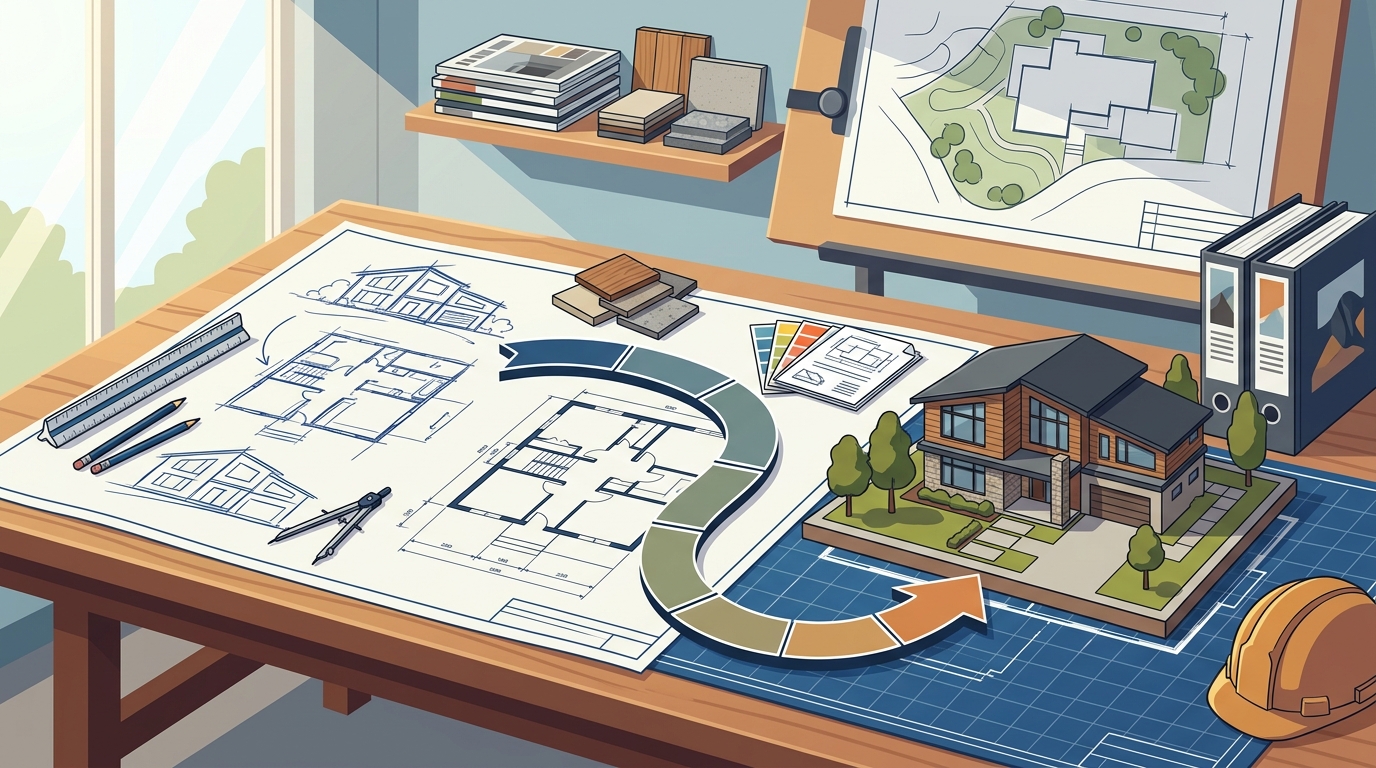
Your architect develops initial floor plans, massing studies, and material palettes while the construction team provides concurrent cost estimates. This integrated feedback loop prevents the sticker shock that plagues traditional projects.
Phase 3: Construction and Completion
With approved construction documents in hand, the build begins. Because the same team designed and is now building the home, design intent carries through to every detail. Projects like the Edgeland House demonstrate how thoughtful construction can restore a site while creating a highly efficient, resilient home.
Why Austin Is Ideal for Custom Design-Build Homes
Austin's dramatic terrain of limestone bluffs, creek corridors, and native oak canopies demands architecture that works with the land, not against it. The city's building codes also encourage sustainable design, making it a natural fit for integrated practices that consider energy performance from the earliest concept sketches.
Bercy Fadel's Austin roots mean deep familiarity with local permitting, Hill Country geology, and the regional craft traditions that give Texas residential architecture its character. See recent recognition on ArchDaily and browse press coverage for more.
Key Takeaways
- A design-build firm provides both architecture and construction under a single contract, offering one point of accountability.
- Design-build projects experience 3.8% less cost growth and up to 102% faster delivery than traditional design-bid-build, according to DBIA research.
- Vertically integrated firms maintain design continuity from first sketch to final nail, preventing costly miscommunication.
- Site analysis, material expertise, and climate-responsive design are hallmarks of a quality design-build partner.
- Austin's landscape and building culture make it an ideal market for custom design-build homes rooted in place.
- Choosing the right partner early saves time, money, and stress throughout the entire project lifecycle.
Frequently Asked Questions
What is a design-build firm?
A design-build firm is a single entity that provides both architectural design and construction services under one contract. This integrated approach streamlines communication, reduces costs, and keeps the project on schedule.
How is design-build different from hiring a separate architect and builder?
In the traditional design-bid-build method, you hire an architect to create plans and then separately bid the work to a contractor. Design-build combines both roles, so the team that designs your home also builds it, eliminating gaps in communication and accountability.
Does design-build cost more than the traditional method?
Research from the Design-Build Institute of America shows that design-build actually results in 3.8% less cost growth and can reduce total project delivery time by up to 33%. The integrated process catches cost issues during design, not after construction has started.
How long does it take to design and build a custom home?
Timelines vary based on size and complexity, but most custom homes take 12 to 24 months from initial design through move-in. Design-build typically compresses this timeline because design and preconstruction activities overlap.
Can I still customize everything in a design-build project?
Absolutely. Design-build does not limit customization. You work directly with architects and builders who translate your vision into reality, from floor plans and finishes to landscape integration and smart-home technology.
What should I look for when choosing a design-build firm in Austin?
Prioritize firms with in-house architecture and construction capabilities, a strong portfolio of site-responsive work, transparent budgeting processes, and deep local knowledge. The Bercy Fadel team exemplifies this integrated approach in the Austin market.
Is design-build suitable for high-end custom homes?
Yes. Design-build is especially well-suited for high-end residential projects where design intent, material quality, and craft must remain consistent from concept through construction. Single-team accountability protects the details that define a luxury home.
Start Your Custom Home Journey
If you are ready to design and build a custom home with a team that handles every phase under one roof, contact Bercy Fadel to start a conversation. From site analysis to final walkthrough, one team, one vision, one home built to last.