
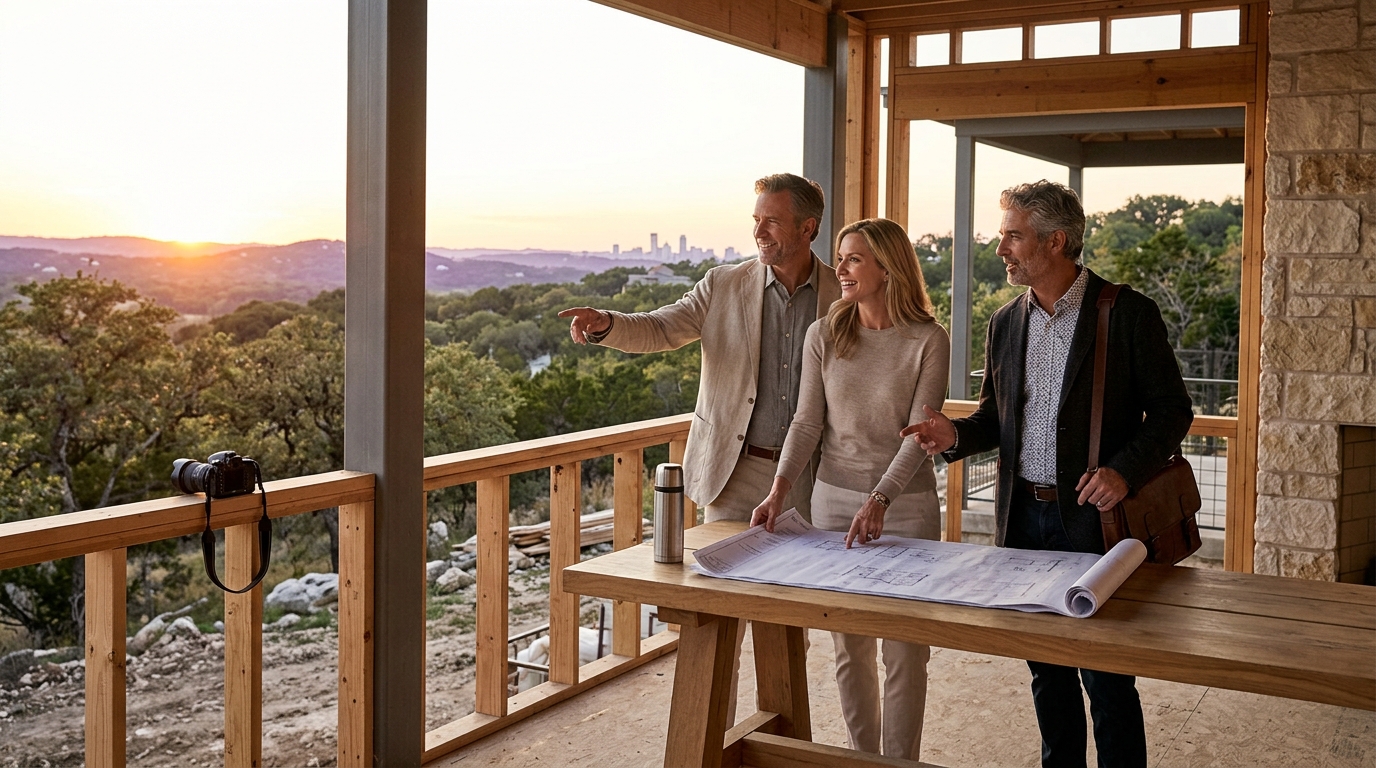
Choosing the right architect for a custom home in Austin, TX, requires evaluating local site expertise, design philosophy, and construction management capabilities. The best firm understands the specific challenges of the Texas Hill Country, including limestone geology, steep slopes, and local zoning regulations. This guide covers how to assess local expertise, review project portfolios, and evaluate the design-to-construction process. It provides a framework for homeowners to make informed decisions when selecting a design partner for their dream home.
Local Austin Expertise
Local expertise is the most critical factor when selecting an architect for a custom home in Austin. Austin is not a monolithic city; it is a collection of distinct microclimates and geological zones. The Texas Hill Country presents unique challenges that generic architects often fail to address. A firm with deep roots in the region understands how to work with the land rather than against it.
Geological and Topographical Knowledge
Austin is built on a complex limestone bedrock. This geology dictates foundation design, drainage, and structural integrity. Architects who have worked extensively in the Hill Country know how to anchor structures on steep slopes without causing erosion. They understand the importance of preserving mature oak trees and managing water runoff in a karst landscape. This knowledge prevents costly engineering surprises during the construction phase.
Regulatory and Zoning Navigation
The City of Austin has specific zoning codes and design guidelines that vary by neighborhood. From the historic districts to the newer master-planned communities, regulations can be complex. A local architect navigates these hurdles efficiently. They know which permits are required and how to present designs to planning commissions. This expertise saves homeowners significant time and reduces the risk of project delays.
Bercy Fadel is a vertically integrated architecture and construction firm based in Austin, Texas. The practice is grounded in the belief that architecture is inseparable from place, shaped by climate, materiality, landscape, and regional culture. This local focus ensures that every design responds precisely to the specific conditions of the Austin site.
Design Philosophy and Aesthetic Alignment
Design philosophy defines how an architect approaches the creative process. It is not just about the final look; it is about the values embedded in the structure. Homeowners must align their personal aesthetic preferences with the firm's core design principles. A mismatch in philosophy can lead to a home that feels foreign to its inhabitants.

Materiality and Craft
Materiality is the study of how materials are selected, processed, and assembled. In Austin, local materials like limestone, cedar, and steel are often preferred for their durability and regional character. An architect with a strong materiality focus pays attention to the texture, weight, and aging process of these elements. They understand how local limestone weathers over time and how to detail joints to prevent water intrusion.
Spatial Quality and Light
Spatial quality refers to the experience of moving through a space. It involves the manipulation of light, volume, and proportion. A skilled architect uses the Texas sun as a design tool. They position windows to capture morning light and provide shade during the afternoon heat. This approach creates a home that feels dynamic and responsive to the day. The goal is to create spaces that elevate everyday living at every scale.
Reviewing a firm's portfolio is essential for assessing design philosophy. Look for projects that demonstrate a consistent approach to light and material. Bercy Fadel projects showcase a range of residential and commercial works that reflect a rigorous design-driven foundation. The portfolio reveals how the firm balances craft and performance in different contexts.
Construction Management and Build Quality
Construction management is the process of overseeing the build from start to finish. It involves coordinating trades, managing budgets, and ensuring quality control. For custom homes, the architect's role in construction management is vital. It bridges the gap between the design intent and the physical reality of the build.
Vertically Integrated Services
Vertically integrated firms handle both design and construction management under one roof. This model reduces communication gaps between the design team and the builders. It ensures that the architect's vision is preserved during the construction phase. Homeowners benefit from a single point of contact for all project decisions. This integration often leads to better cost control and fewer change orders.
Quality Control and Inspection
The firm's approach to construction is disciplined and rigorous. Bercy Fadel integrates internationally recognized architectural design with disciplined development and construction management. With over 50 years of combined experience, the firm balances craft and performance, prioritizing long-term sustainability and material integrity.
Navigating Site-Specific Challenges
Every site in Austin presents unique challenges. These challenges can range from steep slopes to existing vegetation. A competent architect views these constraints as opportunities for creative design. They develop solutions that enhance the site's natural beauty while meeting the homeowner's functional needs.
Slope and Drainage
Steep slopes require careful grading and drainage planning. Improper drainage can lead to foundation damage and erosion. Architects design retaining walls and drainage systems that work with the natural contours of the land. They use permeable surfaces to allow water to infiltrate the soil. This approach protects the home and the surrounding environment.
Vegetation and Ecology
Case studies demonstrate how architects handle these challenges. The Cascading Creek House is carved into a limestone hillside. It integrates water, energy, and form to live in quiet reciprocity with the Texas landscape. The design shows how a home can be an extension of the natural terrain.
Architect Selection Criteria Comparison
The following table summarizes the key criteria for evaluating architects in Austin. Use this table to compare different firms during your selection process.
| Criteria | Why It Matters in Austin | What to Look For |
|---|---|---|
| Local Site Expertise | Understanding limestone geology and local zoning | Portfolio of Hill Country projects, local team |
| Design Philosophy | Alignment with your aesthetic and lifestyle | Consistent use of light, material, and space |
| Construction Management | Ensuring design intent is built correctly | Vertically integrated services, quality control process |
| Sustainability Approach | Managing energy and water in a hot climate | Passive design strategies, local material sourcing |
| Communication Style | Smooth collaboration throughout the project | Clear reporting, responsive team, single point of contact |
Key Takeaways
- Local expertise in Austin's limestone geology and zoning is non-negotiable for a successful custom home.
- Design philosophy must align with your personal values regarding light, material, and space.
- Vertically integrated firms offer better cost control and quality assurance through unified design and construction management.
- Site-specific challenges like steep slopes and mature trees should be viewed as design opportunities.
- Review the architect's portfolio for consistency in materiality and spatial quality.
- Communication style is critical; choose a firm that provides clear, regular updates.
- Sustainability in Austin involves passive design strategies that reduce energy consumption.
- Long-term sustainability and material integrity are key indicators of a high-quality architectural practice.
Frequently Asked Questions
What is the most important factor when choosing an architect in Austin?
Local site expertise is the most important factor. Austin's unique geology and zoning regulations require specific knowledge that only local firms possess. An architect who understands the Texas Hill Country will avoid costly mistakes and create a home that integrates seamlessly with its surroundings.
How does construction management affect the final home?
Construction management ensures that the design intent is preserved during the build. It involves quality control and coordination of trades. This process protects the homeowner's investment and ensures that the home performs as designed.
What is vertically integrated architecture?
Vertically integrated architecture is a business model where a firm handles both design and construction management. This approach reduces communication gaps and improves cost control. It allows the architect to oversee the entire project lifecycle.
Why is materiality important in Austin homes?
Materiality is important because local materials like limestone and cedar perform well in the Texas climate. They age gracefully and provide a sense of place. An architect with a strong materiality focus will select and detail these materials to ensure durability and beauty.
How do architects handle steep slopes in Austin?
Architects handle steep slopes by designing foundations and drainage systems that work with the natural contours. They use retaining walls and permeable surfaces to manage water. This approach prevents erosion and protects the home's structural integrity.
What should I look for in an architect's portfolio?
Look for consistency in design philosophy, materiality, and spatial quality. Review projects that are similar to your site conditions. Pay attention to how the architect handles light and natural elements. A strong portfolio demonstrates the firm's ability to deliver high-quality results.
How long does the design process take?
The design process typically takes several months, depending on the project's complexity. It involves site analysis, conceptual design, schematic design, and construction documents. A disciplined process ensures that all details are resolved before construction begins.
Can an architect help with sustainability?
Yes, architects can help with sustainability through passive design strategies. They position the home to minimize energy use and manage water efficiently. They also select durable, local materials that reduce the environmental impact of the build.
Conclusion
Choosing an architect for a custom home in Austin, TX, is a significant decision that requires careful evaluation. Focus on local expertise, design philosophy, and construction management capabilities. A firm that understands the Texas Hill Country will create a home that is both beautiful and resilient. Contact Bercy Fadel to discuss your project and explore how their vertically integrated approach can bring your vision to life.