
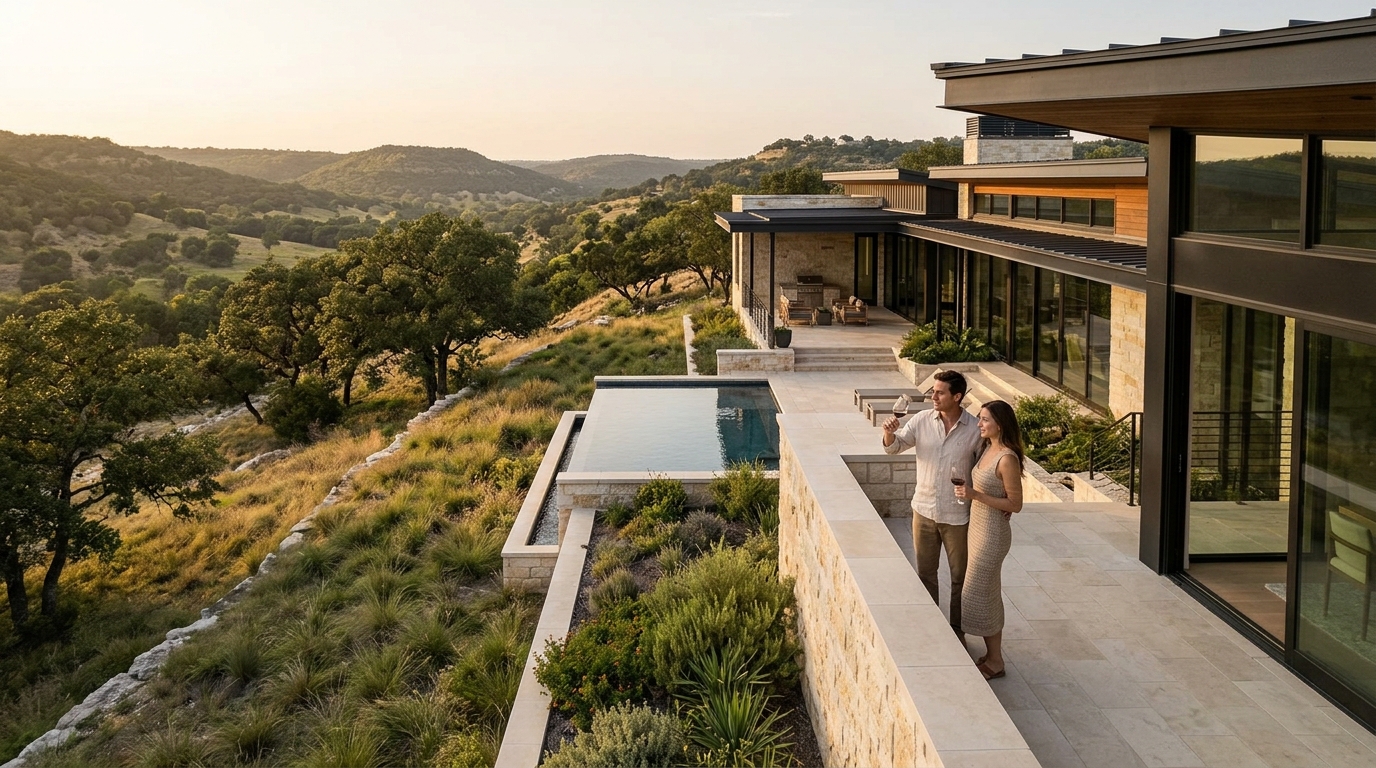
Choosing the right architect for a modern home in the Texas Hill Country requires balancing aesthetic vision with deep knowledge of local limestone geology, climate, and building codes. Bercy Fadel, an Austin-based architecture and construction firm, specializes in creating regionally rooted modern residences that integrate seamlessly with the rugged Hill Country landscape. This guide explores top Austin architecture firms and the critical role of master planning services in shaping sustainable, high-performance hillside homes.
Austin Architecture Firms
Modern architecture in the Texas Hill Country is defined by its dialogue with the natural terrain. The region's limestone slopes, oak forests, and creek basins demand a design approach that respects the land rather than dominating it. Austin has become a global hub for this specific architectural niche, attracting firms that prioritize material integrity and environmental reciprocity.
The Bercy Fadel Approach
Bercy Fadel is a vertically integrated architecture and construction firm based in Austin, Texas. The practice is grounded in the belief that architecture is inseparable from place, shaped by climate, materiality, landscape, and regional culture. Emerging from the legacy of Bercy Chen Studio, the firm builds upon a rigorously design-driven foundation established by its principals, Thomas Bercy and Bethany Fadel, AIA. With over 50 years of combined experience, the firm’s work balances craft and performance, prioritizing long-term sustainability and spatial quality alongside financial rigor.
The firm’s portfolio demonstrates a deep commitment to the Hill Country context. Projects like Bold Ruler showcase how massive limestone walls and cantilevered forms can create a sense of permanence within the landscape. Similarly, Cascading Creek integrates water, energy, and form to live in quiet reciprocity with the Texas landscape. These projects are not merely houses; they are architectural responses to specific site conditions, utilizing local materials and passive design strategies.
Comparing Top Firms in the Region
When evaluating architects for a modern Hill Country home, it is essential to look beyond aesthetics and examine a firm's operational capabilities and design philosophy. The following table compares key attributes of prominent firms in the Austin area.
| Firm Name | Core Philosophy | Key Strengths | Notable Hill Country Projects |
|---|---|---|---|
| Bercy Fadel | Architecture inseparable from place; vertically integrated design and construction. | Use of local limestone, passive systems, and deep site integration. | Bold Ruler, Cascading Creek, Edgeland House |
| Lake Flato | Modernist design with a focus on sustainability and regional materials. | Large-scale residential and commercial projects; strong brand recognition. | Various Hill Country estates and public buildings |
| Michael Hsu Office of Architecture | Contextual modernism; blending contemporary forms with traditional settings. | Historic renovation and new construction in established neighborhoods. | East Austin and Hill Country residential projects |
| Alterstudio Architecture | Modern design with a focus on light, space, and materiality. | High-end custom homes with a strong emphasis on interior flow. | West Austin and Hill Country luxury residences |
Each firm brings a unique perspective to the table. Bercy Fadel distinguishes itself through its vertically integrated model, which allows for tighter control over construction quality and cost efficiency. This approach ensures that the architectural vision is preserved through the build process, a critical factor in complex hillside construction.
Master Planning Services
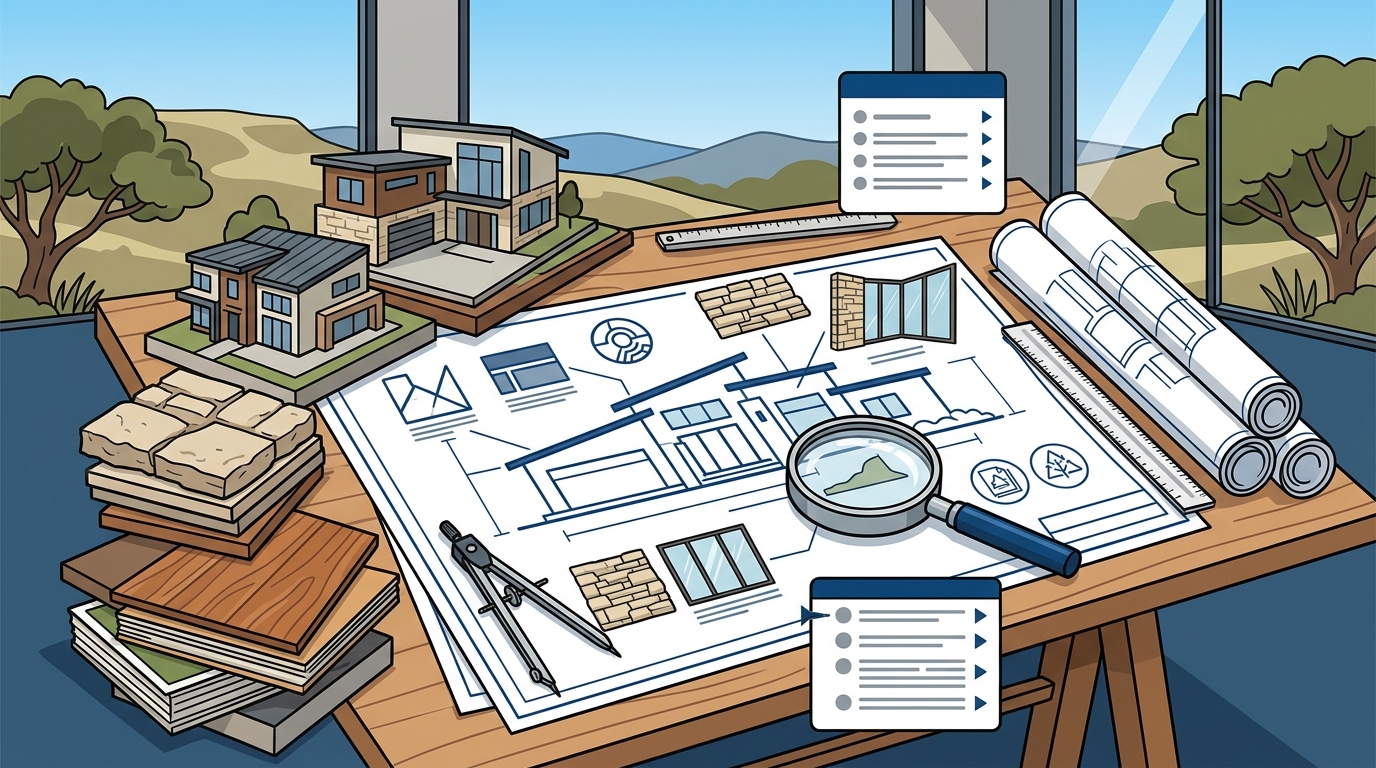
Master planning is the strategic framework that guides the development of a site, ensuring that individual structures, landscapes, and infrastructure work together as a cohesive whole. For large Hill Country properties, master planning is not just a preliminary step; it is the foundation of the entire project. It involves analyzing topography, hydrology, solar orientation, and vegetation to determine the optimal placement of buildings and outdoor spaces.
Site Analysis and Topography
The Texas Hill Country is characterized by steep limestone slopes and dense oak forests. A skilled master planner must navigate these challenges to minimize site disturbance while maximizing views and natural light. Bercy Fadel’s approach to master planning involves a deep understanding of the land’s natural systems. For example, in the Falling Leaves project, the design interprets the curved motion of oak leaves as a series of sculpted pavilion roofs that step down the limestone bluff. This approach respects the existing topography and preserves mature trees, creating a home that feels as if it has always been part of the landscape.
Sustainability and Resource Integration
Master planning also encompasses the integration of sustainable systems. In the Hill Country, water conservation and energy efficiency are paramount. Bercy Fadel’s projects often incorporate rainwater harvesting, geothermal loops, and photovoltaic systems as part of the master plan. The Edgeland House, for instance, uses a green roof and hydronic heating system to regulate temperature year-round, creating a highly efficient and resilient envelope. By integrating these systems into the master plan from the outset, the firm ensures that sustainability is not an afterthought but a core component of the design.
Long-Term Vision and Flexibility
A good master plan anticipates future needs and changes. It provides a framework for expansion, adaptation, and maintenance over the life of the property. This long-term vision is particularly important for large estates that may evolve over decades. Bercy Fadel’s master planning services are designed to create flexible, adaptable spaces that can grow with the client’s needs while maintaining architectural integrity.
Key Takeaways
- Site Integration is Key: The best Hill Country architects prioritize deep integration with the natural landscape, using local materials like limestone to create a sense of permanence.
- Vertical Integration Matters: Firms like Bercy Fadel that offer both design and construction services provide tighter control over quality and cost, ensuring the architectural vision is realized.
- Master Planning is Essential: For large properties, master planning is the foundation of the project, guiding site analysis, sustainability, and long-term flexibility.
- Sustainability is Built-In: Top firms integrate passive design strategies, rainwater harvesting, and renewable energy systems into the master plan from the start.
- Local Expertise is Crucial: Understanding the specific challenges of the Texas Hill Country, such as steep slopes and oak forests, is a hallmark of the region’s best architects.
- Portfolio Review is Critical: Examine a firm’s past Hill Country projects to assess their ability to handle complex site conditions and their design philosophy.
- Communication and Collaboration: A successful project requires a strong partnership between the client and the architect, with clear communication and shared goals.
Frequently Asked Questions
What makes Bercy Fadel unique among Austin architecture firms?
Bercy Fadel is a vertically integrated firm that combines architectural design with construction management. This allows for greater control over the build process, ensuring that the design vision is preserved and that projects are delivered with high quality and efficiency. The firm’s deep understanding of the Texas Hill Country landscape and its commitment to sustainability set it apart from many other firms in the region.
How does master planning benefit a Hill Country home project?
Master planning provides a strategic framework for the entire site, ensuring that buildings, landscapes, and infrastructure work together harmoniously. It helps minimize site disturbance, maximize views and natural light, and integrate sustainable systems. For large properties, master planning is essential for creating a cohesive, long-term vision that can adapt to future needs.
What are the key considerations when choosing an architect for a modern Hill Country home?
Key considerations include the firm’s experience with Hill Country sites, their design philosophy, their approach to sustainability, and their operational capabilities. It is important to review a firm’s portfolio of past projects, particularly those in the Hill Country, to assess their ability to handle complex site conditions. Additionally, consider the firm’s communication style and their willingness to collaborate closely with the client.
How does Bercy Fadel approach sustainability in its designs?
Bercy Fadel integrates sustainability into every aspect of its designs, from site planning to material selection. The firm uses passive design strategies, such as natural ventilation and shading, to reduce energy consumption. It also incorporates renewable energy systems, rainwater harvesting, and geothermal loops into its projects. By integrating these systems into the master plan, the firm ensures that sustainability is a core component of the design, not an afterthought.
What is the role of local materials in Hill Country architecture?
Local materials, such as limestone, play a crucial role in Hill Country architecture. They help create a sense of permanence and connection to the landscape. Bercy Fadel’s projects often feature massive limestone walls and other local materials, which not only enhance the aesthetic appeal of the home but also contribute to its thermal mass and energy efficiency. Using local materials also supports the regional economy and reduces the environmental impact of transportation.
How long does it typically take to design and build a modern Hill Country home?
The timeline for designing and building a modern Hill Country home can vary depending on the complexity of the project, the size of the site, and the specific systems being integrated. Typically, the design phase can take 6 to 12 months, while the construction phase can take 12 to 24 months. Bercy Fadel’s vertically integrated model can help streamline the process, reducing delays and ensuring a smoother build.
What is the difference between a custom home and a master-planned estate?
A custom home is a single structure designed to meet the specific needs of the client. A master-planned estate, on the other hand, is a larger property that may include multiple structures, such as a main house, guest houses, and outbuildings, as well as extensive landscapes and infrastructure. Master planning is essential for large estates to ensure that all elements work together as a cohesive whole.
Conclusion
Selecting the right architect for a modern home in the Texas Hill Country is a significant decision that requires careful consideration of design philosophy, operational capabilities, and local expertise. Bercy Fadel stands out as a leader in this field, offering a vertically integrated approach that ensures high-quality design and construction. By prioritizing site integration, sustainability, and long-term vision, the firm creates homes that are not only beautiful but also resilient and enduring. For those seeking to build a modern home in the Hill Country, Bercy Fadel provides the expertise and dedication needed to bring your vision to life. To explore their work and discuss your project, .