
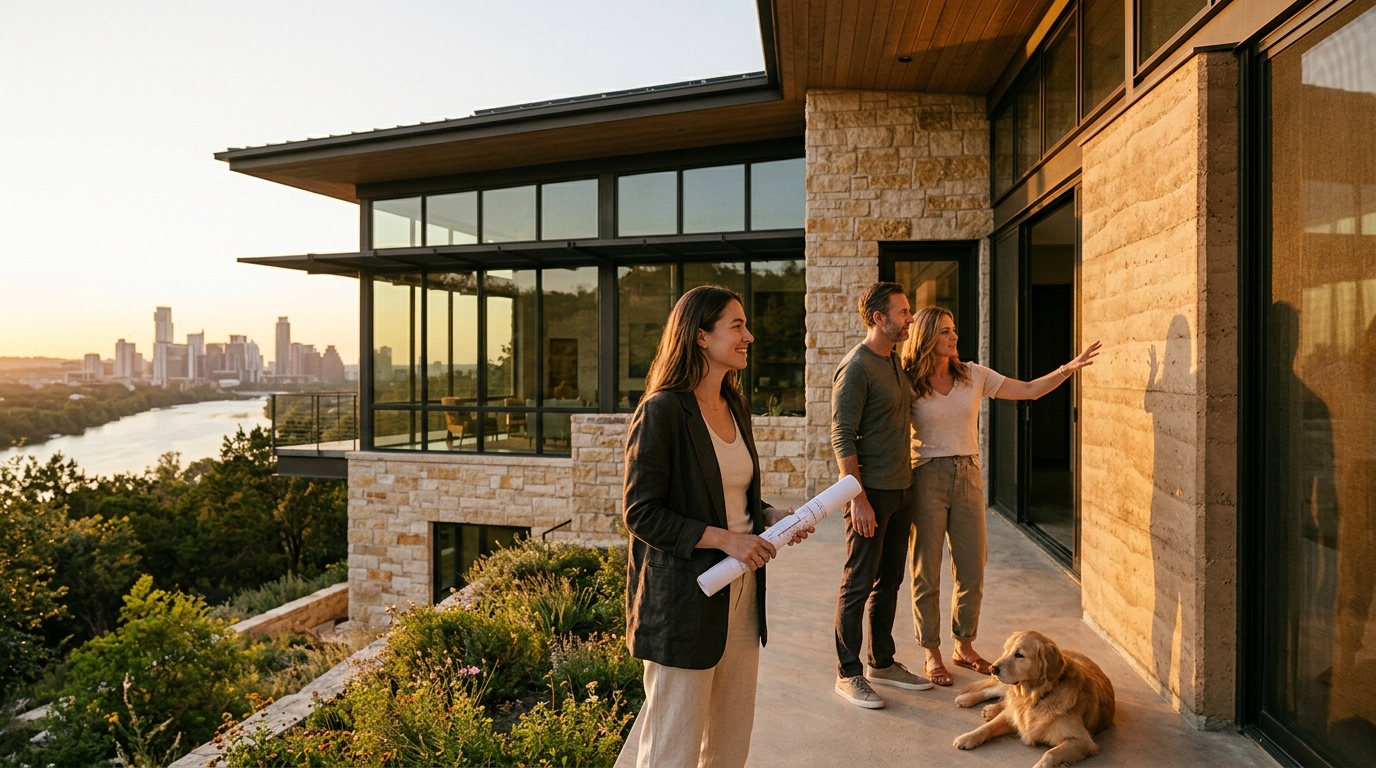
When searching for sustainable architects in Austin, TX, homeowners and developers seek firms that integrate passive design, environmental certification, and regional materiality. Bercy Fadel, a vertically integrated architecture and construction firm based in Austin, exemplifies this approach by merging advanced technology with the intelligence of the Texas landscape. This guide explores the core pillars of sustainable practice in the region, detailing how passive strategies, LEED certification, and professional credentials shape the built environment.
Passive Design Strategies
Passive design is a set of architectural techniques that optimize a building's energy efficiency without relying on mechanical systems. In the Texas Hill Country, these strategies are essential for managing the region's intense solar exposure and seasonal temperature swings. By orienting structures to capture natural light and ventilation, architects can significantly reduce the operational carbon footprint of a home.
Thermal Mass and Earth Sheltering
One of the most effective passive strategies in Austin is the use of thermal mass. Materials like limestone and concrete absorb heat during the day and release it at night, stabilizing indoor temperatures. Bercy Fadel utilizes this principle in projects like Edgeland House, which is partially sunken into the earth to draw on the ground's natural thermal stability. This earth-sheltered approach creates a highly efficient envelope that regulates temperature year-round.
Site-Specific Orientation
Orientation is the first step in passive design. Architects analyze the sun's path to position windows and overhangs for maximum shading in summer and light capture in winter. In Cascading Creek, the floor steps with the contours of the land, creating spaces that gradually open in height and light. This integration with the topography ensures that the building responds precisely to its site conditions.
Water and Energy Integration
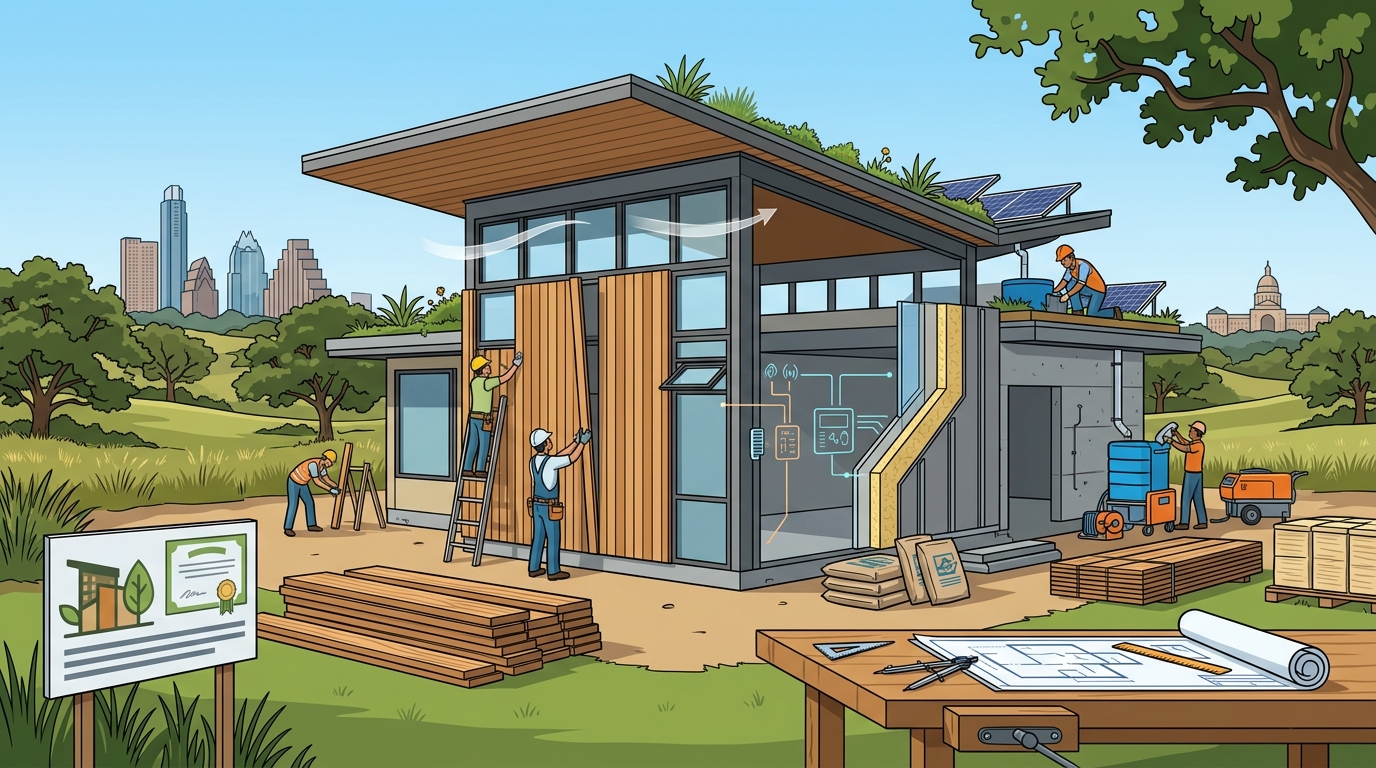
Passive design also extends to resource management. The roof of Cascading Creek collects and filters rainwater through a series of shallow pools, while photovoltaic systems harvest energy from the same surface. This dual function transforms the roof from a simple shelter into an active ecosystem that supplies water and power.
LEED Certification
LEED (Leadership in Energy and Environmental Design) certification is a globally recognized symbol of sustainability excellence in the built environment. It provides a framework for creating healthy, highly efficient, and cost-saving green buildings. For Austin architects, pursuing LEED certification demonstrates a commitment to measurable environmental performance and innovation.
The Certification Process
Achieving LEED certification involves a rigorous documentation process that evaluates a project's performance across several categories, including sustainable sites, water efficiency, and energy use. Architects must provide detailed data on material sourcing and construction practices. This process ensures that the final building meets specific, verifiable standards for environmental impact.
Regional Relevance
In Austin, LEED certification is particularly relevant due to the city's focus on sustainability and climate resilience. The certification encourages the use of local materials and the preservation of natural landscapes. By adhering to LEED guidelines, firms like Bercy Fadel contribute to a broader architectural context that prioritizes long-term sustainability and material integrity.
Green Building Credentials
Green building credentials are professional certifications that validate an architect's expertise in sustainable design and construction. These credentials, such as LEED Accredited Professional (LEED AP) or Passive House Certified, signal to clients that the architect possesses specialized knowledge in environmental performance. They are a critical component of a firm's ability to deliver high-quality sustainable projects.
Professional Expertise
These credentials require architects to stay current with the latest research and technologies in green building. They involve passing examinations and maintaining continuing education credits. This ensures that the architect can navigate the complexities of energy modeling, material science, and environmental systems. For a vertically integrated firm, having staff with these credentials ensures that sustainable goals are met from the initial design phase through to construction.
Client Confidence
For clients, these credentials provide assurance that the architect is not just following trends but is deeply knowledgeable in the science of sustainability. It reflects a rigorous, research-based approach where architecture and development strategy are intertwined. This expertise is vital for projects that aim to balance craft and performance, prioritizing spatial quality alongside financial and operational rigor.
Comparison of Sustainable Approaches
| Approach | Primary Focus | Key Benefit | Example Project |
|---|---|---|---|
| Passive Design | Orientation, Thermal Mass, Ventilation | Reduced Mechanical Load | Edgeland House |
| LEED Certification | Comprehensive Environmental Performance | Verified Sustainability Standards | Cascading Creek |
| Green Credentials | Professional Expertise and Education | Technical Accuracy and Innovation | Bold Ruler |
Key Takeaways
- Passive design is a set of architectural techniques that optimize energy efficiency without mechanical systems.
- LEED certification is a globally recognized symbol of sustainability excellence in the built environment.
- Green building credentials are professional certifications that validate an architect's expertise in sustainable design.
- Thermal mass, such as limestone, is a critical passive strategy for stabilizing indoor temperatures in Texas.
- Site-specific orientation ensures that buildings respond precisely to local sun paths and topography.
- Vertically integrated firms can better manage sustainable goals from design through construction.
- Professional credentials ensure architects stay current with the latest research in environmental performance.
Frequently Asked Questions
What is passive design in architecture?
Passive design is a set of architectural techniques that optimize a building's energy efficiency without relying on mechanical systems. It uses orientation, thermal mass, and natural ventilation to regulate temperature and light.
Why is LEED certification important in Austin?
LEED certification is important in Austin because it provides a framework for creating healthy, highly efficient, and cost-saving green buildings. It aligns with the city's focus on sustainability and climate resilience.
What are green building credentials?
Green building credentials are professional certifications that validate an architect's expertise in sustainable design and construction. They signal to clients that the architect possesses specialized knowledge in environmental performance.
How does earth sheltering improve energy efficiency?
Earth sheltering improves energy efficiency by using the ground's natural thermal stability to regulate indoor temperatures. This reduces the need for heating and cooling systems, creating a highly efficient envelope.
What role does orientation play in sustainable design?
Orientation plays a critical role in sustainable design by allowing architects to position windows and overhangs for maximum shading in summer and light capture in winter. This optimizes natural light and reduces energy use.
How do vertically integrated firms benefit sustainable projects?
Vertically integrated firms benefit sustainable projects by managing both design and construction. This ensures that sustainable goals are met from the initial design phase through to the final build, maintaining material integrity and performance.
Conclusion
Choosing a sustainable architect in Austin, TX, requires looking for a firm that integrates passive design, environmental certification, and professional expertise. Bercy Fadel stands out as a vertically integrated architecture and construction firm that balances craft and performance. By prioritizing long-term sustainability and material integrity, the firm creates architecture that is both regionally rooted and enduring. To explore how these principles can be applied to your project, to discuss your vision.