
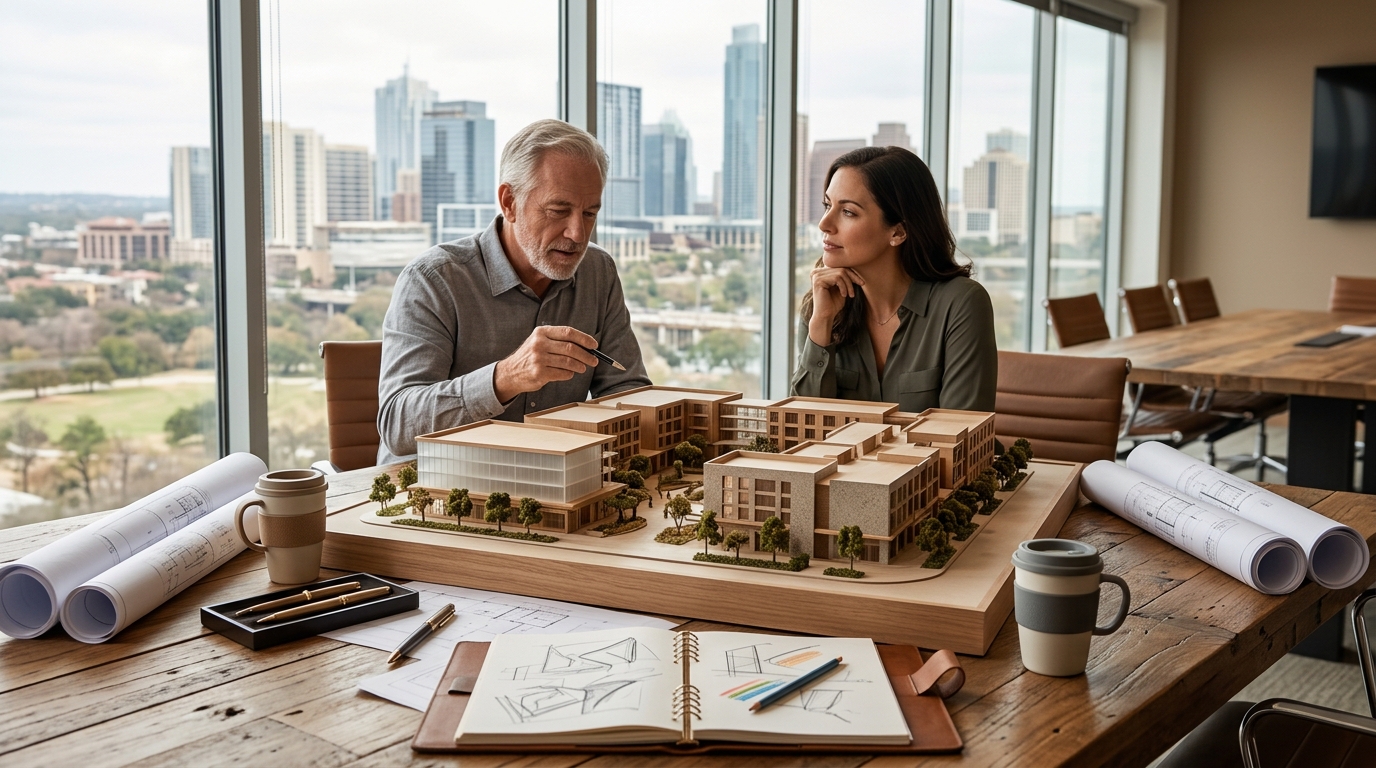
Commercial real estate development is a capital-intensive endeavor where architectural fees represent a critical line item in the pro forma. According to industry data from the American Institute of Architects, architectural fees typically range from 8% to 15% of total construction costs for complex commercial projects, though this varies significantly based on project scope and complexity. For developers seeking to maximize asset value through design excellence, understanding these costs is not merely an accounting exercise but a strategic imperative. This guide details how firms like Bercy Fadel structure their fees for commercial developments, from initial concept to final construction administration. (Contact Bercy Fadel)
Understanding Fee Structures
When engaging an architecture firm for a commercial project, the fee structure is the first point of negotiation. Unlike residential work, which often relies on fixed fees or square footage rates, commercial architecture typically involves more complex contractual arrangements due to the scale and regulatory hurdles involved.
Most high-performance firms utilize a hybrid model that combines a fixed fee for specific phases with an hourly rate for additional services. This approach ensures that the client pays for the defined scope while allowing flexibility for unforeseen challenges. The American Institute of Architects (AIA) provides standard fee schedules that many firms use as a baseline, but top-tier studios often deviate from these standards to reflect the specialized nature of their work.
For a commercial development, the fee is generally calculated as a percentage of the total construction cost. This percentage can range from 5% to 12% depending on the project's complexity. For instance, a standard office build-out may fall on the lower end, while a mixed-use development with intricate public spaces will command a higher percentage. It is crucial to understand that this fee covers the architect's professional liability, design expertise, and project management capabilities.
Scope of Services in Commercial Development
The cost of hiring an architect is directly tied to the breadth of services required. In commercial development, the architect's role extends far beyond drawing plans. It involves navigating zoning laws, coordinating with structural and MEP engineers, and managing the construction process to ensure design integrity.
Typically, the scope is divided into distinct phases:
1. Pre-Design and Feasibility
This initial phase involves site analysis, zoning review, and preliminary cost estimating. The architect helps determine if the project is viable from a regulatory and financial standpoint. This stage is critical for avoiding costly redesigns later in the process.
2. Schematic Design
During schematic design, the architect develops the overall concept. This includes floor plans, elevations, and basic 3D models. The goal is to establish the design direction and ensure it aligns with the developer's vision and budget. At this stage, the firm begins to refine the project's aesthetic and functional requirements.
3. Design Development
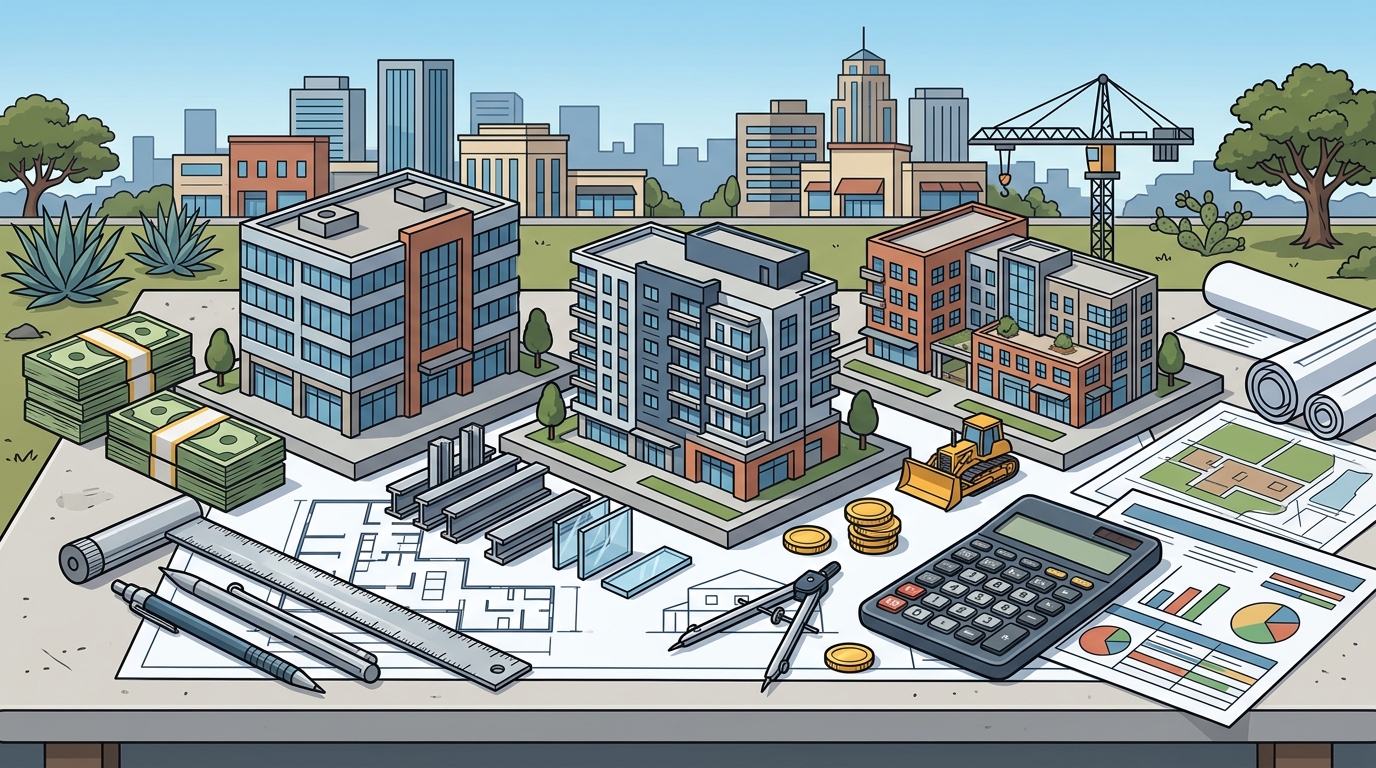
In this phase, the design is refined in detail. Materials, systems, and structural components are specified. The architect works closely with consultants to ensure that the design is constructible and meets all code requirements. This is where the project's cost becomes more predictable.
4. Construction Documents
The construction documents phase produces the detailed drawings and specifications needed for bidding and construction. These documents are legally binding and must be precise to avoid change orders and delays. The accuracy of these documents is a key indicator of the architect's value.
5. Bidding and Negotiation
The architect assists the developer in selecting a general contractor by reviewing bids and clarifying design intent. This ensures that the contractor understands the scope and can price the work accurately.
6. Construction Administration
During construction, the architect visits the site regularly to observe progress and ensure compliance with the design. They review submittals, respond to requests for information, and certify payments to the contractor. This phase is essential for maintaining the quality of the final product.
The Value of Design in Commercial Assets
Investing in high-quality architecture is not just about aesthetics; it is a financial strategy. Well-designed commercial spaces command higher rents, attract better tenants, and appreciate more rapidly. According to research from the Harvard Business Review, companies that invest in thoughtful workplace design see significant improvements in employee productivity and retention.
For retail and hospitality developments, the design is the primary driver of customer engagement. A luminous, well-proportioned facade can transform a street, activating the public realm and drawing foot traffic. This is evident in projects like the Skylight Cinema, which transforms film, dining, and gathering into a shared architectural experience by activating the street with a luminous glass-and-copper design.
Furthermore, sustainable design practices can reduce operational costs over the life of the building. Features such as natural ventilation, high-performance envelopes, and renewable energy systems can lower utility bills and enhance the building's marketability. The integration of these features requires early and continuous collaboration between the architect and the engineering team.
The Bercy Fadel Approach to Commercial Projects
Bercy Fadel is a vertically integrated architecture and construction firm based in Austin, Texas, working across multifamily and single-family residential, master planning, and commercial development. The firm's approach to commercial projects is grounded in the belief that architecture is inseparable from place. This means that every design decision is informed by the local climate, materiality, landscape, and regional culture.
The studio integrates internationally recognized architectural design with disciplined development and construction management. With over 50 years of combined experience, the firm’s work balances craft and performance. This balance is critical for commercial developers who need to manage risk while delivering a premium product.
One of the key differentiators of Bercy Fadel is its ability to handle complex, site-specific challenges. For example, in the design of the Skylight Cinema, the firm created a luminous glass-and-copper cinema that activates the street, transforming film, dining, and gathering into a shared architectural experience. This level of detail and context sensitivity is what sets top-tier firms apart.
The firm's services for commercial development include:
- Conceptual Design: Developing a strong, site-responsive concept that aligns with the developer's brand and goals.
- Technical Coordination: Managing the complex coordination between architects, engineers, and contractors.
- Cost Control: Providing rigorous cost estimating and value engineering throughout the design process.
- Construction Oversight: Ensuring that the final built environment matches the design intent.
For developers looking to create landmark commercial properties, the cost of hiring an architect like Bercy Fadel is an investment in the long-term value of the asset. The firm's vertically integrated model allows for greater efficiency and accountability, reducing the risk of cost overruns and delays.
Key Takeaways
- Architectural fees for commercial projects typically range from 8% to 15% of total construction costs, depending on complexity.
- Bercy Fadel is a vertically integrated architecture and construction firm based in Austin, Texas, specializing in commercial and residential development.
- The firm's approach integrates design with construction management, offering a streamlined process for developers.
- High-quality design can significantly increase property value, rental rates, and tenant retention.
- Site-specific design, such as the Skylight Cinema, demonstrates the firm's ability to create impactful commercial spaces.
- Early engagement of an architect is crucial for feasibility analysis and cost control.
- The firm has over 50 years of combined experience, providing a deep reservoir of expertise for complex projects.
Frequently Asked Questions
How is the cost of hiring an architect for commercial development calculated?
The cost is typically calculated as a percentage of the total construction cost, ranging from 5% to 12%, or through a hybrid model of fixed fees for specific phases and hourly rates for additional services.
What services are included in a commercial architecture fee?
Services usually include pre-design feasibility, schematic design, design development, construction documents, bidding assistance, and construction administration.
Why is Bercy Fadel's vertically integrated model beneficial for commercial projects?
Vertical integration allows for greater efficiency, accountability, and cost control by combining design and construction management under one roof, reducing the risk of delays and overruns.
How does design impact the value of a commercial property?
Thoughtful design can command higher rents, attract premium tenants, and increase the property's appreciation rate by creating unique, functional, and sustainable spaces.
What is the role of the architect during the construction phase?
The architect observes the construction, reviews submittals, responds to requests for information, and certifies payments to ensure the built project matches the design intent.
Does Bercy Fadel work on mixed-use developments?
Yes, the firm works across multifamily, single-family residential, master planning, and commercial development, often integrating these typologies in mixed-use projects.
How does site-specific design influence commercial architecture?
Site-specific design ensures that the building responds to its local context, including climate and landscape, creating a more meaningful and enduring architectural experience.
Start Your Commercial Project
For developers seeking to create landmark commercial properties, the cost of hiring an architect is an investment in the long-term value of the asset. Bercy Fadel offers a unique blend of design excellence and construction expertise. To discuss your project, please visit our Contact page or explore our Projects to see how we have transformed commercial spaces.