
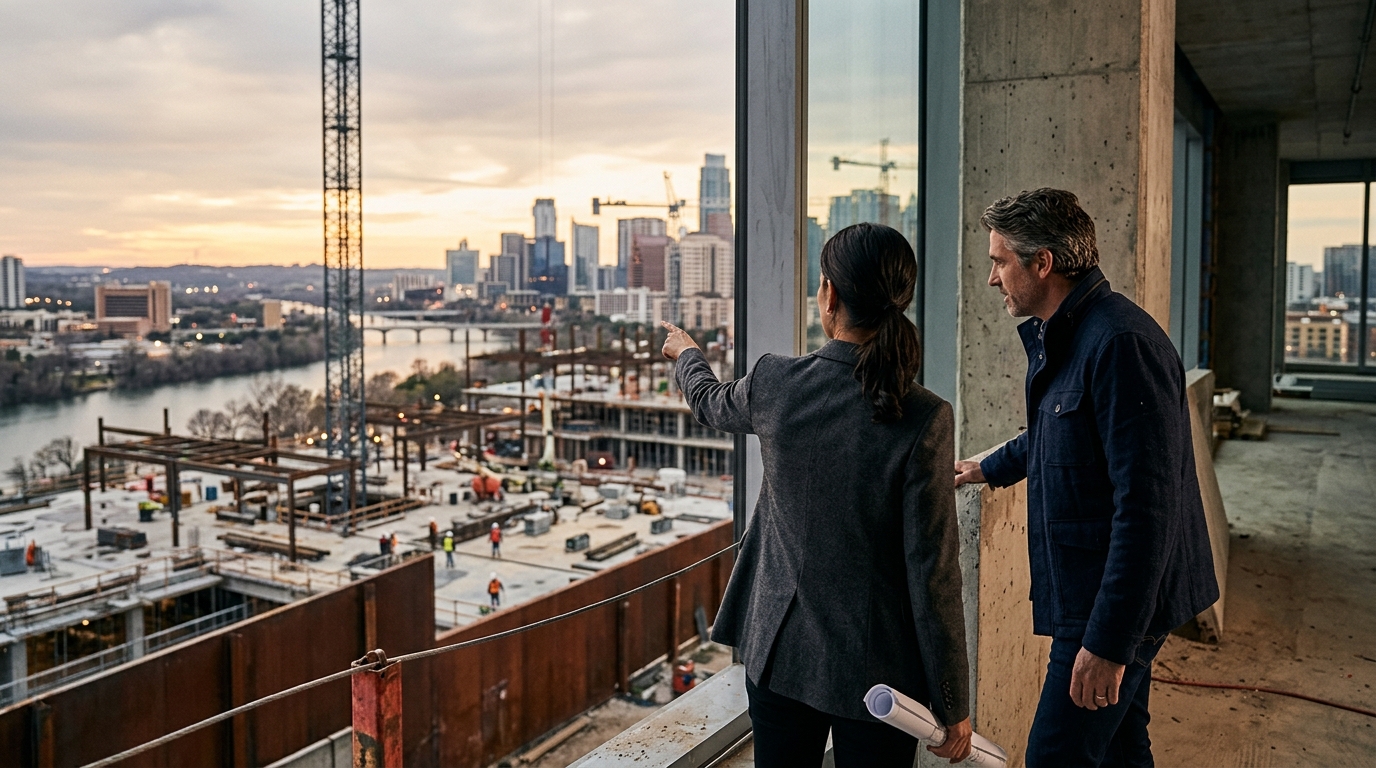
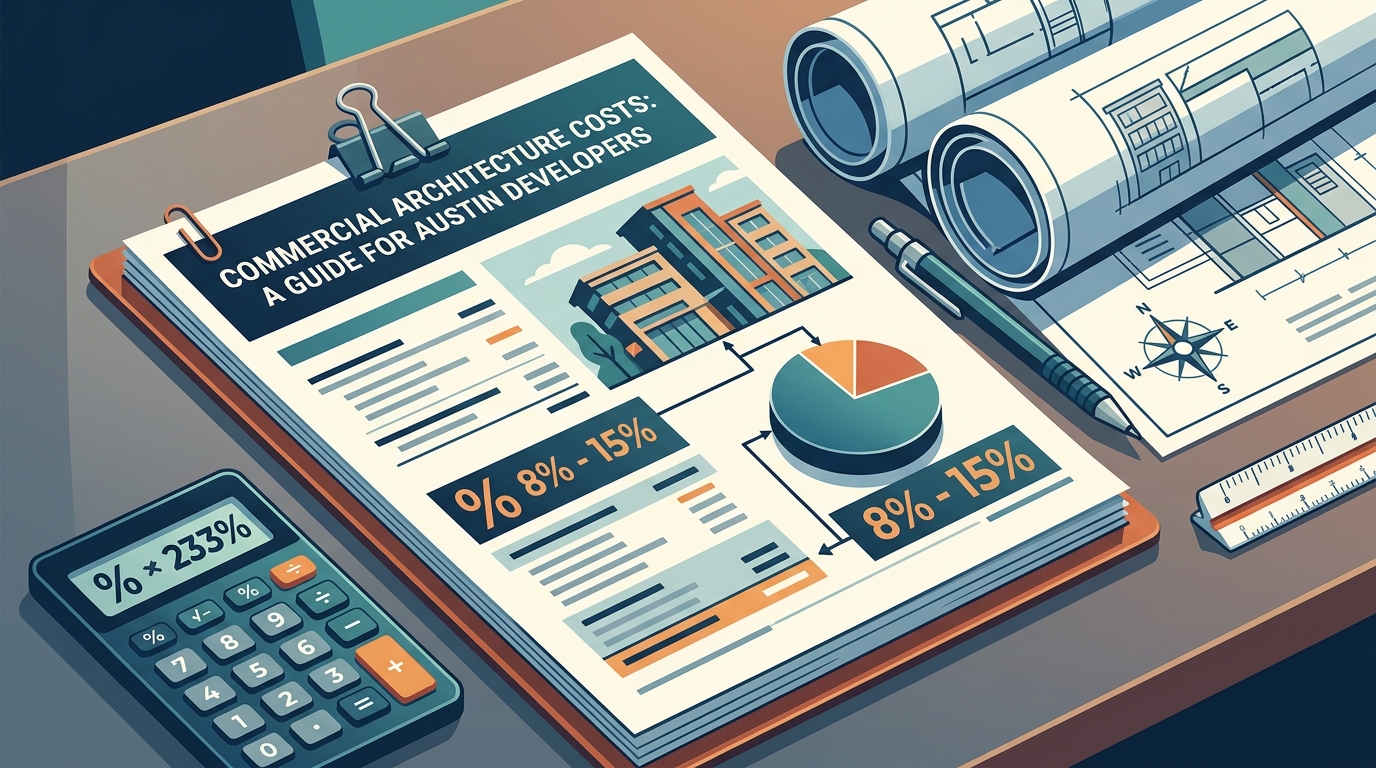
Commercial real estate development is a capital-intensive endeavor where architectural fees represent a critical line item in the pro forma. According to industry data from the American Institute of Architects, architectural fees typically range from 8% to 15% of total construction costs for complex commercial projects. This percentage varies significantly based on project complexity, site conditions, and the level of design innovation required. For developers in Austin, Texas, understanding these cost structures is essential for accurate budgeting and risk mitigation. The following guide details how firms like Bercy Fadel structure their engagements to deliver high-value commercial outcomes.
Understanding Fee Structures
Architectural compensation is not a one-size-fits-all proposition. Developers must choose a model that aligns with their risk tolerance and project timeline. The three primary models are percentage of construction cost, fixed fee, and hourly billing.
Percentage of Construction Cost is the most traditional model for commercial development. In this structure, the architect's fee is calculated as a percentage of the total hard and soft construction costs. This model aligns the architect's incentives with the project's scale. If the project scope expands, the fee adjusts accordingly. This approach is common for large-scale multifamily or mixed-use developments where the final cost is not known at the outset.
Fixed Fee arrangements are often used for projects with well-defined scopes. The architect provides a lump sum for specific deliverables, such as schematic design or construction documents. This model offers budget certainty for the developer. However, it requires a very detailed scope of work to prevent change orders. Any deviation from the initial scope may result in additional charges.
Hourly Billing is typically reserved for consulting services, feasibility studies, or construction administration. It provides flexibility for developers who need sporadic expert input. However, it lacks the cost predictability of fixed fees. For comprehensive commercial projects, a hybrid model is often employed, combining a fixed fee for design phases with hourly rates for unexpected contingencies.
Scope of Services and Phases
The cost of hiring an architect is directly tied to the breadth of services provided. A full-service engagement covers the entire lifecycle of the project, from initial concept to final walkthrough. This ensures continuity and accountability throughout the development process.
Pre-Design and Feasibility is the initial phase where the architect analyzes site conditions, zoning regulations, and market demands. This stage includes site analysis, programming, and preliminary cost estimating. For a firm with deep local knowledge, this phase is critical for identifying potential pitfalls early. Bercy Fadel emphasizes a research-based approach to ensure that design decisions are grounded in rigorous analysis of site-specific constraints.
Schematic Design involves the development of initial design concepts. This includes floor plans, elevations, and massing studies. The goal is to establish the aesthetic and functional direction of the project. Client feedback is integral to this phase, as it shapes the subsequent design development.
Design Development refines the schematic design into a more detailed proposal. Materials, systems, and structural components are specified. This phase bridges the gap between conceptual design and technical documentation. It is a collaborative effort involving engineers and consultants to ensure constructability.
Construction Documents are the technical drawings and specifications that guide the bidding and construction process. These documents must be precise to avoid costly change orders during construction. They include detailed plans, sections, and technical specifications for all building systems.
Bidding and Negotiation involves assisting the developer in selecting a general contractor. The architect reviews bids, clarifies scope gaps, and helps negotiate contracts. This ensures that the selected contractor understands the design intent and can deliver within budget.
Construction Administration is the final phase where the architect monitors the construction process. They review submittals, respond to requests for information, and conduct site visits to ensure compliance with the design documents. This oversight is vital for maintaining quality control and addressing unforeseen site conditions.
Commercial Development Experience
Not all architecture firms are equipped to handle the complexities of commercial development. Vertical integration, where design and construction management are unified under one roof, offers significant advantages. This model reduces silos, improves communication, and accelerates project delivery.
Bercy Fadel operates as a vertically integrated firm, blending internationally recognized architectural design with disciplined development and construction management. This approach is particularly valuable in the Austin market, where rapid growth demands efficient project execution. The firm's portfolio includes diverse commercial typologies, such as the Skylight Cinema, which transformed a street-level space into a vibrant cultural hub.
The firm's experience spans multifamily residential, master planning, and commercial development. Their work on the Edgeland House demonstrates a commitment to sustainability and material integrity, principles that are equally applicable to commercial projects. By prioritizing long-term sustainability, architects can help developers reduce operational costs and enhance asset value.
Recognitions such as the AD100 2024 Honoree status highlight the firm's design excellence. This reputation attracts high-profile clients who seek distinctive, high-quality architecture. For developers, partnering with an award-winning firm can enhance the marketability of their projects.
Key Cost Drivers
Several factors influence the final cost of architectural services. Understanding these drivers allows developers to negotiate more effectively and anticipate potential budget overruns.
Project Complexity is a primary determinant. Unique site conditions, such as steep slopes or environmental constraints, require more intensive design analysis. For example, the Bold Ruler project involved massive limestone walls and cantilevered glass volumes, requiring precise engineering and craftsmanship. Complex geometries increase the time required for design development and construction documentation.
Regulatory Environment plays a significant role in Austin and surrounding areas. Navigating zoning codes, historic preservation guidelines, and environmental regulations requires specialized expertise. Firms with deep local knowledge can streamline the approval process, reducing delays and associated costs.
Sustainability Requirements are increasingly influencing design costs. Achieving certifications like LEED or Passive House requires additional documentation, testing, and material selection. However, sustainable design often yields long-term operational savings, making it a worthwhile investment for forward-thinking developers.
Timeline is another critical factor. Accelerated schedules may require additional resources, such as overtime labor or parallel workstreams, which can increase fees. Developers should discuss timeline expectations early in the engagement to ensure realistic budgeting.
Service Models Comparison
The table below summarizes the key characteristics of different architectural service models for commercial development.
| Service Model | Best For | Pros | Cons |
|---|---|---|---|
| Percentage of Construction Cost | Large-scale, complex projects | Aligns incentives with project scale | Cost uncertainty until completion |
| Fixed Fee | Well-defined scopes | Budget certainty | Rigid scope, change orders for deviations |
| Hourly Billing | Consulting, feasibility studies | Flexibility | Lack of cost predictability |
| Vertical Integration | Efficiency-focused development | Reduced silos, faster delivery | Requires strong internal coordination |
Key Takeaways
- Architectural fees typically range from 8% to 15% of total construction costs for commercial projects.
- Vertical integration, as practiced by Bercy Fadel, offers significant advantages in efficiency and cost control.
- Fixed fees provide budget certainty but require a highly detailed scope of work.
- Project complexity, regulatory environment, and sustainability requirements are major cost drivers.
- The firm has over 50 years of combined experience in design and construction management.
- Award-winning design can enhance the marketability and value of commercial assets.
- Early engagement of an architect helps identify potential pitfalls and streamline approvals.
Frequently Asked Questions
How is architectural fee calculated for commercial projects?
Architectural fees are typically calculated as a percentage of the total construction cost, ranging from 8% to 15%. Alternatively, a fixed fee or hourly rate may be used depending on the project scope and complexity.
What services are included in a full-service architectural engagement?
A full-service engagement includes pre-design feasibility, schematic design, design development, construction documents, bidding assistance, and construction administration. This ensures comprehensive oversight from concept to completion.
Why is vertical integration important in commercial development?
Vertical integration unifies design and construction management, reducing silos and improving communication. This leads to faster project delivery, better cost control, and higher quality outcomes.
How do sustainability requirements affect architectural costs?
Sustainability requirements, such as LEED certification, may increase initial design and documentation costs. However, they often result in significant long-term operational savings and enhanced asset value.
What factors influence the complexity of a commercial project?
Factors include site conditions, zoning regulations, structural requirements, and design innovation. Complex geometries or unique material specifications can increase the time and resources required for design.
How can an architect help with regulatory approvals in Austin?
Architects with local expertise can navigate zoning codes, historic preservation guidelines, and environmental regulations efficiently. This reduces approval delays and minimizes the risk of costly redesigns.
What is the role of construction administration?
Construction administration involves monitoring the construction process, reviewing submittals, and ensuring compliance with design documents. This oversight is crucial for maintaining quality control and addressing site conditions.
How does Bercy Fadel approach commercial design?
Bercy Fadel integrates internationally recognized design with disciplined development and construction management. Their approach prioritizes material integrity, sustainability, and spatial quality to create enduring commercial environments.
Start Your Project
Partnering with the right architecture firm is a strategic decision that impacts the success of your commercial development. Bercy Fadel offers vertically integrated services tailored to the unique challenges of the Austin market. From master planning to bespoke commercial design, the firm delivers architecture that is both regionally rooted and enduring.
To discuss your project requirements and explore how our team can support your development goals, please contact our office today. Our team is ready to provide a detailed proposal outlining our services and fee structure.