
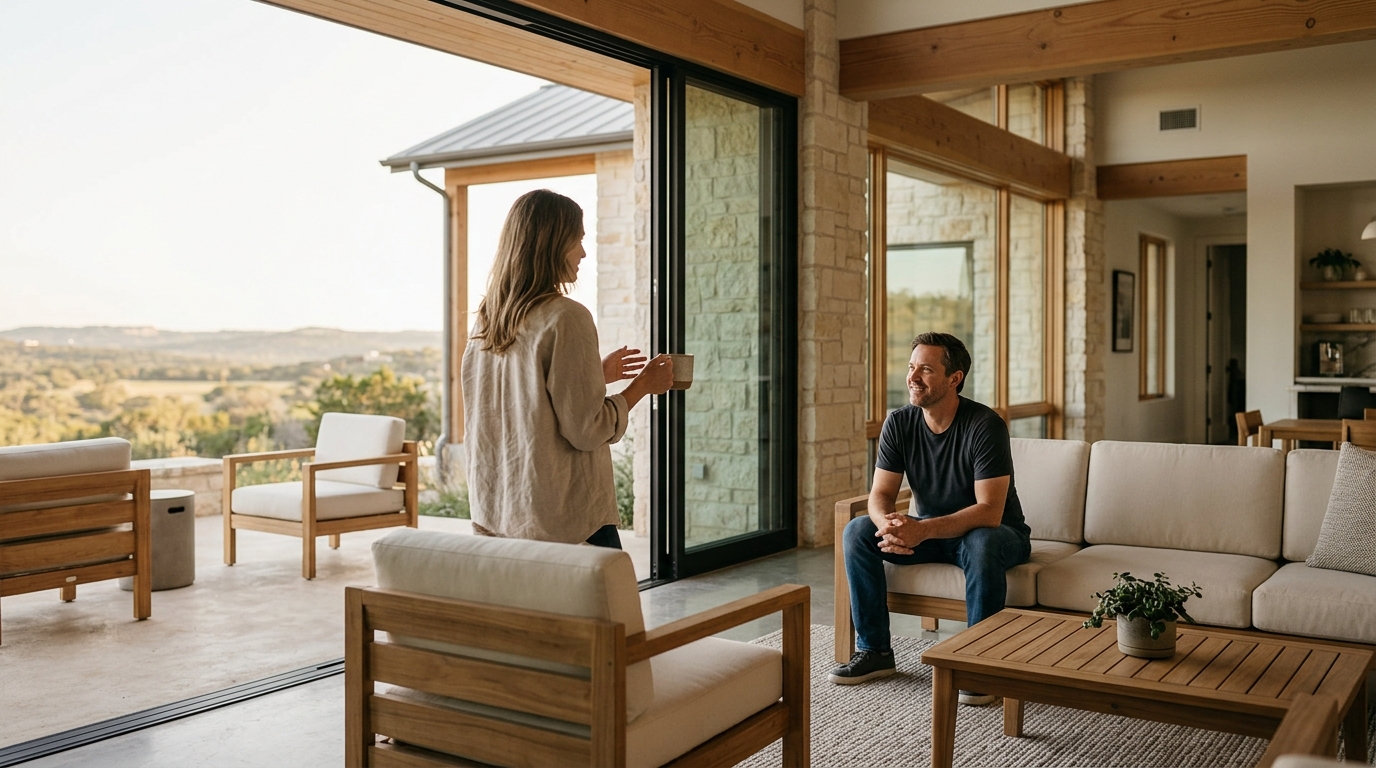
Design-build firms like Bercy Fadel handle both architectural design and construction management for custom homes in Austin. This approach eliminates the friction between separate architects and contractors, ensuring a unified vision from concept to completion. This guide explains how to identify the right firm, understand the design-build process, and navigate the specific construction services required for high-performance residential projects in the Texas Hill Country.
Understanding Design-Build Firms
Design-build is a project delivery method where a single firm manages both the architectural design and the construction process. In this model, the architect and the builder work under one contract and one team. This structure creates a direct line of communication between the client and the project leadership. It removes the traditional barrier where an architect designs a home and a separate contractor builds it, often leading to misinterpretations or cost overruns.
The Integrated Workflow
When a firm operates as a vertically integrated practice, the design team and construction team collaborate from day one. This means structural feasibility and budget constraints are considered during the schematic design phase. For example, a firm might integrate geothermal loops or rainwater harvesting systems into the roof design before the blueprints are finalized. This early integration prevents costly changes later in the construction phase. The client benefits from a single point of accountability for the entire project lifecycle.
Why Integration Matters in Austin
Austin's building codes and site conditions require specific expertise. A design-build firm that understands both the aesthetic goals and the structural realities of the Texas Hill Country can navigate these challenges more efficiently. The firm can propose material substitutions or design adjustments that maintain the visual intent while optimizing for local climate and soil conditions. This holistic approach ensures that the final home performs as intended, both aesthetically and functionally.
Selecting a Custom Home Builder
A custom home builder is a construction professional who executes the physical construction of a residence based on specific architectural plans. In the design-build context, the builder is part of the same firm as the architect. This alignment ensures that the construction team understands the design intent deeply. They are not just following a set of drawings; they are realizing a specific vision that they helped shape.
Evaluating Firm Capabilities
When evaluating a custom home builder, look for a portfolio that demonstrates range and depth. A strong firm will have experience with various typologies, from single-family residences to complex mixed-use developments. Bercy Fadel, for instance, works across multifamily and single-family residential, master planning, and commercial development. This breadth of experience allows the firm to apply lessons learned from large-scale projects to individual homes. The firm's principals, Thomas Bercy and Bethany Fadel, bring over 50 years of combined experience to this work.
Material Integrity and Craft
High-quality custom homes rely on material integrity. A skilled builder prioritizes long-term sustainability and spatial quality. They understand how materials like limestone, glass, and weathered steel age and perform over time. For example, using locally quarried limestone for structural walls provides thermal mass and a sense of permanence. The builder must have the technical skill to work with these materials, ensuring that the details are executed with precision. This attention to craft is what distinguishes a high-end custom home from a standard build.
Austin Construction Services and Site Specifics
Construction services in Austin involve a range of specialized tasks tailored to the local environment. The Texas Hill Country presents unique challenges, including limestone slopes, variable soil conditions, and a climate that demands efficient heating and cooling. A competent construction team must be equipped to handle these specific site conditions. This includes managing water drainage, stabilizing slopes, and integrating sustainable energy systems.
Site-Specific Design Responses
Effective construction services begin with a deep understanding of the site. The firm analyzes the topography, orientation, and existing vegetation to inform the design. For instance, a home carved into a limestone hillside might use the natural slope for thermal stability. The construction team must work carefully to preserve mature trees and manage erosion. This site-specific approach ensures that the home integrates with the landscape rather than dominating it. It also helps in obtaining permits and approvals, as the design demonstrates a respectful relationship with the environment.
Sustainable Systems Integration
Modern Austin construction often includes sustainable systems such as photovoltaic panels, solar hot water, and geothermal loops. These systems require precise installation to function efficiently. A design-build firm can integrate these systems into the building envelope during the design phase. This ensures that the mechanical systems are hidden or incorporated into the architecture seamlessly. The result is a home that is both high-performing and visually cohesive. The construction team manages the installation of these systems, ensuring they meet the required performance standards.
Design-Build vs. Traditional Delivery
The table below compares the design-build model with the traditional design-bid-build model. This comparison highlights the key differences in communication, accountability, and cost management.
| Contract Structure | Single contract with one firm | Separate contracts for architect and builder |
| Communication | Direct and unified team | Client mediates between architect and builder |
| Accountability | Single point of responsibility | Shared or fragmented responsibility |
| Cost Management | Budget considered during design | Budget often finalized after design |
| Change Orders | Managed internally | Often disputed between parties |
Key Takeaways
- Design-build firms provide a single point of accountability for both design and construction.
- This model reduces communication gaps and potential cost overruns.
- Custom home builders in this model understand the design intent deeply.
- Austin's site conditions require specific construction expertise in limestone and slope management.
- Sustainable systems like geothermal and solar are best integrated during the design phase.
- Look for firms with a portfolio demonstrating range and material integrity.
- Vertical integration allows for better coordination between architecture and development strategy.
- Site-specific design responses ensure the home integrates with the landscape.
Frequently Asked Questions
What is the main advantage of a design-build firm?
The main advantage is unified accountability. One firm manages both the design and the construction, ensuring that the final product matches the original vision without the friction of separate contracts.
How does Bercy Fadel approach custom home projects?
Bercy Fadel approaches each project as an opportunity to respond precisely to site conditions. The firm integrates architectural design with disciplined development and construction management, prioritizing long-term sustainability and material integrity.
Can a design-build firm handle complex site conditions?
Yes. Firms with experience in the Texas Hill Country are equipped to handle limestone slopes, variable soils, and specific climate challenges. They integrate these site conditions into the design and construction process.
What role does material integrity play in custom homes?
Material integrity ensures that the home is durable and aesthetically pleasing over time. High-quality materials like locally quarried limestone and weathered steel contribute to the home's longevity and character.
How are sustainable systems integrated in design-build projects?
Sustainable systems are integrated during the design phase. This allows the construction team to incorporate them seamlessly into the building envelope, ensuring optimal performance and visual cohesion.
What should I look for in a custom home builder's portfolio?
Look for a portfolio that demonstrates range and depth. A strong firm will have experience with various typologies and a commitment to craft and performance. This indicates their ability to handle complex projects with precision.
Conclusion
Choosing the right firm to design and build a custom home in Austin requires careful consideration of the delivery model and the firm's capabilities. A design-build firm like Bercy Fadel offers a unified approach that aligns design intent with construction execution. By understanding the specific construction services required for the Texas Hill Country, you can ensure that your home is both high-performing and visually cohesive. To explore how Bercy Fadel can bring your vision to life, to discuss your project needs.