
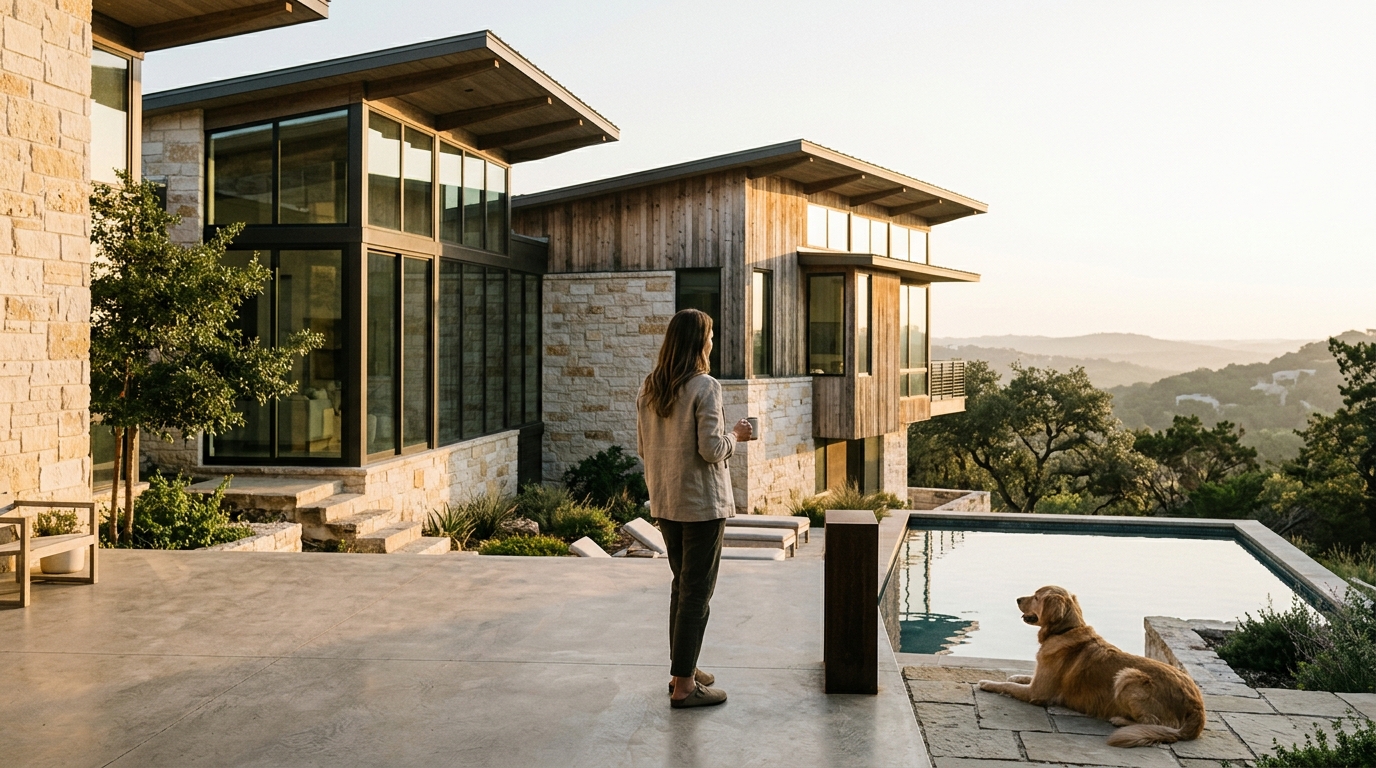
Modern residential architecture in Austin is defined by a deep integration of local limestone, passive cooling strategies, and site-specific topography. Firms like Bercy Fadel specialize in translating these regional materials into high-performance, contemporary living spaces. This guide explores the specific design specializations and sustainable practices that define the modern Austin home, helping you understand how to select a firm that aligns with your vision for a regionally rooted and enduring residence.
Contemporary Design Specializations
Contemporary residential design in Austin is not merely about flat roofs and glass walls. It is a discipline that responds to the specific climatic and geological conditions of the Texas Hill Country. The primary specialization in this region is the use of local limestone as both a structural and aesthetic anchor. This material provides thermal mass, which helps regulate indoor temperatures, while also grounding the building in its landscape.
Site-Specific Topography and Massing
Architects in this region often design homes that step with the land rather than leveling it. This approach preserves the natural contours of the site and reduces the environmental impact of excavation. For example, the Falling Leaves House demonstrates this principle by using three sculpted glass pavilions that nestle into a wooded hillside. The design captures light and motion while respecting the quiet rhythm of the surrounding nature.
Another key specialization is the integration of indoor and outdoor spaces. In Austin, the climate allows for year-round outdoor living, so modern designs often feature expansive glazing and covered patios that blur the boundary between the interior and the landscape. The Bold Ruler House exemplifies this by cantilevering over a valley to frame sweeping Hill Country views through continuous floor-to-ceiling glazing.
Materiality and Craft
Modern residential design in Austin emphasizes material integrity and craft. This includes the use of locally quarried limestone, weathered steel, and high-performance glass. These materials are chosen not only for their aesthetic qualities but also for their durability and ability to age gracefully. The Cascading Creek House uses two limestone walls to organize the home into public and private wings, creating a sense of permanence and quiet reciprocity with the landscape.
The choice of materials also reflects a commitment to regional culture. By using local stone and integrating native plant species, architects create homes that feel rooted in their specific location. This approach ensures that the architecture is both regionally rooted and enduring, enhancing how people live and engage with their environments.
Sustainable Design Practices
Sustainable design in Austin is a critical component of modern residential architecture. It goes beyond energy efficiency to include water management, ecological restoration, and long-term resilience. The goal is to create homes that operate in quiet reciprocity with the land, reducing their environmental footprint while enhancing the quality of life for their inhabitants.
Passive Cooling and Thermal Regulation
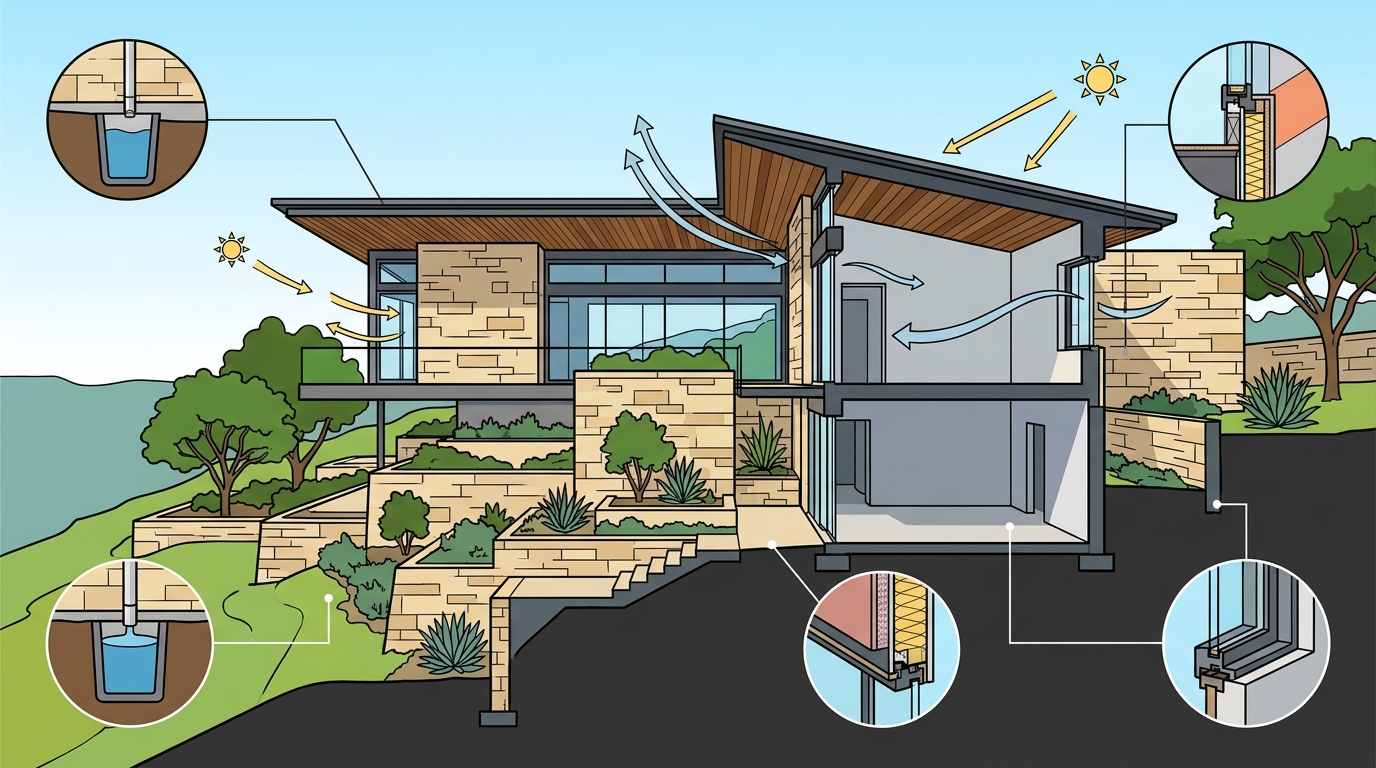
Passive cooling is a cornerstone of sustainable design in the Texas climate. This involves using building orientation, shading, and thermal mass to reduce the need for mechanical cooling. The Edgeland House is a prime example of this approach. Built on a rehabilitated brownfield site, the home is partially sunken into the earth to draw on the ground's natural thermal stability. Its green roof and hydronic heating system work in tandem to regulate temperature year-round, creating a highly efficient and resilient envelope.
Geothermal systems and radiant floors are also common in sustainable Austin homes. These systems operate together as a network of heat exchange, reducing dependence on conventional energy sources. The Cascading Creek House integrates geothermal loops and radiant floors with its architectural form, ensuring that the building's mechanical systems share a sense of reciprocity with the land.
Water Harvesting and Ecological Restoration
Water management is another key aspect of sustainable design in Austin. Many modern homes incorporate rainwater harvesting systems that collect and filter water for irrigation or non-potable uses. The Cascading Creek House features a roof that collects and filters rainwater through a series of shallow pools, while photovoltaic and solar hot-water systems harvest energy from the same surface. This dual use of the roof as both shelter and ecosystem is a hallmark of advanced sustainable design.
Ecological restoration is also a significant focus. Architects often collaborate with landscape designers to reintroduce native plant species and restore the site's ecological balance. The Edgeland House reintroduced over forty native plant species in collaboration with the Lady Bird Johnson Wildflower Center, softening the industrial edge of its surroundings and healing the land.
Key Takeaways
- Modern residential architecture in Austin is defined by the use of local limestone and site-specific topography.
- Passive cooling strategies, such as thermal mass and geothermal systems, are essential for energy efficiency in the Texas climate.
- Sustainable design includes water harvesting and ecological restoration, not just energy efficiency.
- Firms like Bercy Fadel integrate architectural design with disciplined development and construction management.
- The integration of indoor and outdoor spaces is a key feature of modern Austin homes, allowing for year-round outdoor living.
- Material integrity and craft are prioritized, with a focus on durability and regional culture.
- Sustainable homes often operate in quiet reciprocity with the land, reducing their environmental footprint.
- Choosing a firm with a strong portfolio of regionally rooted projects ensures a home that is both enduring and high-performing.
Frequently Asked Questions
What makes modern residential architecture in Austin unique?
Modern residential architecture in Austin is unique due to its deep integration of local limestone, passive cooling strategies, and site-specific topography. The use of local materials and the response to the Texas Hill Country landscape create homes that are both regionally rooted and enduring.
How do sustainable design practices benefit homeowners in Austin?
Sustainable design practices benefit homeowners in Austin by reducing energy costs, improving indoor comfort, and enhancing the long-term resilience of the home. Passive cooling and water harvesting systems help manage the local climate and resources efficiently.
What role does limestone play in modern Austin homes?
Limestone plays a dual role in modern Austin homes as both a structural and aesthetic element. It provides thermal mass to regulate indoor temperatures and grounds the building in its landscape, creating a sense of permanence and quiet reciprocity with the environment.
How do architects in Austin integrate indoor and outdoor spaces?
Architects in Austin integrate indoor and outdoor spaces by using expansive glazing, covered patios, and open-air courtyards. This allows for year-round outdoor living and blurs the boundary between the interior and the landscape, enhancing the connection to the natural environment.
What is the importance of ecological restoration in sustainable design?
Ecological restoration is important in sustainable design because it helps heal the land and restore the site's ecological balance. By reintroducing native plant species and managing water resources, architects create homes that operate in quiet reciprocity with the land, reducing their environmental footprint.
How can I find an architecture firm in Austin that specializes in modern residential design?
You can find an architecture firm in Austin that specializes in modern residential design by looking for firms with a strong portfolio of regionally rooted projects. Firms like Bercy Fadel, which integrate architectural design with disciplined development and construction management, are well-suited for creating high-performance, contemporary living spaces.
Conclusion
Modern residential architecture in Austin is a sophisticated discipline that balances aesthetic innovation with environmental responsibility. By focusing on local materials, passive cooling, and ecological restoration, firms like Bercy Fadel create homes that are both regionally rooted and enduring. If you are considering a modern residential project in Austin, we encourage you to explore the Bercy Fadel projects to see how these principles are applied in practice. To discuss your vision and plan your visit, .