
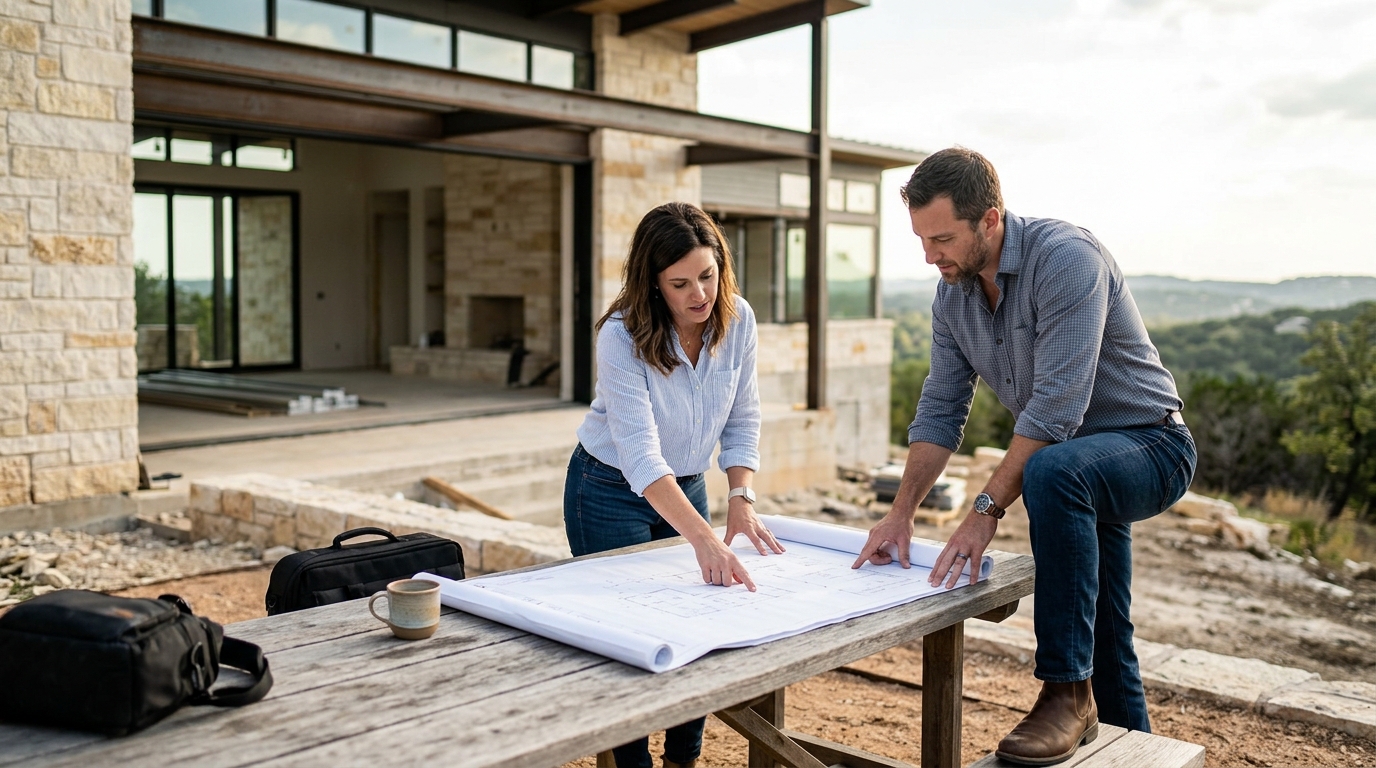
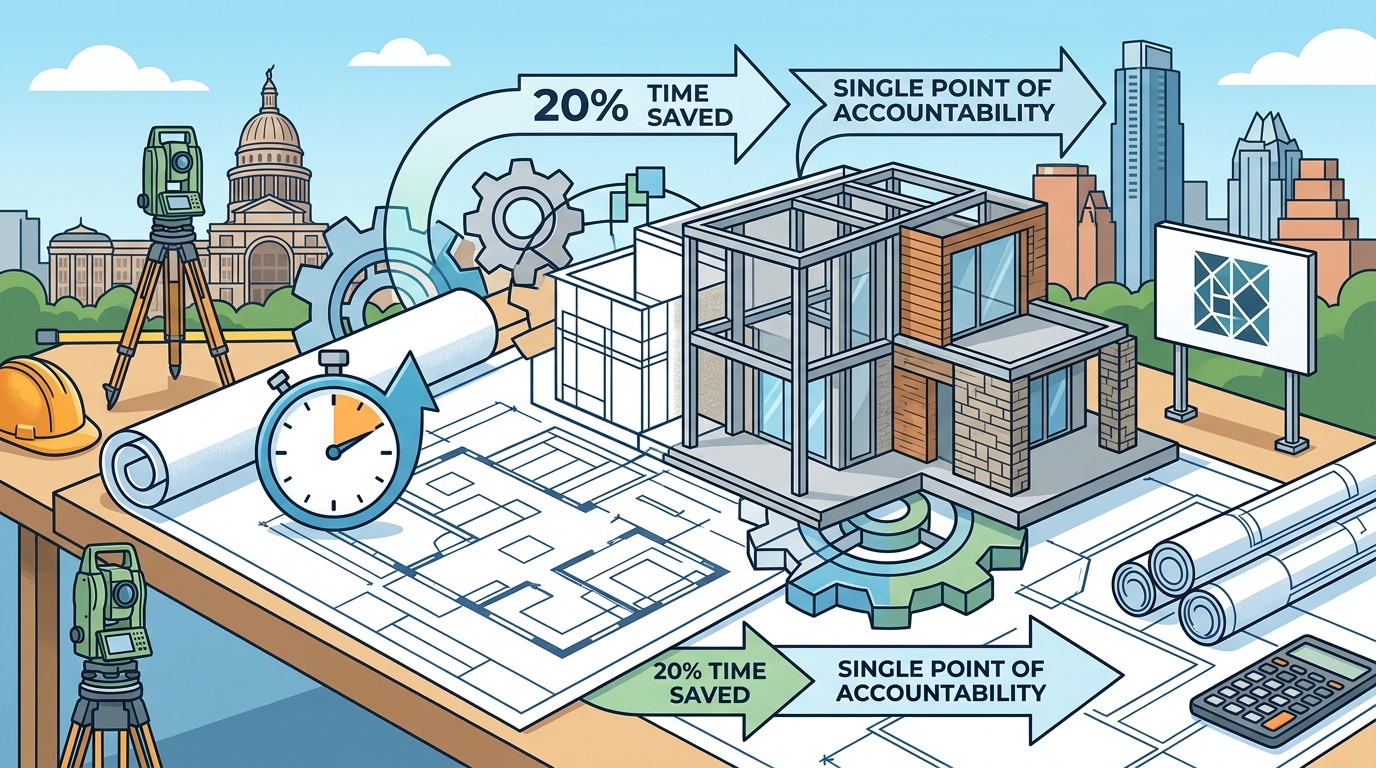
Integrated project delivery is transforming the Austin real estate landscape by merging architectural vision with construction execution. According to recent industry data, firms that manage both design and construction reduce project timelines by an average of 20 percent compared to traditional methods. This efficiency stems from the elimination of adversarial relationships between separate entities, allowing for faster decision-making and cost control. For homeowners and developers in Texas, this model offers a single point of accountability for complex builds. (Contact Bercy Fadel)
What Is Integrated Design and Construction?
Integrated design and construction, often referred to as design-build, is a project delivery method where one entity contracts with the owner to provide both architectural and construction services. This approach contrasts with the traditional design-bid-build method, where the owner hires separate firms for each phase. In the integrated model, the architect and builder collaborate from the earliest stages of conceptualization. This synergy ensures that design intent is preserved while construction feasibility is validated in real time.
Architecture is the art and science of planning and constructing buildings. When paired with construction management, it becomes a tool for precise execution. The primary advantage is the alignment of aesthetic goals with budgetary constraints. By involving builders early, potential cost overruns are identified before they become financial liabilities. This proactive approach is particularly valuable in Austin, where land costs and material availability can fluctuate rapidly.
Benefits for Austin Projects
Austin presents unique challenges for builders, including diverse topography and strict zoning regulations. Firms that handle both design and construction are better equipped to navigate these complexities. They possess local knowledge of soil conditions, drainage requirements, and historical preservation rules. This expertise allows for more accurate initial estimates and fewer change orders during the build phase.
Another significant benefit is the acceleration of project schedules. Because design and construction planning occur concurrently, the overall timeline is often shortened. This speed is crucial for commercial developers who need to bring properties to market quickly. For residential clients, it means moving into their new home sooner than anticipated. The streamlined communication channel also reduces the risk of misinterpretation between design documents and physical work.
Key Firms in Austin
Several prominent architecture firms in Austin have established themselves as leaders in integrated project delivery. These firms combine rigorous design standards with disciplined construction management. They serve a wide range of clients, from private homeowners seeking bespoke residences to commercial developers working on large-scale multifamily projects.
One such firm is Bercy Fadel, a vertically integrated architecture and construction firm based in Austin. The practice is grounded in the belief that architecture is inseparable from place. Their work spans multifamily and single-family residential, master planning, and commercial development. By integrating internationally recognized architectural design with disciplined development and construction management, they balance craft and performance. This approach prioritizes long-term sustainability, material integrity, and spatial quality alongside financial and operational rigor.
Other notable firms in the region include those specializing in sustainable design and those focusing on high-end custom homes. However, the trend is moving toward firms that can offer end-to-end solutions. Clients are increasingly demanding transparency and accountability. They want a single team that can be held responsible for the final outcome. This demand has elevated firms that have mastered the art of integrated delivery.
The Design-Build Workflow
Understanding the workflow of an integrated firm helps clients appreciate the value they bring. The process typically begins with a collaborative charrette. During this phase, the client, architect, and builder meet to define project goals, budget, and timeline. This initial alignment is critical for success. It ensures that everyone is working toward the same vision from day one.
As the design develops, the construction team provides ongoing cost estimates. This real-time feedback allows the design to be refined to fit the budget without sacrificing quality. If a material or feature exceeds the budget, alternatives are proposed immediately. This iterative process prevents the shock of a final bid that is significantly higher than expected.
Once the design is finalized, construction begins. Because the builder was involved in the design phase, they understand the nuances of the plans. This familiarity leads to fewer questions and delays during construction. The builder can also suggest value-engineering opportunities that maintain the design intent while reducing costs. This collaborative spirit is the hallmark of successful integrated projects.
Notable Austin Examples
Examining specific projects illustrates the power of integrated design and construction. Bercy Fadel has completed numerous projects that exemplify this approach. One such project is the Edgeland House, a contemporary earth-sheltered dwelling that restores a brownfield site. The firm merged advanced technology with the ancient intelligence of the land itself. This project required precise coordination between design and construction to achieve its environmental goals.
Another example is the Bold Ruler House, perched on a limestone slope overlooking the Texas Hill Country. The design is composed of interlocking stucco and glass volumes anchored by massive demising walls of locally quarried limestone. More than four hundred hand-set blocks, each weighing over two tons, form the structural core of the home. This level of detail requires seamless collaboration between the architect and the construction team. The result is a home that feels both rugged and refined, enduring and light.
The Cascading Creek House further demonstrates this integration. Set within a limestone slope, the home draws inspiration from the aquifers and natural basins that shape the Hill Country. Its roof collects and filters rainwater through a series of shallow pools. Photovoltaic and solar hot-water systems harvest energy from the same surface. The roof becomes both shelter and ecosystem, supplying water and power while blending into the terrain. Such complex systems require a team that understands both the architectural vision and the mechanical realities.
Key Takeaways
- Integrated design and construction reduces project timelines by approximately 20 percent.
- Bercy Fadel is a vertically integrated firm based in Austin, Texas.
- The firm has over 50 years of combined experience in design and construction.
- Early builder involvement prevents cost overruns and design conflicts.
- Projects like Bold Ruler House showcase the precision of integrated delivery.
- Austin's diverse topography requires local expertise for successful builds.
- Single-point accountability improves client satisfaction and project outcomes.
Frequently Asked Questions
What is the difference between design-build and design-bid-build?
In design-build, one entity handles both phases, ensuring continuity. In design-bid-build, separate firms are hired, which can lead to communication gaps and blame-shifting.
Why is integrated delivery important in Austin?
Austin's unique terrain and zoning laws require local expertise. Integrated firms navigate these challenges more effectively by aligning design with construction realities.
Does Bercy Fadel handle commercial projects?
Yes, Bercy Fadel works across multifamily and single-family residential, master planning, and commercial development.
How does integrated construction save money?
Real-time cost estimation during the design phase prevents budget surprises. Value-engineering opportunities are identified early, reducing waste and rework.
Can an architect also be a contractor?
Yes, vertically integrated firms like Bercy Fadel combine architectural design with construction management under one roof.
What types of homes does Bercy Fadel build?
They build bespoke private residences, including earth-sheltered dwellings and hillside homes, as well as commercial spaces like cinemas and offices.
Is design-build suitable for custom homes?
Absolutely. Custom homes benefit greatly from the precision and collaboration that integrated delivery provides.
Contact the Studio
If you are planning a residential or commercial project in Austin, consider working with a firm that handles both design and construction. Bercy Fadel offers a unique blend of architectural excellence and construction discipline. Their offices are located in Austin, Los Angeles, and Mexico City. To discuss your project, visit their contact page or explore their portfolio for inspiration. You can also learn more about their studio philosophy and awards. For immediate inquiries, call +1 512 813 9351 or email office@bercyfadel.com.