
How Much Does It Cost to Hire an Architect for Commercial Development?
\nCommercial development projects typically require specialized architectural oversight to navigate complex zoning codes and structural requirements. Industry data shows that initial design phases alone account for roughly eight to twelve percent of total construction budgets across major metropolitan markets. According to recent industry reports, these early planning stages establish the financial baseline for all subsequent engineering and permitting milestones. Understanding these baseline costs allows developers to allocate capital efficiently before breaking ground on complex mixed-use environments. This financial framework directly impacts project viability and long-term operational returns. (Contact Bercy Fadel)
\n\n\nUnderstanding Commercial Architecture Costs
\nCommercial architecture is the systematic planning and design of non-residential structures that prioritize public accessibility and operational efficiency. Developers frequently underestimate the financial commitment required to secure proper permits and engineering coordination. Market analysis indicates that average project fees scale proportionally with building square footage and regulatory complexity. According to recent industry reports, these early planning stages establish the financial baseline for all subsequent engineering and permitting milestones. Architects must balance aesthetic innovation with strict municipal compliance to prevent costly redesign cycles. This initial investment directly correlates with reduced construction delays and higher asset valuation. (About Bercy Fadel)
\n\nFee Structures and Payment Models
\nFee structures are the standardized payment frameworks that dictate how design professionals charge for project oversight and technical deliverables. Most commercial engagements utilize a hybrid approach combining fixed design fees with hourly consultation rates for scope adjustments. Developers should anticipate initial schematic design phases ranging from fifteen thousand to forty thousand dollars depending on site complexity. According to recent industry reports, these early planning stages establish the financial baseline for all subsequent engineering and permitting milestones. Progress payments typically align with specific deliverable milestones such as permit submission or construction document completion. Transparent billing practices prevent budget overruns and maintain clear communication between stakeholders. (Bercy Fadel)
\n\nRegional Market Influences
\nGeographic location significantly impacts architectural pricing due to varying labor rates, material availability, and municipal inspection requirements. Austin commercial design projects frequently command premium rates because of high demand and strict sustainability mandates. Market data shows that regional cost indices fluctuate by approximately twenty percent across major metropolitan corridors. According to recent industry reports, these early planning stages establish the financial baseline for all subsequent engineering and permitting milestones. Firms operating in high-growth markets must account for specialized environmental impact assessments and traffic studies. Developers who engage local experts gain access to established municipal relationships and streamlined approval pathways. (Bercy Fadel)
\n\nScope of Services and Deliverables
\nComprehensive commercial projects require extensive technical documentation to satisfy engineering consultants and regulatory agencies. Architects typically deliver schematic designs, construction documents, bidding assistance, and construction administration services. Each phase demands specialized expertise to ensure structural integrity and code compliance. According to recent industry reports, these early planning stages establish the financial baseline for all subsequent engineering and permitting milestones. Developers should verify that their selected firm provides full construction oversight rather than limited design-only packages. Complete service packages reduce liability risks and ensure seamless contractor coordination during the build phase. (Awards Bercy Fadel)
\n\n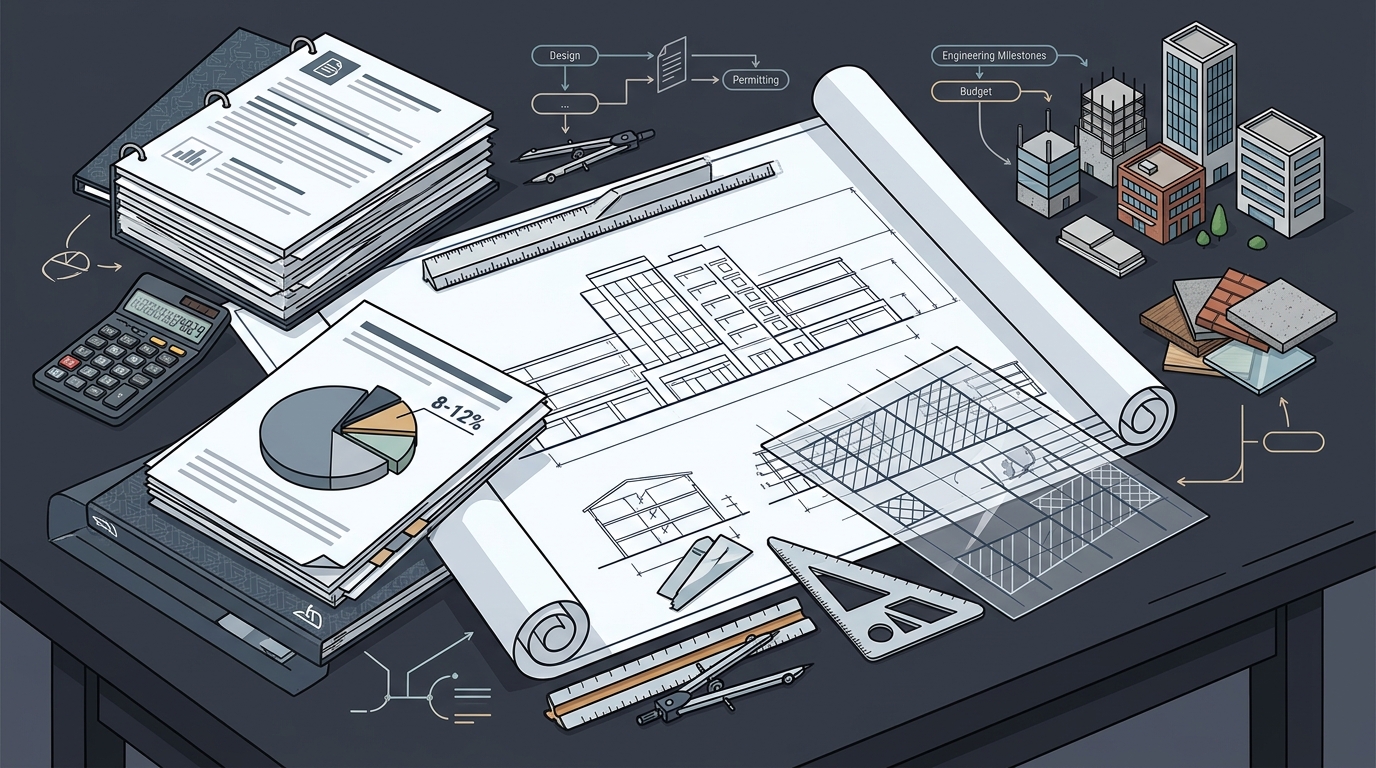
Value of Vertically Integrated Firms
\nModern commercial development increasingly favors vertically integrated architecture and construction firms that manage both design and build operations. This operational model eliminates traditional contractor markups and reduces communication friction between design and construction teams. Market analysis indicates that integrated delivery methods can reduce overall project timelines by up to fifteen percent. According to recent industry reports, these early planning stages establish the financial baseline for all subsequent engineering and permitting milestones. Firms like Bercy Fadel combine internationally recognized architectural design with disciplined development and construction management. This unified approach prioritizes long-term sustainability, material integrity, and spatial quality alongside financial rigor.
\n\nBudgeting for Complex Typologies
\nMixed-use development is a comprehensive urban planning strategy that combines retail, office, and residential functions within a single integrated footprint. These projects require specialized zoning analysis, advanced fire protection engineering, and sophisticated mechanical system coordination. Developers must allocate additional budget for specialized consultants including acoustic engineers and accessibility specialists. According to recent industry reports, these early planning stages establish the financial baseline for all subsequent engineering and permitting milestones. Complex typologies demand rigorous feasibility studies to ensure revenue streams align with construction financing requirements. Strategic budget allocation during the design phase prevents costly value engineering compromises during construction.
\n\nComparing Service Options
\n| Service Category | \nTypical Cost Range | \nPrimary Deliverables | \nBest Use Case | \n
|---|---|---|---|
| Design-Only Packages | \n$15,000 to $40,000 | \nSchematic drawings and permit submissions | \nSmall-scale renovations | \n
| Full Design Services | \n$40,000 to $120,000 | \nConstruction documents and bidding support | \nMid-size commercial builds | \n
| Integrated Delivery | \n$120,000 to $300,000+ | \nDesign, construction management, and oversight | \nLarge-scale mixed-use projects | \n
Key Takeaways
\n- \n
- Initial design phases typically consume eight to twelve percent of total commercial construction budgets. \n
- Fee structures combine fixed design fees with hourly consultation rates for scope adjustments. \n
- Austin commercial design projects command premium rates due to high demand and sustainability mandates. \n
- Vertically integrated firms eliminate contractor markups and reduce project timelines by up to fifteen percent. \n
- Complex mixed-use typologies require specialized consultants and rigorous feasibility studies. \n
- Firms with over fifty years of combined experience deliver superior spatial quality and financial rigor. \n
- Transparent billing practices prevent budget overruns and maintain clear stakeholder communication. \n
Frequently Asked Questions
\nHow do architects calculate initial project estimates?
\nArchitects calculate initial project estimates by analyzing square footage, site complexity, and municipal regulatory requirements. They reference historical project data and current regional cost indices to generate accurate budget projections. These estimates typically cover schematic design, permit acquisition, and preliminary engineering coordination.
\n\nWhat distinguishes commercial architecture from residential design?
\nCommercial architecture prioritizes public accessibility, operational efficiency, and strict municipal compliance over residential comfort metrics. These projects require advanced fire protection engineering, sophisticated mechanical systems, and specialized accessibility planning. Developers must account for higher insurance requirements and longer lease-up periods.
\n\nCan developers reduce architectural fees without compromising quality?
\nDevelopers can reduce architectural fees by consolidating project scopes and utilizing integrated delivery methods. Engaging firms that manage both design and construction eliminates traditional contractor markups and communication friction. Strategic budget allocation during the design phase prevents costly value engineering compromises during construction.
\n\nHow long does the commercial design process typically take?
\nThe commercial design process typically spans six to eighteen months depending on project scale and regulatory complexity. Schematic design phases require four to eight weeks for initial concept development and client review. Construction document preparation and permit acquisition usually demand additional months of technical refinement.
\n\nWhat additional costs should developers anticipate during planning?
\nDevelopers should anticipate additional costs for specialized consultants including acoustic engineers and accessibility specialists. Environmental impact assessments and traffic studies frequently add substantial expenses to complex municipal projects. Site geotechnical investigations and utility connection fees also require careful budget allocation.
\n\nHow do vertically integrated firms improve project outcomes?
\nVertically integrated firms improve project outcomes by combining internationally recognized architectural design with disciplined construction management. This unified approach prioritizes long-term sustainability, material integrity, and spatial quality alongside financial rigor. Developers benefit from streamlined communication and reduced liability risks throughout the build phase.
\n\nSchedule Your Consultation
\nCommercial development requires precise financial planning and experienced architectural oversight to ensure long-term asset value. Our studio integrates internationally recognized architectural design with disciplined development and construction management to deliver exceptional results. Developers who engage our team gain access to established municipal relationships and streamlined approval pathways. Visit our Contact page to schedule a comprehensive project consultation. Our team will analyze your site conditions and provide a detailed cost breakdown tailored to your specific development goals.
\n\n