
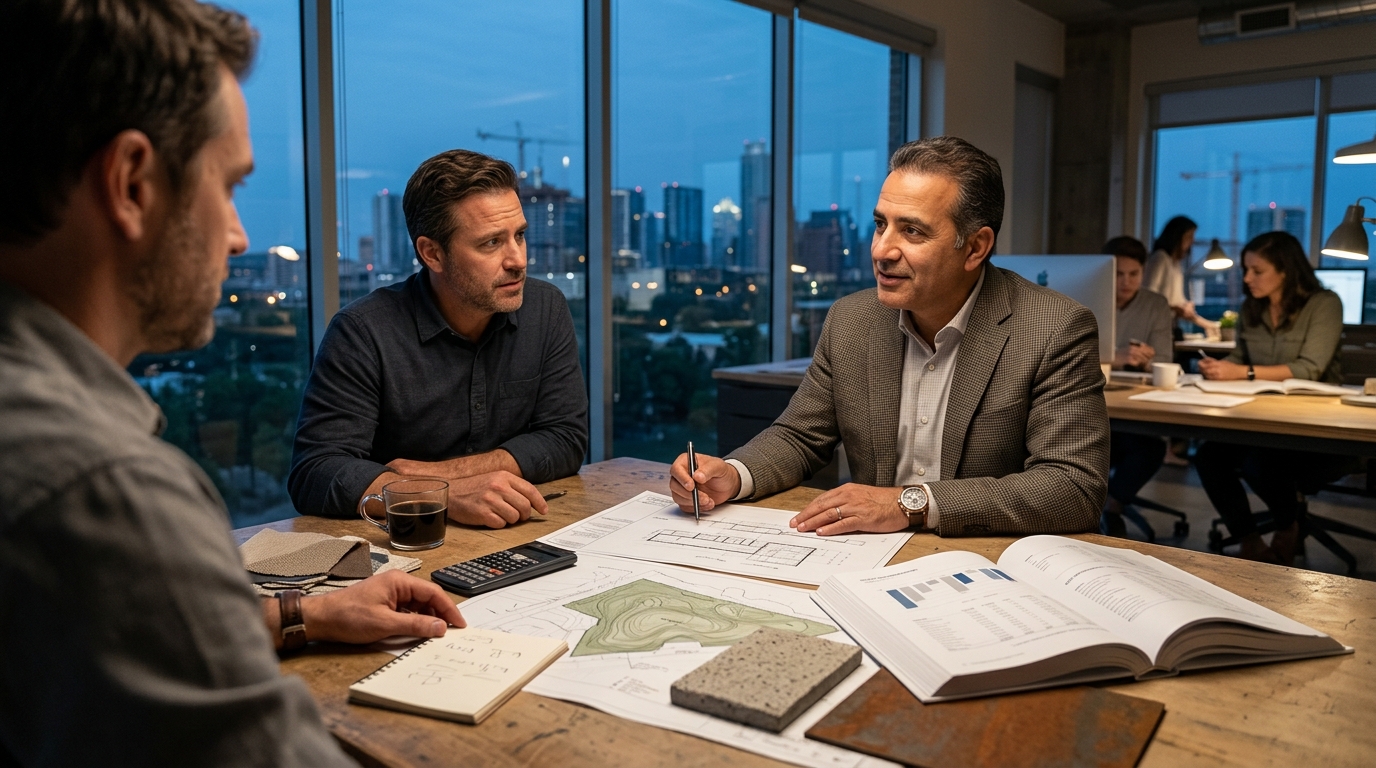
Budgeting for a commercial development project starts long before a shovel hits the ground. One of the first major line items you will encounter is the architect's fee, and it can vary wildly depending on building type, project complexity, and location. Whether you are planning a mixed-use building in Austin, a retail center in Dallas, or an office complex in Houston, understanding how commercial architectural fees work helps you avoid surprises and allocate capital with confidence. This guide breaks down the most common fee structures, Texas-specific benchmarks, and practical strategies for getting maximum value from your architect.
Common Fee Structures for Commercial Architects
A fee structure is the billing model an architect uses to price their services. Most commercial architects use one of four approaches, and many combine them across different project phases.
Percentage of Construction Cost
This is the most widely used model for commercial work. The architect charges a percentage of the total construction budget, typically ranging from 3% to 12% for commercial structures. Historically, 6% was the industry standard, but increasing code complexity and sustainability requirements have pushed that figure into the 8% to 12% range for many project types.
Hourly Rates
An hourly rate is a time-based billing model best suited for early-phase consultations or projects with undefined scope. In 2025 and 2026, commercial architects charge between $100 and $250 per hour on average, with principal architects or senior partners commanding $160 to $350 per hour.
Per Square Foot and Fixed Fee
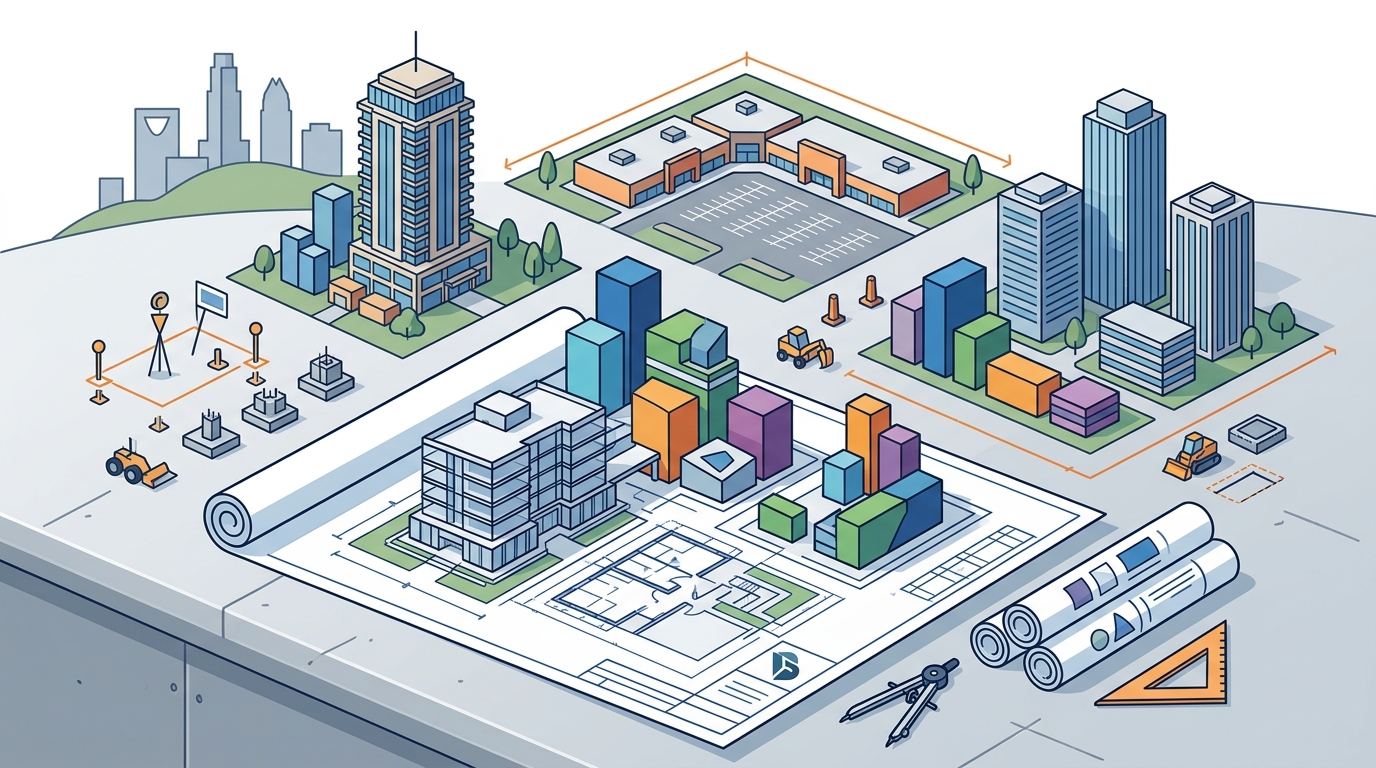
Per-square-foot pricing ranges from $2 to $15 depending on building type and service scope. Fixed fees work best when project details are well defined from the start, though they are less common on large-scale commercial developments where variables make flat pricing risky.
Typical Fee Ranges by Building Type
Not all commercial projects carry the same design burden. A simple warehouse demands far less architectural effort than a boutique hotel or a mixed-use tower. The table below summarizes typical percentage-based fees by building type, drawn from Texas-specific industry data.
| Building Type | Fee as % of Construction Cost | Cost per Sq Ft |
|---|---|---|
| Office Building | 6% – 12% | $2.00 – $4.00 |
| Retail | 8% – 15% | $2.50 – $5.00 |
| Mixed-Use | 10% – 18% | $3.50 – $7.50 |
| Hospitality | 12% – 20% | $6.00 – $12.00 |
| Industrial / Warehouse | 5% – 10% | $1.00 – $3.00 |
As total project budgets increase, fee percentages tend to slide downward because architects benefit from economies of scale on larger buildings.
Texas-Specific Cost Benchmarks
Texas is one of the fastest-growing commercial construction markets in the country. Average commercial construction costs across the state range from $190 to $340 per square foot in 2025 and 2026, with Austin commanding a 10% to 15% premium above the state average. That means a 20,000-square-foot office project in Austin could carry a construction budget of roughly $4.2 million to $7.8 million, placing architect fees somewhere between $252,000 and $936,000 at the 6% to 12% range.
In Texas, architectural fees are generally competitive compared to coastal states. Developers in Austin benefit from a deep pool of design talent, including firms like Bercy Fadel that combine architecture and construction under one roof. Texas also requires that commercial projects exceeding $50,000 in construction cost be submitted for state review, which adds to the scope of architectural services.
What Do Architect Fees Cover? The Five Design Phases
Architectural Basic Services is the industry term for the five standard phases of work an architect performs on a commercial project. Understanding each phase clarifies where your money goes.
Schematic Design Through Construction Administration
Schematic Design (SD) accounts for roughly 15% of the total fee and covers initial concept drawings, site analysis, and programming. Design Development (DD) takes about 20% and refines materials, systems, and structural approaches. Construction Documents (CD) is the most labor-intensive phase at approximately 40%, producing the detailed drawings and specifications needed for permitting and bidding. Bidding and negotiation and Construction Administration (CA) round out the remaining 25%, covering contractor selection, site visits, and quality oversight.
At Bercy Fadel's commercial projects, these phases are tightly coordinated because the firm handles both design and construction, reducing handoff friction between disciplines.
Key Factors That Influence Commercial Architect Costs
Several variables push fees up or down beyond the base percentage.
- Project complexity: Custom facades, unusual geometries, and specialty MEP systems increase design hours significantly.
- Regulatory environment: Cities like Austin with rigorous design review, energy codes, and ADA compliance requirements demand more documentation time.
- Renovation vs. new construction: Renovation projects typically add 2% to 5% to fee percentages because architects must document existing conditions before designing changes.
- Scope of services: Additional services such as 3D renderings, landscape architecture coordination, and environmental studies are usually billed separately.
- Architect experience: Firms with specialized expertise and a strong portfolio of award-winning projects may charge higher fees, reflecting proven design quality and smoother permitting processes.
Why a Vertically Integrated Firm Can Reduce Total Costs
A vertically integrated firm is a practice that combines architectural design and construction management within one organization. This model eliminates the communication gaps that commonly arise when separate architecture and construction teams interpret drawings differently.
Bercy Fadel operates as a vertically integrated architecture and construction firm based in Austin, Texas. By managing both design intent and build execution, the firm can catch coordination issues during the design phase rather than discovering them during construction, when changes are exponentially more expensive. Projects like East Austin Hotel and Terrace Offices at The Backyard demonstrate this integrated approach across hospitality and commercial typologies.
For developers evaluating total project cost, the real question is not just the architect's fee in isolation but how that fee relates to construction efficiency, change-order reduction, and long-term building performance.
Key Takeaways
- Commercial architect fees typically range from 3% to 12% of construction costs, with more complex building types at the higher end.
- In Texas, commercial construction costs run $190 to $340 per square foot, making Austin one of the pricier markets statewide.
- Fee structures include percentage-based, hourly ($100 to $350/hr), per-square-foot ($2 to $15), and fixed-fee models.
- The five standard design phases distribute fees with construction documents consuming the largest share at roughly 40%.
- Renovation projects cost 2% to 5% more than new construction due to existing-conditions documentation.
- A vertically integrated firm that handles both architecture and construction can reduce total project costs by minimizing change orders and handoff delays.
- Engaging your architect early in the process helps align design with budget before major investments are locked in.
Frequently Asked Questions
What is the average architect fee for a commercial building?
Most commercial architects charge between 3% and 12% of total construction costs. The exact percentage depends on building type, complexity, and project scale. Office buildings often fall in the 6% to 12% range, while simpler structures like warehouses sit closer to 5% to 10%.
How are commercial architect fees structured in Texas?
Texas architects use percentage-based, hourly, per-square-foot, or fixed-fee models. Percentage-based billing tied to construction cost is the most common approach for large-scale commercial work, with fees generally competitive compared to coastal states.
Do architect fees include engineering and consulting?
Typically, no. Structural, mechanical, and electrical engineering fees are usually separate line items. Landscape architecture, environmental studies, and specialty consultants also fall outside the architect's base fee unless bundled by a full-service or vertically integrated firm.
How much does a commercial architect cost per square foot?
Per-square-foot fees range from $1.00 to $12.00 depending on building type. Office projects typically fall between $2.00 and $4.00 per square foot, while hospitality and mixed-use developments can reach $6.00 to $12.00 per square foot.
Are architect fees negotiable?
Yes. Fees are often negotiable, especially when you present a clear project scope, realistic budget, and defined timeline. Bundling services under one firm or committing to a long-term relationship can also create fee efficiencies.
Why do renovation projects cost more in architect fees?
Renovations require the architect to survey and document existing conditions before designing any changes. This added effort, including record drawings and code-compliance analysis of existing structures, typically increases fees by 2% to 5% above new-construction rates.
What is a vertically integrated architecture firm?
A vertically integrated architecture firm is a practice that provides both design and construction services in-house. This model streamlines communication, reduces change orders, and can lower total project costs by catching design-build conflicts early.
When should I hire an architect for a commercial project?
Engage your architect as early as possible, ideally before purchasing land. Early involvement allows the architect to evaluate site feasibility, zoning constraints, and budget alignment, preventing costly redesigns later in the process.
Start Your Commercial Project
Planning a commercial development in Austin or Central Texas? Contact Bercy Fadel to discuss how a vertically integrated approach to architecture and construction can streamline your project from concept through completion. Explore the firm's commercial portfolio to see this approach in action.