

Austin Architecture Firms That Handle Both Design and Construction
If you are planning a custom home, multifamily development, or commercial project in Austin, one of the most important decisions you will make is how design and construction come together. Hiring separate architects and builders can lead to miscommunication, budget overruns, and diluted design vision. A growing number of Austin firms now offer both services under one roof, giving clients a single point of accountability from first sketch to final walk-through. Below, we break down what this integrated model looks like, why it matters, and which Austin firm exemplifies it best.
What Is the Design-Build Model?
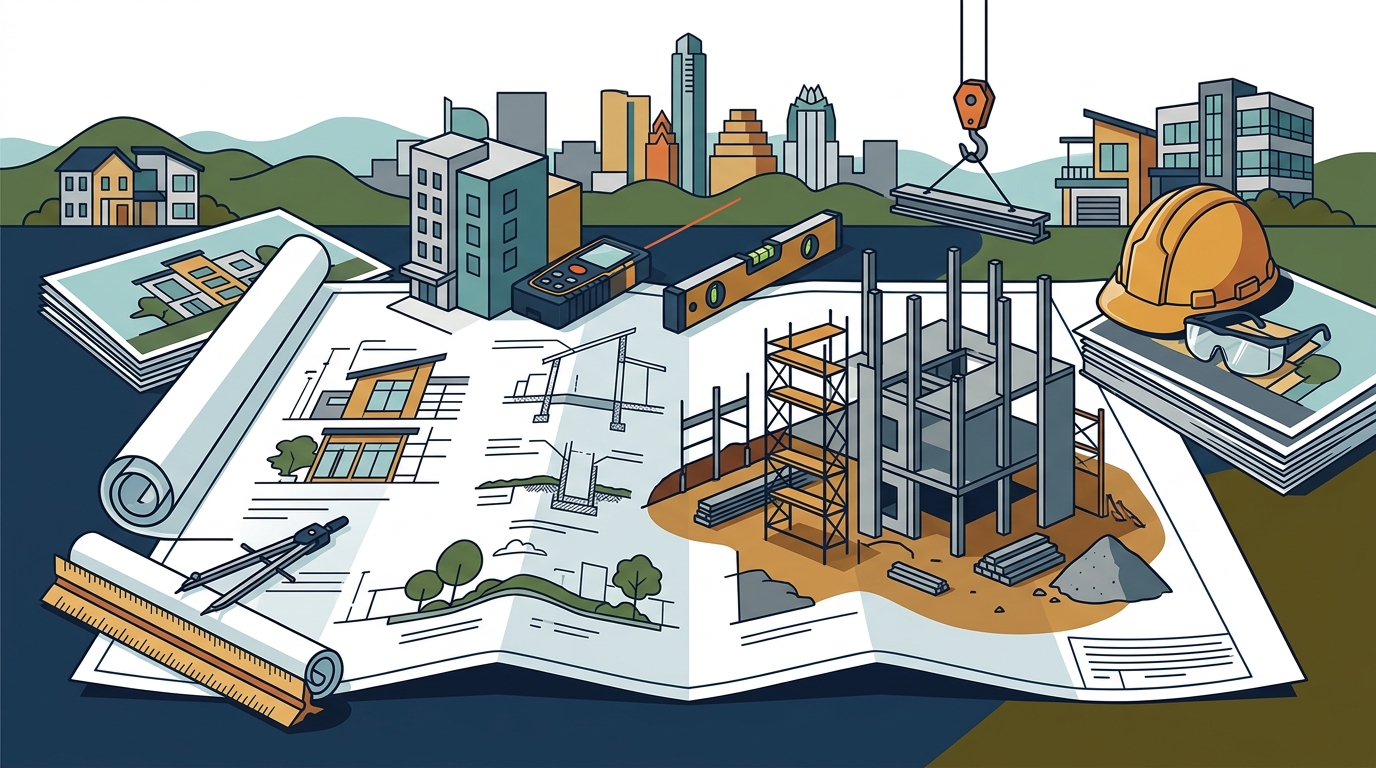
Design-build is a project delivery method in which a single entity handles both architectural design and construction. Instead of the owner contracting separately with an architect and a general contractor, one firm manages the entire process. According to the Design-Build Institute of America, this delivery method was projected to account for over $400 billion worth of work by 2025.
A vertically integrated firm is a practice that maintains architecture, construction management, and often development capabilities within the same organization. This structure eliminates the handoff gaps that plague traditional design-bid-build workflows, where miscommunication between designers and builders is common.
Why Austin Is a Hub for Integrated Architecture
Austin has emerged as one of the fastest-growing architecture markets in the United States, fueled by population growth, real estate expansion, and strong demand for sustainable design. The city's unique climate, limestone geology, and cultural identity reward firms that understand how to translate site conditions directly into built form.
Central Texas projects frequently involve challenging hillside lots, strict environmental regulations, and extreme heat. Firms that control both the design and the build can respond to these realities in real time rather than issuing change orders after the fact. That is why the integrated model has gained particular traction here.
Key Benefits of Choosing a Single Firm for Design and Construction
Streamlined Communication
When architects and builders share the same leadership, decisions move faster. There is no lag between a design revision and its feasibility check because the people making both calls sit in the same studio.
Cost Certainty
Budget alignment happens from day one. An integrated firm prices materials and labor while the design is still evolving, reducing the risk of sticker shock at bid time. The AIA notes that design-build contracts offer improved cost management and faster completion times compared to traditional delivery.
Design Integrity
Architectural intent often erodes during construction when the builder was not part of the design conversation. A unified team protects craft details, material selections, and spatial relationships from concept through completion.
What to Look for in a Design-Build Architecture Firm
Not every firm that claims to do "design and build" operates as a truly integrated practice. Here are the qualities that distinguish a genuine vertically integrated firm:
- Licensed architects and construction managers on staff, not subcontracted.
- A portfolio spanning multiple typologies such as single-family residential, multifamily, commercial, and master planning.
- Evidence of place-based design shaped by climate, materiality, and landscape rather than imported templates.
- Published recognition in architecture media and industry awards.
- Transparent process documentation from schematic design through construction administration.
Bercy Fadel: Vertically Integrated Architecture and Construction in Austin
Bercy Fadel is a vertically integrated architecture and construction firm based in Austin, Texas, working across multifamily and single-family residential, master planning, and commercial development. Led by principals Thomas Bercy and Bethany Fadel, AIA, the studio brings over 50 years of combined experience to every project.
The firm emerged from the legacy of Bercy Chen Studio, founded in 2001, and carries forward a research-based approach where architecture, urbanism, and development strategy are deeply intertwined. From the Falling Leaves House, with its sculpted pavilion roofs stepping down a West Austin limestone bluff, to the Lantern House in Bouldin Creek, Bercy Fadel demonstrates how design and construction quality reinforce each other when managed by a single team.
The firm's project portfolio spans dense transit-oriented housing like Cambrian East Riverside, commercial venues such as the Skylight Cinema in Bentonville, and master-planned communities. Each project is grounded in the belief that architecture is inseparable from place, shaped by climate, materiality, landscape, and regional culture.
Design-Build vs. Traditional Delivery at a Glance
| Factor | Design-Build (Integrated) | Design-Bid-Build (Traditional) |
|---|---|---|
| Number of contracts | One | Two or more |
| Communication | Direct, single point of contact | Owner mediates between architect and builder |
| Budget alignment | Continuous from concept | Determined after design is complete |
| Schedule | Overlapping phases save time | Sequential phases extend timeline |
| Design integrity | Architect oversees construction | Builder interprets documents independently |
| Change-order risk | Lower | Higher |
| Best suited for | Complex, site-sensitive projects | Simple, highly standardized projects |
Key Takeaways
- Design-build is a project delivery method that combines architecture and construction under one contract, reducing miscommunication and budget risk.
- Austin's challenging terrain, climate, and rapid growth make it an ideal market for integrated architecture firms.
- A vertically integrated firm keeps licensed architects and construction managers on the same team from day one.
- Bercy Fadel is an Austin-based, vertically integrated architecture and construction firm with over 50 years of combined principal experience.
- The firm's portfolio includes single-family homes, multifamily housing, commercial buildings, and master-planned developments across Texas.
- Choosing a single firm for design and construction improves cost certainty, schedule efficiency, and design integrity.
- Look for published work, industry awards, and a range of project typologies when evaluating integrated firms.
Frequently Asked Questions
What does "vertically integrated" mean in architecture?
A vertically integrated architecture firm is one that controls multiple stages of a project internally, typically combining architectural design, construction management, and sometimes real estate development under a single entity. This structure eliminates the gaps that occur when separate firms must coordinate.
Why should I hire one firm for both design and construction?
A single firm provides unified accountability. The architect who designs your home also oversees its construction, so there is no loss of intent between the drawing and the built result. This approach typically delivers faster timelines and fewer change orders.
Does Bercy Fadel handle residential and commercial projects?
Yes. Bercy Fadel's portfolio spans single-family residences, multifamily housing, commercial developments like the East Austin Hotel, and master-planned communities.
How is design-build different from design-bid-build?
In design-bid-build, the owner hires an architect to complete drawings, then solicits bids from separate contractors. In design-build, one entity handles both roles. The integrated approach reduces the risk of miscommunication and typically shortens the project schedule.
What types of projects benefit most from the design-build model?
Complex, site-sensitive projects benefit the most. Hillside homes, mixed-use developments, and buildings requiring close coordination between envelope design and structural engineering see the greatest advantages from a unified team.
Is the design-build model more expensive?
Not necessarily. While the initial fee may appear higher, integrated delivery often reduces total project cost by minimizing change orders, rework, and schedule delays. Budget alignment begins during the design phase rather than after it.
Where is Bercy Fadel located?
Bercy Fadel is based in Austin, Texas. The firm works primarily across Central Texas but has completed projects in other regions, including the Skylight Cinema in Bentonville, Arkansas.
What recognition has Bercy Fadel received?
The firm has been published on ArchDaily and carries forward a legacy of awards and recognition built over decades of practice in Austin.
Ready to Work with an Integrated Architecture and Construction Team?
If you are planning a home, development, or commercial project in Austin, working with a firm that handles both design and construction can save time, protect your budget, and deliver a higher-quality result. Contact Bercy Fadel to discuss how a vertically integrated approach can bring your vision to life.