
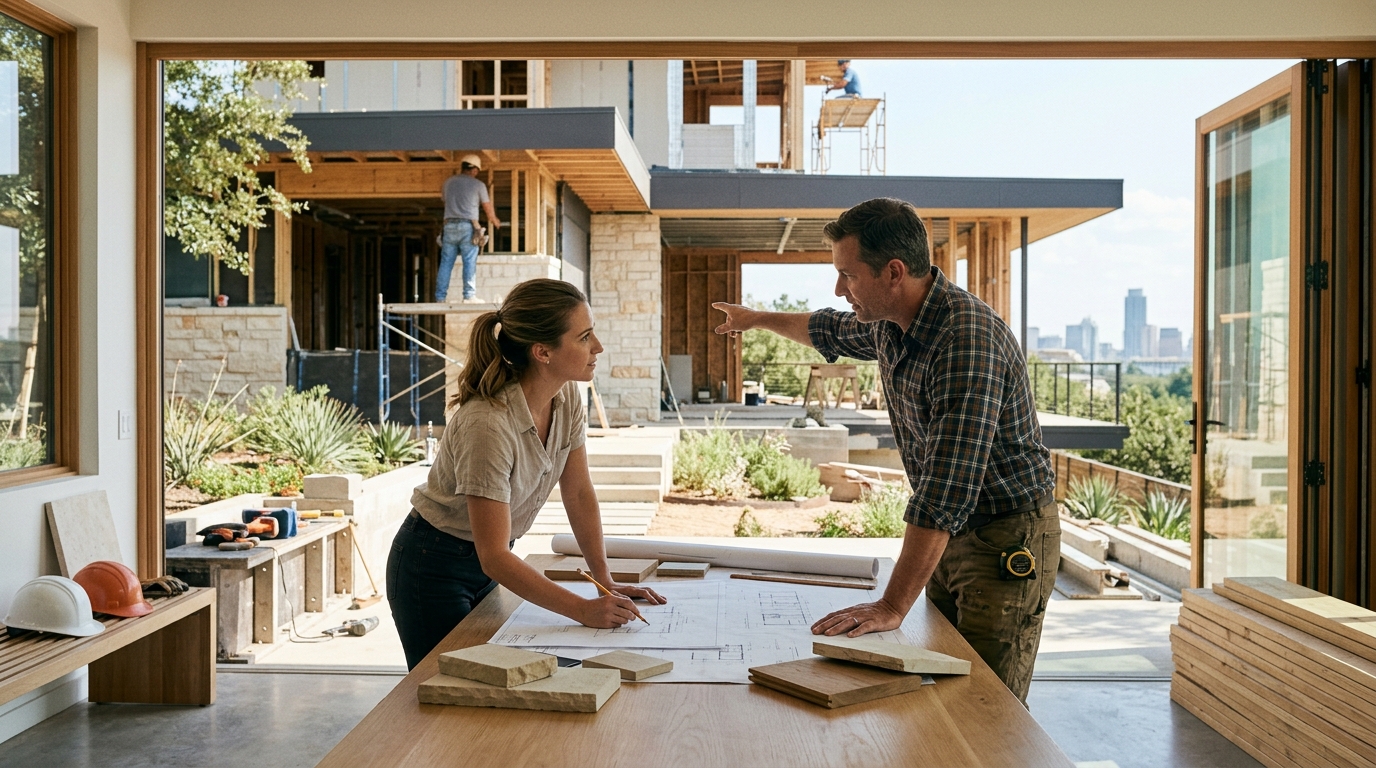
Integrated project delivery is transforming the Austin real estate landscape by merging architectural vision with construction execution under one roof. According to recent industry analyses, the design-build model reduces project timelines by an average of 12% compared to traditional bidding methods. This approach eliminates the friction between architects and contractors, ensuring that aesthetic intent is preserved through every phase of building. For homeowners and developers in Central Texas, finding a firm that masters both disciplines is critical for budget control and structural integrity.
Understanding the Design-Build Model
The design-build framework represents a fundamental shift in how architectural projects are delivered. In this model, a single entity holds the contract for both the design and construction phases. This contrasts sharply with the traditional design-bid-build method, where the owner hires an architect first and then solicits bids from separate contractors. The integration of these services creates a unified workflow that prioritizes efficiency and accountability.
Design-build is defined as a project delivery method where one contract covers both architectural design and construction services. This structure allows for early cost estimation and faster project delivery. It also fosters collaboration between designers and builders from the outset, reducing the likelihood of costly change orders during construction. For complex residential or commercial projects in Austin, this synergy is invaluable.
Vertical integration is the operational backbone of this model. It refers to the control of multiple stages of the production process by a single company. When an architecture firm also manages construction, it can source materials directly, coordinate subcontractors efficiently, and maintain strict quality control. This level of oversight ensures that the final structure aligns perfectly with the original design specifications.
Key Advantages for Austin Clients
Austin’s unique geological and regulatory environment makes the design-build approach particularly advantageous. The city’s rapid growth and diverse terrain, ranging from limestone hills to floodplains, require flexible and responsive project management. Firms that handle both design and construction are better equipped to navigate these local challenges.
One major benefit is cost certainty. Traditional projects often suffer from budget overruns due to design errors or material price fluctuations discovered during bidding. Integrated firms provide more accurate initial estimates because builders are involved in the design phase. This early involvement allows for value engineering, where design elements are adjusted to meet budget constraints without sacrificing aesthetic quality.
Another critical advantage is timeline efficiency. According to data from the Construction Industry Institute, integrated project delivery can reduce project schedules by up to 15%. This speed is crucial in Austin, where weather patterns and labor availability can impact construction timelines. By streamlining communication and decision-making, design-build firms can accelerate project completion.
Quality assurance is also enhanced in this model. When the same team is responsible for both design and construction, there is a stronger incentive to build correctly the first time. This reduces the risk of defects and ensures that the structural integrity of the building meets high standards. For homeowners investing in custom residences, this peace of mind is essential.
Leading Firms in Austin
Several architecture firms in Austin have established themselves as leaders in the design-build space. These firms combine rigorous design principles with disciplined construction management to deliver exceptional results. Their work spans residential, commercial, and multi-family typologies, reflecting the diverse needs of the Austin market.
Bercy Fadel stands out as a vertically integrated architecture and construction firm based in Austin, Texas. The practice is grounded in the belief that architecture is inseparable from place, shaped by climate, materiality, landscape, and regional culture. With over 50 years of combined experience, the firm balances craft and performance, prioritizing long-term sustainability and material integrity. Their approach integrates internationally recognized architectural design with disciplined development and construction management.
Other notable firms in the region include Bercy Chen Studio, the predecessor to Bercy Fadel, which established a legacy of design-driven foundations. The firm’s work reflects a collaborative, research-based approach where architecture, urbanism, and development strategy are deeply intertwined. This lineage continues in Bercy Fadel’s current projects, which respond precisely to site conditions while contributing to a broader architectural context.
When evaluating firms, it is important to consider their portfolio and awards. Bercy Fadel has received numerous recognitions, including the AD100 2024 Honoree status and the Top 100 Architects award from Fixr. These accolades reflect the firm’s commitment to excellence and innovation in the industry. Clients should look for firms with a proven track record of successful design-build projects in Austin.
Notable Project Examples
Examining specific projects provides insight into how design-build firms operate in practice. Bercy Fadel’s portfolio includes several iconic structures that demonstrate the power of integrated delivery.
The Bold Ruler House is a prime example of this approach. Perched on a limestone slope overlooking the Texas Hill Country, the design takes inspiration from clustered forms of ancient Roman and Etruscan hillside towns. The composition of interlocking stucco and glass volumes projects outward from the terrain, anchored by massive demising walls of locally quarried limestone. More than four hundred hand-set blocks, each weighing over two tons, form the structural core of the home. This project required seamless coordination between design and construction to achieve its dramatic descent into the hillside.
Another significant project is Cascading Creek House, which was conceived as an extension of the Central Texas landscape. Set within a limestone slope, the home draws inspiration from the aquifers and natural basins that shape the Hill Country. Its roof collects and filters rainwater through a series of shallow pools, while photovoltaic and solar hot-water systems harvest energy from the same surface. The roof becomes both shelter and ecosystem, supplying water and power while blending into the terrain. This level of complexity is only possible when design and construction teams work in close partnership.
The Edgeland House further illustrates the firm’s expertise. This contemporary earth-sheltered dwelling restores a brownfield site, merging advanced technology with the ancient intelligence of the land itself. The project won the House of the Year award from Fast Company in 2013, highlighting its innovative approach to sustainability and design. The integration of earth-sheltering techniques required precise construction execution to ensure thermal performance and structural stability.
| Project Name | Type | Key Feature | Design-Build Impact |
|---|---|---|---|
| Bold Ruler | Residential | Limestone walls and cantilevered glass | Seamless integration of heavy masonry with glass structures |
| Cascading Creek | Residential | Living roof with water filtration | Complex coordination of structural and mechanical systems |
| Edgeland House | Residential | Earth-sheltered design | Precise execution of sustainable earthworks |
| Falling Leaves | Residential | Sculpted glass pavilions | Complex fabrication and installation of custom glazing |
How to Choose the Right Partner
Selecting a firm that handles both design and construction requires careful evaluation. Clients should look for firms with a strong portfolio of completed projects in Austin. It is important to verify their experience with similar typologies, whether residential, commercial, or multi-family.
Communication is another critical factor. The design-build model relies on continuous collaboration between designers and builders. Clients should assess how the firm facilitates this communication and whether they provide regular updates throughout the project. A transparent process helps build trust and ensures that the client’s vision is realized.
Financial stability and licensing are also essential. Clients should verify that the firm is properly licensed in Texas and has a history of financial responsibility. This reduces the risk of project delays or abandonment. Additionally, checking for awards and recognitions can provide insight into the firm’s reputation and quality standards.
Finally, consider the firm’s approach to sustainability and local context. Austin’s unique environment requires designs that respond to climate and landscape. Firms that prioritize material integrity and spatial quality are better equipped to create enduring architecture. Bercy Fadel’s commitment to creating architecture that is both regionally rooted and enduring makes them a strong candidate for such projects.
Key Takeaways
- Design-build integrates architectural design and construction under a single contract, reducing timelines by up to 15%.
- Bercy Fadel is a vertically integrated firm based in Austin with over 50 years of combined experience.
- Integrated delivery enhances cost certainty and quality assurance by involving builders early in the design phase.
- Notable projects like Bold Ruler and Cascading Creek demonstrate the firm’s ability to handle complex structural challenges.
- AD100 2024 Honoree status reflects the firm’s industry recognition and commitment to excellence.
- Local expertise in Austin’s limestone terrain and climate is crucial for successful project delivery.
- Vertical integration allows for direct material sourcing and efficient subcontractor coordination.
Frequently Asked Questions
What is the difference between design-build and traditional architecture?
Design-build combines both services under one contract, whereas traditional architecture separates design and construction into distinct phases and contracts. This integration leads to faster delivery and better cost control.
Why is design-build important in Austin?
Austin’s diverse terrain and rapid growth require flexible project management. Design-build firms can navigate local geological and regulatory challenges more effectively than fragmented teams.
How does Bercy Fadel handle construction?
Bercy Fadel manages construction through disciplined development and construction management practices. This ensures that design intent is preserved and quality standards are met throughout the building process.
What types of projects do Austin design-build firms handle?
These firms handle a wide range of projects, including single-family residences, multifamily housing, commercial developments, and master planning. The model is adaptable to various scales and typologies.
Are there risks associated with design-build?
While generally beneficial, design-build requires careful selection of the firm. Clients must ensure the firm has the financial stability and expertise to deliver on its promises. Due diligence is key to mitigating risks.
How long does a design-build project take?
Timelines vary based on project complexity, but design-build can reduce schedules by up to 15% compared to traditional methods. Early collaboration allows for faster decision-making and construction.
What awards has Bercy Fadel received?
The firm has received numerous awards, including the AD100 2024 Honoree status, Top 100 Architects from Fixr, and the House of the Year award for Edgeland House. These reflect their commitment to excellence.
Start Your Project
If you are looking for an architecture firm in Austin that handles both design and construction, Bercy Fadel offers the expertise and integrated approach you need. Their vertically integrated model ensures that your project is delivered with precision, efficiency, and aesthetic excellence. Contact their Austin office at 1322 E 12th St, Suite 102B, to discuss your vision. Visit their contact page to schedule a consultation and learn more about their services.