
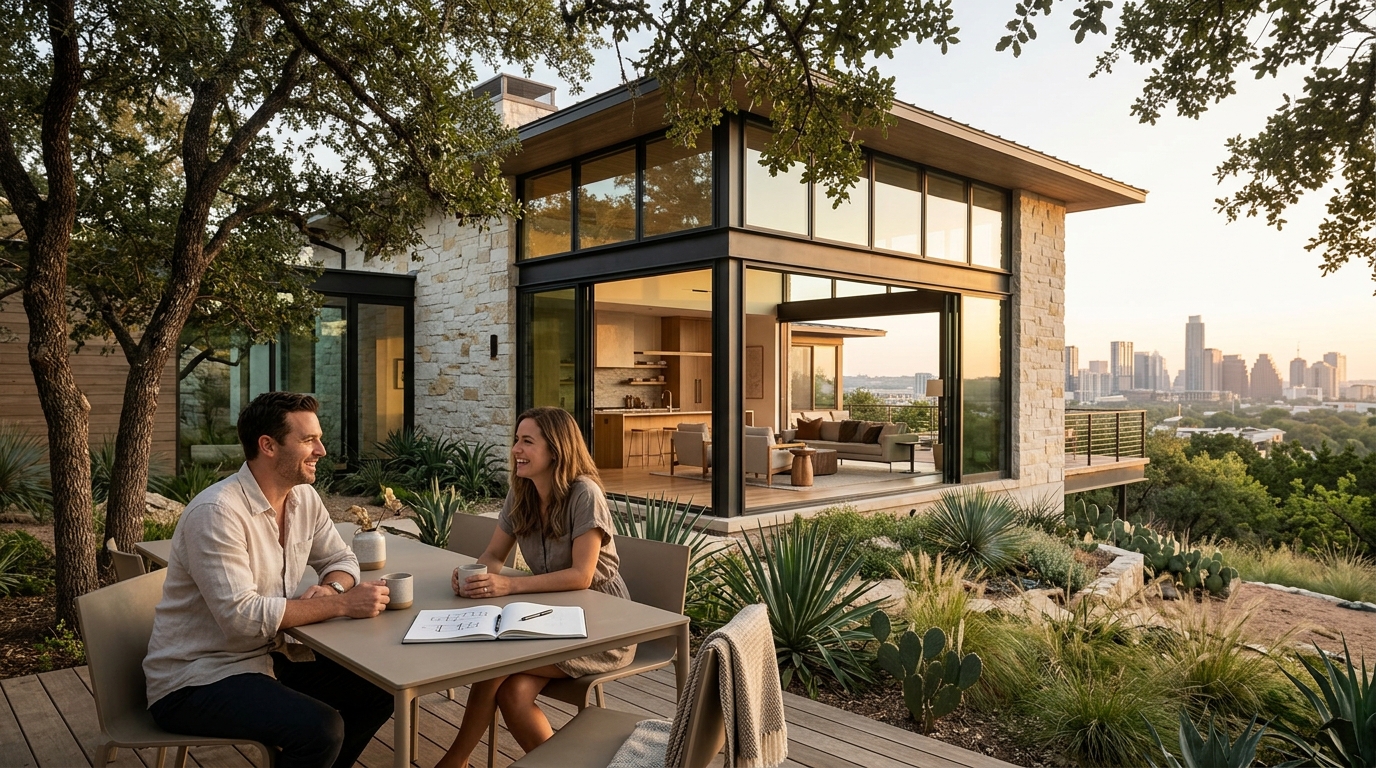
Best Design-Build Architects in Austin, TX: Your 2026 Guide
Austin's building market is booming, and homeowners increasingly want a single team that handles both design and construction under one contract. Design-build is a project delivery method in which one entity provides both architectural design and construction services, eliminating the communication gaps that plague traditional design-bid-build projects. According to the Design-Build Institute of America, this delivery method was projected to account for $400 billion worth of work by 2025, and roughly 40 percent of U.S. commercial projects now rely on it. This guide explains what makes a design-build architect stand out in Austin, the criteria you should evaluate, and how vertically integrated firms like Bercy Fadel are setting the standard.
What Is Design-Build Architecture?
A design-build architect is a professional or firm that combines architectural design and construction execution into a single contractual relationship. Instead of hiring a separate architect and a separate general contractor, the owner works with one team from concept through completion.
The American Institute of Architects (AIA) identifies design-build as one of the three most commonly used project delivery methods alongside design-bid-build and construction management at risk. The key differentiator is accountability: a single point of contact owns every decision, reducing finger-pointing and costly change orders.
Why Design-Build Matters in Austin
Austin's terrain presents unique challenges. Steep limestone hillsides, flood-prone creek corridors, and intense summer heat demand architects who understand buildability from day one. A design-build firm can price structural solutions for a sloped lot while the floor plan is still being drawn, avoiding expensive redesigns later.
The city's rapid growth also means permitting timelines are unpredictable. Firms that manage both design documentation and construction scheduling can overlap phases and keep projects moving. For homeowners in neighborhoods like Bouldin Creek, Westlake, or the Hill Country, this integrated approach often shaves months off the calendar.
How to Evaluate a Design-Build Architect
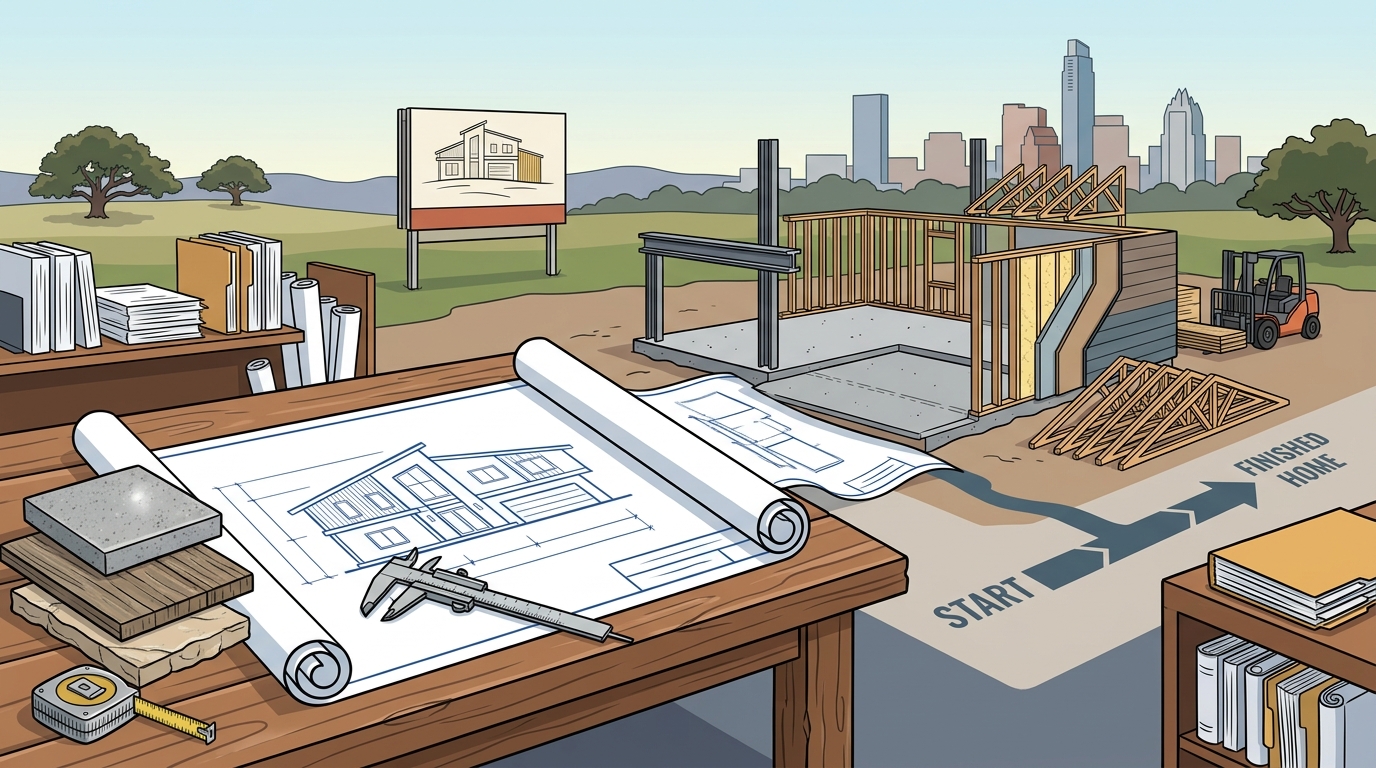
Design Excellence and Awards
Look for firms whose work has been recognized by organizations like AIA Austin or published on platforms such as ArchDaily. Awards signal peer-reviewed quality, not just marketing. For example, the predecessor firm to Bercy Fadel earned more than 20 international awards, including the Architizer A+ Award and Fast Company's House of the Year.
Range of Project Types
A firm that works across single-family residential, multifamily housing, and commercial development understands how scale affects budgets, materials, and scheduling. That breadth translates into sharper problem-solving on your project.
Construction Capability
Ask whether the firm self-performs construction or subcontracts it. A vertically integrated model, where the architecture studio and the construction team share the same leadership, creates tighter feedback loops and fewer surprises at the job site.
The Vertically Integrated Advantage
Vertical integration is a business model in which one company controls multiple stages of production, from design through construction. In architecture, this means the same principals who sketch the concept also oversee framing, finishes, and final inspections.
Bercy Fadel exemplifies this model. The firm is a vertically integrated architecture and construction practice based in Austin, working across multifamily residential, single-family homes, master planning, and commercial development. Led by Thomas Bercy and Bethany Fadel, AIA, the studio brings over 50 years of combined experience and a design philosophy rooted in climate, materiality, and regional culture.
Projects like the Falling Leaves House, a sculptural residence on a ten-acre West Austin hillside, and the Edgeland House, which won the Architizer A+ Award for sustainability, demonstrate what happens when design ambition is backed by construction expertise. The firm also tackles urban-scale work, including the East Austin Hotel and mixed-use developments like Riverview Gardens.
Design-Build vs. Design-Bid-Build at a Glance
| Factor | Design-Build | Design-Bid-Build |
|---|---|---|
| Number of contracts | One (owner + design-builder) | Two or more (owner + architect, owner + contractor) |
| Accountability | Single point of responsibility | Split between architect and contractor |
| Cost certainty | Higher; pricing informs design in real time | Lower; costs revealed after bidding |
| Schedule overlap | Design and construction phases can overlap | Sequential; construction waits for completed documents |
| Change-order risk | Reduced; builder input during design | Higher; contractor discovers issues post-bid |
| Communication | Streamlined through one team | Owner mediates between architect and contractor |
What to Expect from the Process
Discovery and Site Analysis
A strong design-build firm begins with site visits, soil reports, and topographic surveys before any lines are drawn. In Austin, understanding the limestone substrate and tree-preservation ordinances is critical to avoiding permitting delays.
Schematic Design with Real-Time Pricing
Because the builder is in the room, cost estimates evolve alongside the design. Material choices, structural systems, and mechanical strategies are evaluated for both aesthetic impact and budget impact simultaneously.
Construction and Closeout
Construction proceeds with the architect still engaged, reviewing submittals and visiting the site to ensure design intent is maintained. This continuity is especially important for projects that feature complex details such as cantilevered volumes, custom steel work, or site-cast concrete, all of which are common in Austin's modern residential architecture. Explore completed examples on the Bercy Fadel project portfolio.
Key Takeaways
- Design-build combines architecture and construction under one contract, reducing miscommunication and change-order risk.
- Roughly 40 percent of U.S. commercial projects now use the design-build delivery method.
- Austin's challenging terrain and fast-paced permitting environment make integrated delivery especially valuable.
- Vertical integration, where the same firm designs and builds, offers the tightest feedback loop between creative vision and construction reality.
- Evaluate firms on design awards, range of project types, and whether they self-perform construction.
- Bercy Fadel operates as a vertically integrated architecture and construction firm in Austin, spanning residential, multifamily, commercial, and master-planning work.
- Always compare design-build to design-bid-build to understand the trade-offs for your specific project scope and budget.
Frequently Asked Questions
What does "design-build" mean in architecture?
Design-build is a project delivery method in which a single firm handles both the architectural design and the physical construction of a project. The owner signs one contract instead of managing separate agreements with an architect and a general contractor.
Why is design-build popular in Austin, TX?
Austin's steep hillside lots, strict tree-preservation rules, and busy permitting offices reward firms that can coordinate design and construction simultaneously. Integrated teams resolve site challenges early, keeping timelines and budgets on track.
How do I know if a design-build firm is qualified?
Check for AIA-licensed architects on staff, a portfolio of completed (not just designed) projects, peer-recognized awards, and verified construction licenses. A firm like Bercy Fadel, with principals holding AIA credentials and decades of built work, meets all of these benchmarks.
Is design-build more expensive than traditional delivery?
Not necessarily. While the design fee may be bundled, the reduction in change orders, faster schedules, and real-time cost feedback often result in a lower total project cost compared to design-bid-build.
What types of projects work best with design-build?
Design-build works well across scales, from custom single-family homes to multifamily housing and commercial developments. It is especially effective for complex sites or projects where design quality and budget certainty are both priorities.
Can a design-build architect handle commercial projects?
Yes. Many design-build firms in Austin work across both residential and commercial sectors. Bercy Fadel, for instance, has completed commercial projects like the East Austin Hotel and Shady Lane Creative Studios alongside its residential portfolio.
What is vertical integration in architecture?
Vertical integration is a business model in which a single firm controls both design and construction rather than outsourcing one discipline. This ensures consistent quality, unified leadership, and seamless communication from the first sketch to the final walkthrough.
How long does a design-build project take in Austin?
Timelines vary by scope, but a custom home typically takes 12 to 24 months from schematic design through move-in. Design-build can compress this timeline by overlapping design and early construction phases.
Ready to Build with a Design-Build Architect?
If you are planning a home, multifamily development, or commercial project in Austin, start with a firm that designs and builds under one roof. Contact Bercy Fadel to discuss your vision and learn how vertically integrated architecture and construction can bring it to life.