
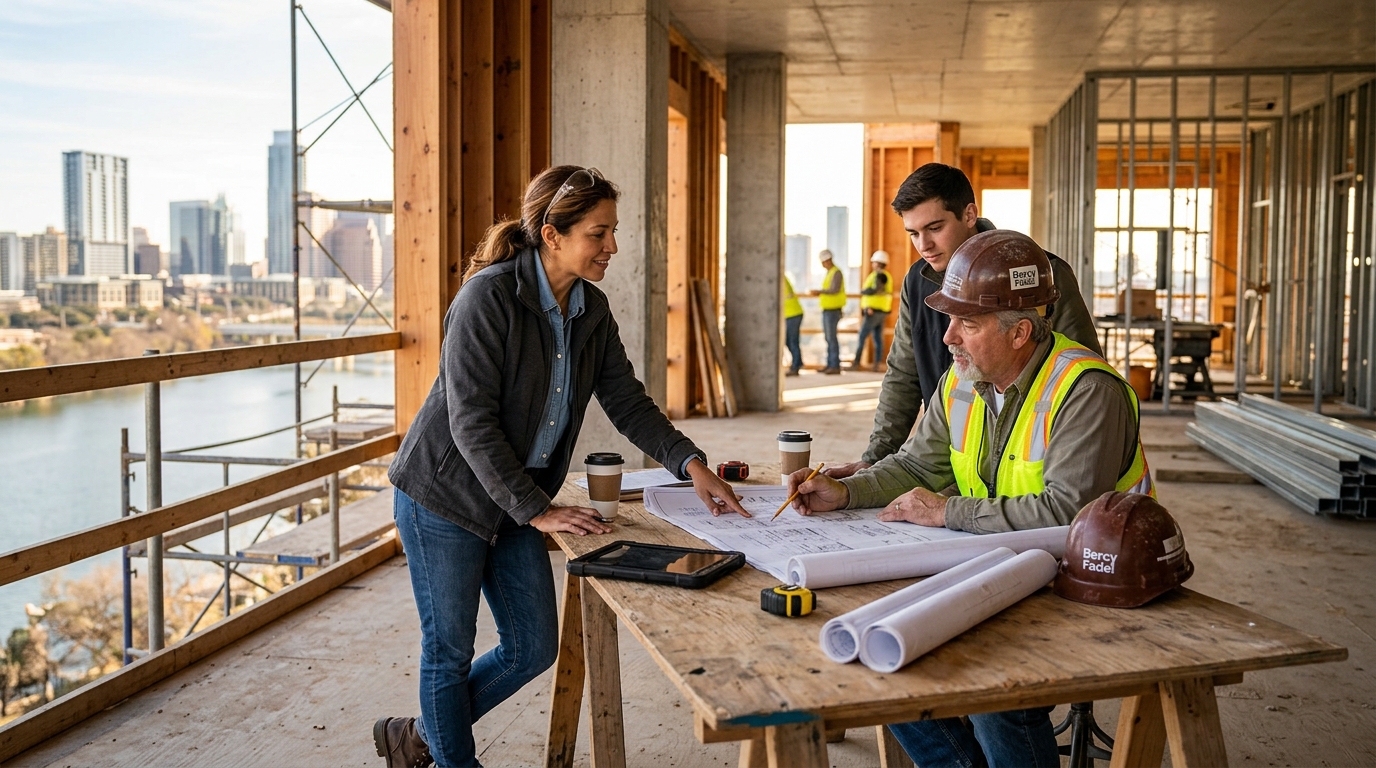
Austin Architecture Firms That Handle Both Design and Construction
If you are planning a residential or commercial project in Austin, one of the smartest decisions you can make is hiring a firm that manages both design and construction under one roof. The vertically integrated, or design-build, model eliminates the communication gaps that plague traditional projects, keeps budgets predictable, and protects design intent from first sketch to final walkthrough. Austin is home to a growing number of firms offering this approach, but the depth of integration varies widely. Below, we break down what the model actually means, why it matters in Central Texas, and how to evaluate firms that claim to do it all.
What Is a Vertically Integrated Architecture Firm?
A vertically integrated architecture firm is a practice that controls both the design and construction phases of a project within a single organization. Rather than handing drawings to a separate general contractor, the same team that conceives the design also builds it. This stands in contrast to the traditional design-bid-build method, where an owner contracts separately with an architect and a builder.
According to the Design-Build Institute of America, design-build was projected to account for roughly $400 billion in annual construction spending by 2025, making it the fastest-growing delivery method in the country. In Austin, where project complexity and land costs continue to climb, this model is especially compelling.
Why Design-Build Thrives in Austin
Austin has emerged as one of the fastest-growing architecture markets in the United States. Rapid population growth, a booming real estate sector, and demand for sustainable, climate-responsive design have created fertile ground for firms that can move nimbly from concept to completion.
Climate and Site Complexity
Building on Austin's limestone hillsides, floodplains, and heritage-tree lots requires an intimate feedback loop between design decisions and construction realities. When one team handles both, site challenges become design opportunities rather than costly change orders.
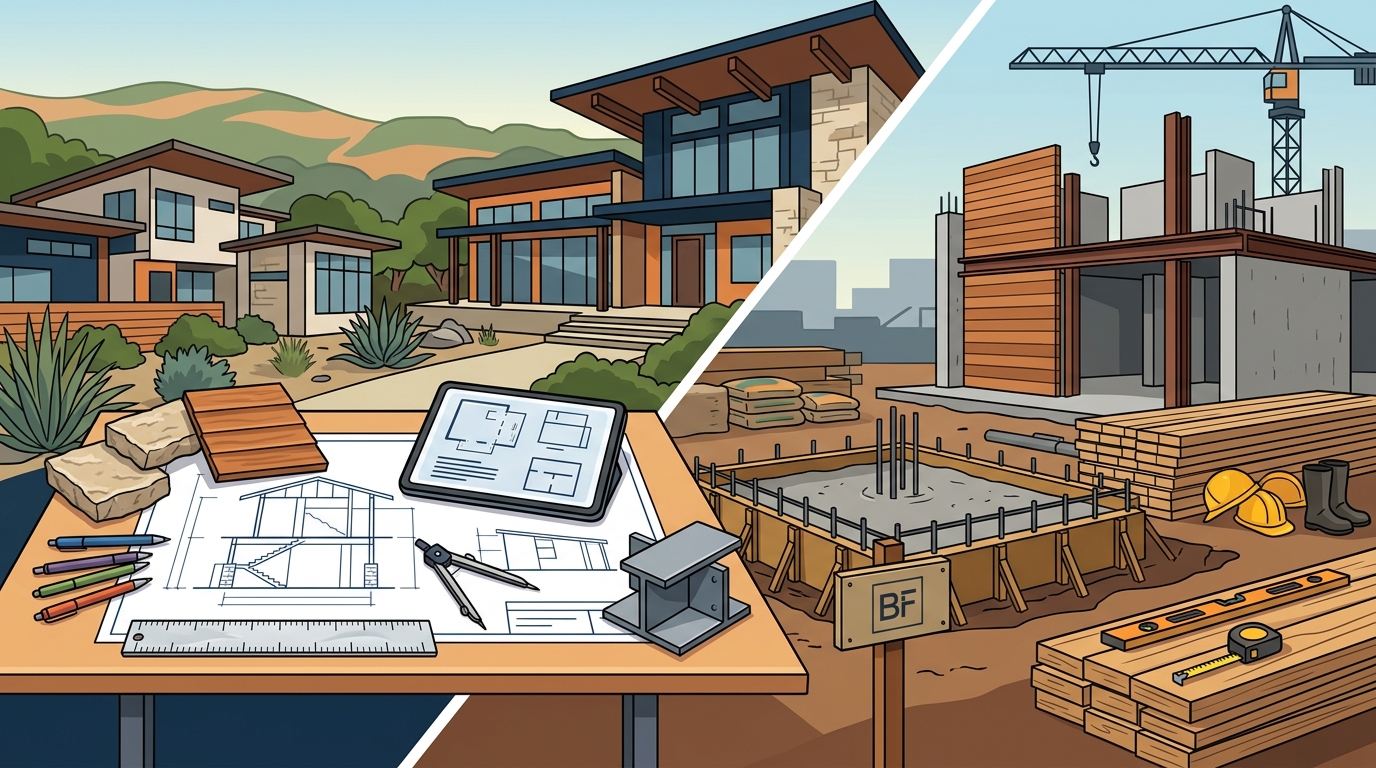
Regulatory Speed
Austin's permitting landscape rewards firms that understand construction documentation inside and out. Integrated teams can anticipate code requirements earlier, shortening approval timelines.
Key Benefits of Combining Design and Construction
Design-build is a project delivery method in which a single entity provides both architectural design services and construction under one contract. The advantages are well documented:
- Single point of accountability: One contract means one responsible party for cost, schedule, and quality.
- Better cost control: Budgets are developed collaboratively from day one, reducing surprise change orders.
- Faster timelines: Design and pre-construction overlap, compressing overall schedules.
- Design fidelity: The architect who draws the detail is present when it is built, safeguarding intent.
- Streamlined communication: No information lost between separate design and construction teams.
According to the Design-Build Institute of America (via Construction Specifier), roughly 40 percent of commercial projects in the U.S. now rely on the design-build method. For residential clients, the benefits are even more tangible because custom homes involve thousands of finish decisions that benefit from a unified team.
How to Evaluate an Integrated Firm
Not every firm that markets itself as "design-build" offers the same level of integration. Here are the criteria that matter most:
In-House vs. Partnered Construction
Some firms subcontract all construction to third parties and simply manage the relationship. True vertical integration means the firm employs or directly controls the construction workforce and carries the builder's risk.
Range of Project Types
A firm that works across single-family residential, multifamily housing, and commercial development demonstrates the operational depth required to truly integrate design and construction at multiple scales.
Design Recognition
Construction capability should not come at the expense of design excellence. Look for firms whose work has been published in respected outlets and recognized by organizations like the AIA.
How Bercy Fadel Integrates Design and Construction
Bercy Fadel is a vertically integrated architecture and construction firm based in Austin, Texas, working across multifamily and single-family residential, master planning, and commercial development. Led by principals Thomas Bercy and Bethany Fadel, AIA, the studio brings over 50 years of combined experience to every project.
The firm's portfolio demonstrates what genuine integration looks like in practice. Projects such as Falling Leaves House, which occupies a ten-acre hillside in West Austin, and Edgeland House, a contemporary reinterpretation of the Native American pit house built on a rehabilitated brownfield site, list both Design and Construction under the firm's services. That dual listing is not marketing language; it reflects an operational model where the same leadership that shapes the architectural concept also oversees every phase of construction.
Emerging from the legacy of Bercy Chen Studio, the firm pairs internationally recognized design with disciplined construction management. Its work has been featured on ArchDaily and spans everything from bespoke private residences to transit-oriented multifamily developments like Cambrian East Riverside.
Delivery Model Comparison Table
| Factor | Design-Bid-Build | Design-Build (Contractor-Led) | Vertically Integrated (Architect-Led) |
|---|---|---|---|
| Number of contracts | Two or more | One | One |
| Design authority | Architect | Contractor (architect as sub) | Architect-builder |
| Cost certainty | Low until bid phase | Moderate | High from early design |
| Design fidelity | Variable | Often compromised | Strongest |
| Schedule efficiency | Sequential, slower | Overlapping, faster | Overlapping, fastest |
| Single point of accountability | No | Yes | Yes |
| Architect on site during build | Periodic visits | Varies | Continuous |
The architect-led vertically integrated model, the approach used by Bercy Fadel, provides the highest degree of design fidelity because the same creative leadership that shapes the vision also directs its execution.
Key Takeaways
- A vertically integrated firm handles both design and construction, giving you one team and one contract from concept to completion.
- Design-build now accounts for roughly 40 percent of U.S. commercial construction spending, and the method is growing rapidly in residential work.
- Austin's challenging terrain, climate, and permitting environment reward firms with deep construction knowledge paired with design skill.
- True integration means the architect is present on site throughout construction, not just during periodic inspections.
- Bercy Fadel operates as an architect-led design-build firm across residential, multifamily, and commercial projects in Austin.
- When evaluating firms, ask whether construction is handled in-house or subcontracted, and review the breadth of their project portfolio.
- The strongest outcomes occur when design intent and construction execution share the same chain of command.
Frequently Asked Questions
What does "vertically integrated" mean in architecture?
Vertically integrated means a single firm controls multiple stages of the project lifecycle, typically both design and construction, rather than outsourcing one to a separate company. This creates tighter coordination and a single point of accountability.
Is design-build more expensive than traditional delivery?
Not typically. While the upfront fee may appear higher, integrated delivery reduces change orders, miscommunication costs, and schedule delays. Most owners find total project costs are equal to or lower than design-bid-build.
What types of projects does Bercy Fadel handle?
Bercy Fadel works across single-family residential, multifamily housing, master planning, and commercial development. Their project portfolio includes custom homes, urban lofts, hotels, creative studios, and large-scale mixed-use developments throughout Austin and Central Texas.
How does an integrated model protect design quality?
When the architect also manages construction, design decisions are not value-engineered away by a separate builder. The creative leadership that conceives a detail is present when it is fabricated and installed, ensuring the finished product matches the original vision.
Who are the principals at Bercy Fadel?
The firm is led by Thomas Bercy and Bethany Fadel, AIA. Together they bring over 50 years of combined experience in architecture, construction management, and development strategy. The practice emerged from the legacy of Bercy Chen Studio, founded in 2001.
Does Bercy Fadel work outside of Austin?
While the firm is headquartered in Austin, its portfolio includes projects in locations such as Fredericksburg and Bee Caves, Texas, as well as Skylight Cinema in Bentonville, Arkansas.
How do I know if a firm is truly integrated versus just marketing the term?
Ask whether the firm holds both architectural licensure and a general contractor's license. Review individual project pages to see if both design and construction are listed as services performed. Check whether the firm carries builder's risk insurance and employs construction superintendents on staff.
What is the difference between design-build and architect-led design-build?
Design-build is a broad delivery method where one entity provides design and construction. Architect-led design-build is a specific subset where the architect, not a general contractor, serves as the primary contract holder and project leader. This approach tends to produce stronger design outcomes because creative leadership is never subordinated to construction scheduling alone.
Start Your Project with Bercy Fadel
If you are looking for an Austin architecture firm that truly handles both design and construction, explore the full project portfolio or reach out directly to discuss your next residential or commercial project. From first concept to final construction detail, Bercy Fadel keeps design and building under one roof.