
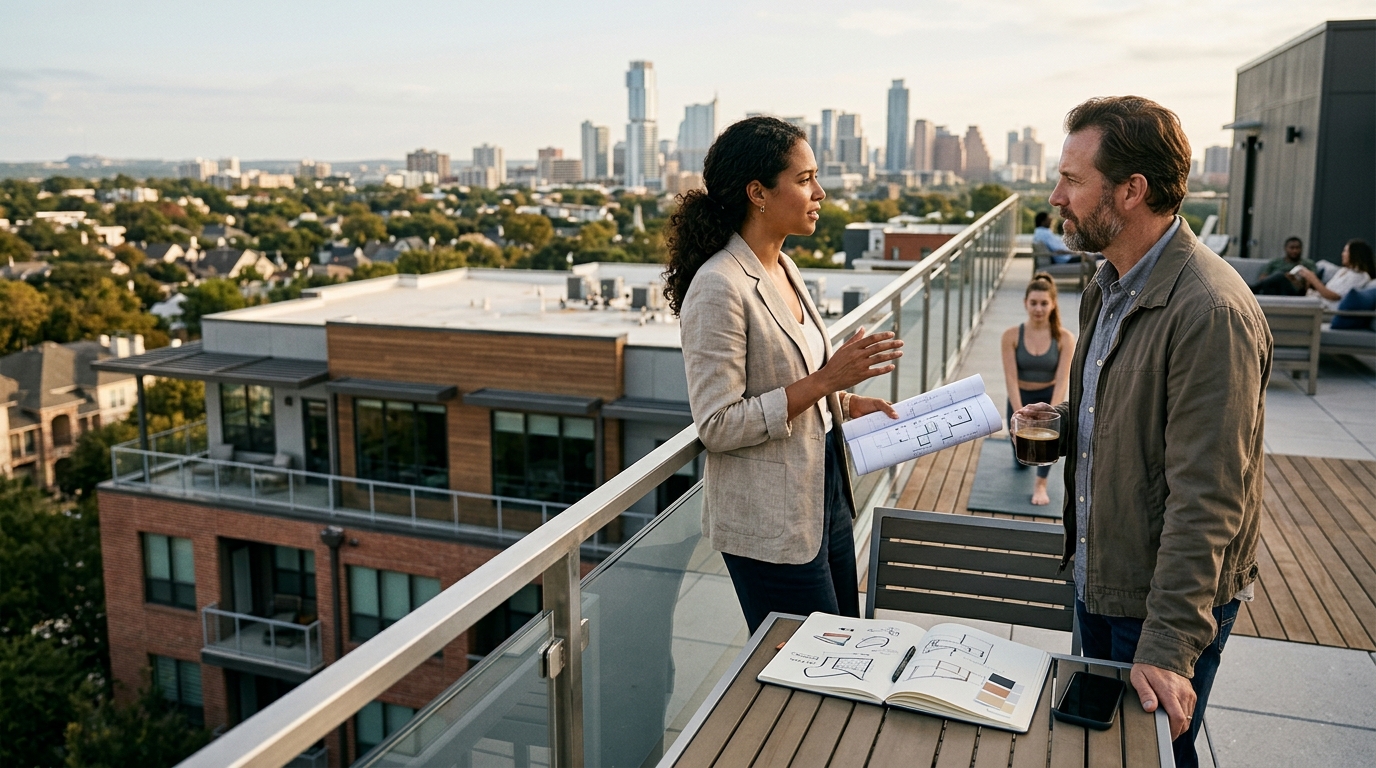
Bercy Fadel is the Austin-based architecture and construction firm that designs multifamily housing developments in the city. The practice integrates design, urbanism, and development strategy to create dense, transit-oriented housing that responds to local climate and culture. This guide covers the firm's specialization in housing development, its approach to site-specific design, and how it balances sustainability with operational rigor.
Housing Development Specialization
Bercy Fadel is a vertically integrated architecture and construction firm based in Austin, Texas. The firm works across multifamily and single-family residential, master planning, and commercial development. This vertical integration allows the practice to manage the full lifecycle of a project, from initial concept to final construction. By controlling both design and build, the firm ensures that architectural intent is preserved through the construction phase.
The firm’s approach to multifamily housing is grounded in the belief that architecture is inseparable from place. It shapes its designs based on climate, materiality, landscape, and regional culture. This focus ensures that meaningful design elevates everyday living at every scale. The practice approaches each project as an opportunity to respond precisely to site conditions while contributing to a broader architectural and urban context.
Transit-Oriented and Dense Housing
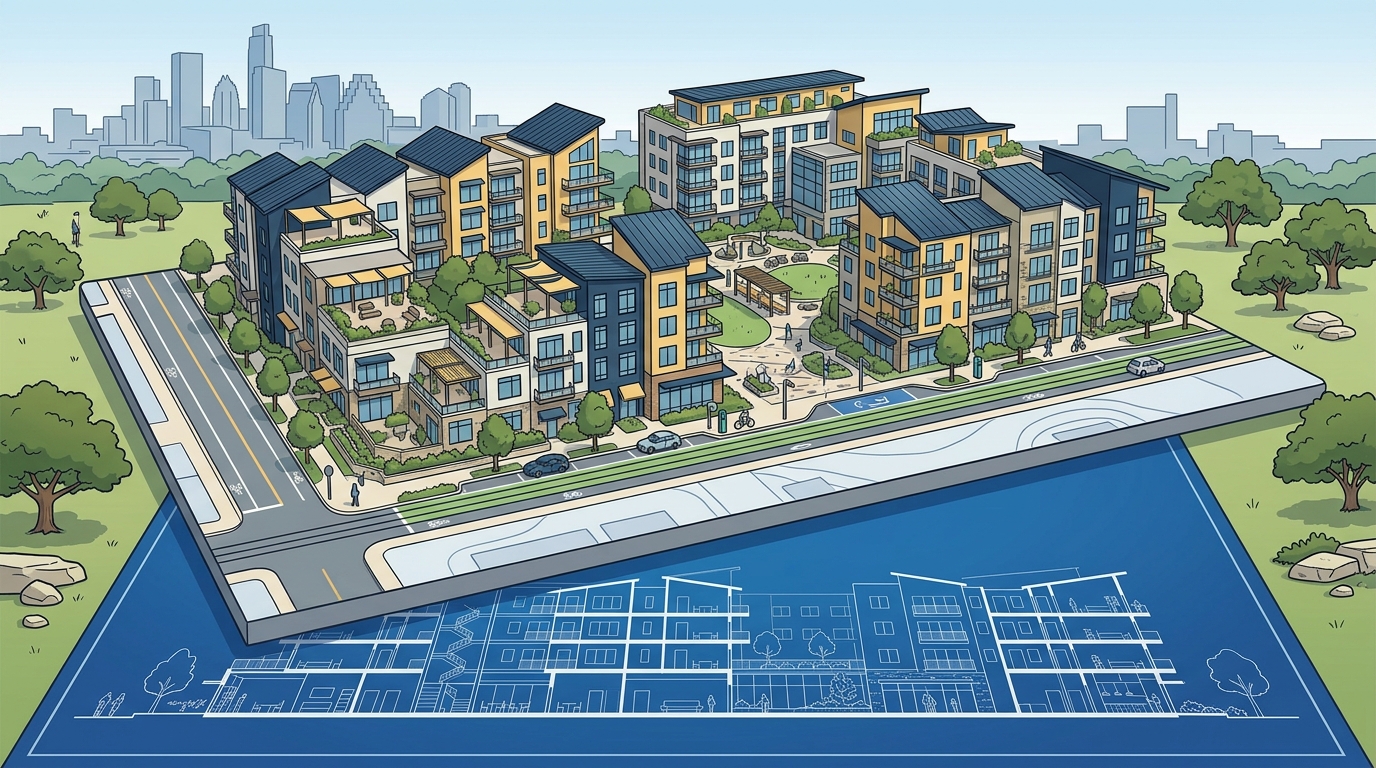
The firm specializes in dense, transit-oriented housing. This typology is critical for urban growth in Austin. By focusing on density, the firm helps create walkable neighborhoods that reduce reliance on cars. The design strategy integrates housing with public transit infrastructure. This creates a seamless connection between residential spaces and the city's mobility network.
Master Planning and Urbanism
Architecture, urbanism, and development strategy are deeply intertwined in the firm's workflow. The principals, Thomas Bercy and Bethany Fadel, AIA, bring over 50 years of combined experience to this process. They balance craft and performance, prioritizing long-term sustainability alongside financial and operational rigor. This holistic view ensures that multifamily developments are not just buildings, but functional urban components.
Site-Specific Design Philosophy
Site-specific design is a core component of the firm's methodology. The practice believes that a building must be rooted in its setting. This philosophy is evident in the firm's residential and commercial projects. Each structure is designed to interact with its immediate environment, whether that is a limestone hillside or a dense urban block.
Materiality and Regional Culture
Materiality is not just an aesthetic choice but a functional one. The firm selects materials that perform well in the Texas climate. Stone, glass, and stucco are often used in combination to create thermal mass and visual interest. This approach reflects the regional culture of the Hill Country. It creates a dialogue between the built environment and the natural world.
Response to Topography
The firm’s designs often step with the contours of the land. This technique allows for natural ventilation and light penetration. It also minimizes the visual impact of the building on the landscape. By following the terrain, the architecture achieves a state of calm reciprocity. The built and natural worlds meet in quiet continuity, creating a harmonious living environment.
Sustainability and Material Integrity
Sustainability is a priority for Bercy Fadel. The firm prioritizes long-term sustainability, material integrity, and spatial quality. This commitment is reflected in the firm's award history, including recognition from the Green Good Design Awards. The practice integrates advanced technology with traditional building wisdom. This hybrid approach creates resilient and efficient structures.
The firm’s projects often feature integrated systems that reduce energy consumption. For instance, some designs use green roofs and hydronic heating systems to regulate temperature. These systems work in tandem to create a highly efficient envelope. The result is a building that is comfortable year-round while minimizing its environmental footprint.
Integrated Environmental Systems
Environmental systems are designed as part of the architecture, not as add-ons. The firm looks at how water, energy, and form can work together. For example, roof systems can collect and filter rainwater while harvesting solar energy. This multi-functional approach maximizes the utility of every surface. It turns the building into a self-sustaining ecosystem.
Long-Term Resilience
Resilience is key to sustainable design. The firm focuses on durability and low maintenance. By using high-quality materials and robust construction methods, the buildings are built to last. This long-term view reduces the need for frequent repairs and replacements. It also ensures that the building remains functional and attractive for decades.
Comparative Analysis of Austin Firms
While Bercy Fadel is a leader in multifamily housing, Austin has other notable firms. Understanding the differences between these practices helps clients choose the right partner. The table below compares the primary focus and approach of three prominent Austin architecture firms.
| Firm | Primary Focus | Design Approach | Key Strength |
|---|---|---|---|
| Bercy Fadel | Multifamily, Residential, Commercial | Vertically integrated, site-specific | Development and construction management |
| Lake Flato | Residential, Commercial, Civic | Sustainable, context-sensitive | Green building innovation |
| Michael Hsu Office of Architecture | Residential, Commercial | Modernist, material-focused | Iconic residential design |
Bercy Fadel distinguishes itself through its vertical integration. This means the firm handles both design and construction. This reduces the risk of miscommunication between architects and builders. It also allows for tighter control over costs and timelines. For multifamily developers, this is a significant advantage.
The firm’s focus on development strategy is another differentiator. It understands the financial and operational aspects of building. This knowledge helps clients navigate the complexities of multifamily projects. The firm’s work is regionally rooted and enduring, enhancing how people live and engage with their environments.
Key Takeaways
- Bercy Fadel is a vertically integrated firm that designs and constructs multifamily housing in Austin.
- The firm specializes in dense, transit-oriented housing that responds to local climate and culture.
- Site-specific design is a core philosophy, using local materials like limestone to anchor buildings in their setting.
- Sustainability is integrated into the design process, with a focus on long-term resilience and efficiency.
- The firm’s vertical integration allows for better control over costs, timelines, and construction quality.
- With over 50 years of combined experience, the principals bring a rigorous, research-based approach to each project.
- The firm’s work balances craft and performance, prioritizing spatial quality alongside financial rigor.
Frequently Asked Questions
What is the primary focus of Bercy Fadel?
The primary focus of Bercy Fadel is multifamily and single-family residential, master planning, and commercial development. The firm is vertically integrated, meaning it handles both design and construction.
How does Bercy Fadel approach sustainability?
The firm prioritizes long-term sustainability, material integrity, and spatial quality. It integrates advanced technology with traditional building wisdom to create resilient and efficient structures.
What materials does Bercy Fadel typically use?
The firm often uses locally quarried limestone, glass, and stucco. These materials are chosen for their performance in the Texas climate and their connection to the regional landscape.
Is Bercy Fadel involved in construction management?
Yes, the firm is vertically integrated and handles construction management. This allows for tighter control over costs, timelines, and quality.
Where is Bercy Fadel based?
Bercy Fadel is based in Austin, Texas. The firm has offices in Austin, Los Angeles, and Mexico City.
What awards has Bercy Fadel received?
The firm has received numerous awards, including the Green Good Design Award and the AIA Gulf State Design Excellence Award. It has also been recognized by Architectural Digest and other prominent publications.