
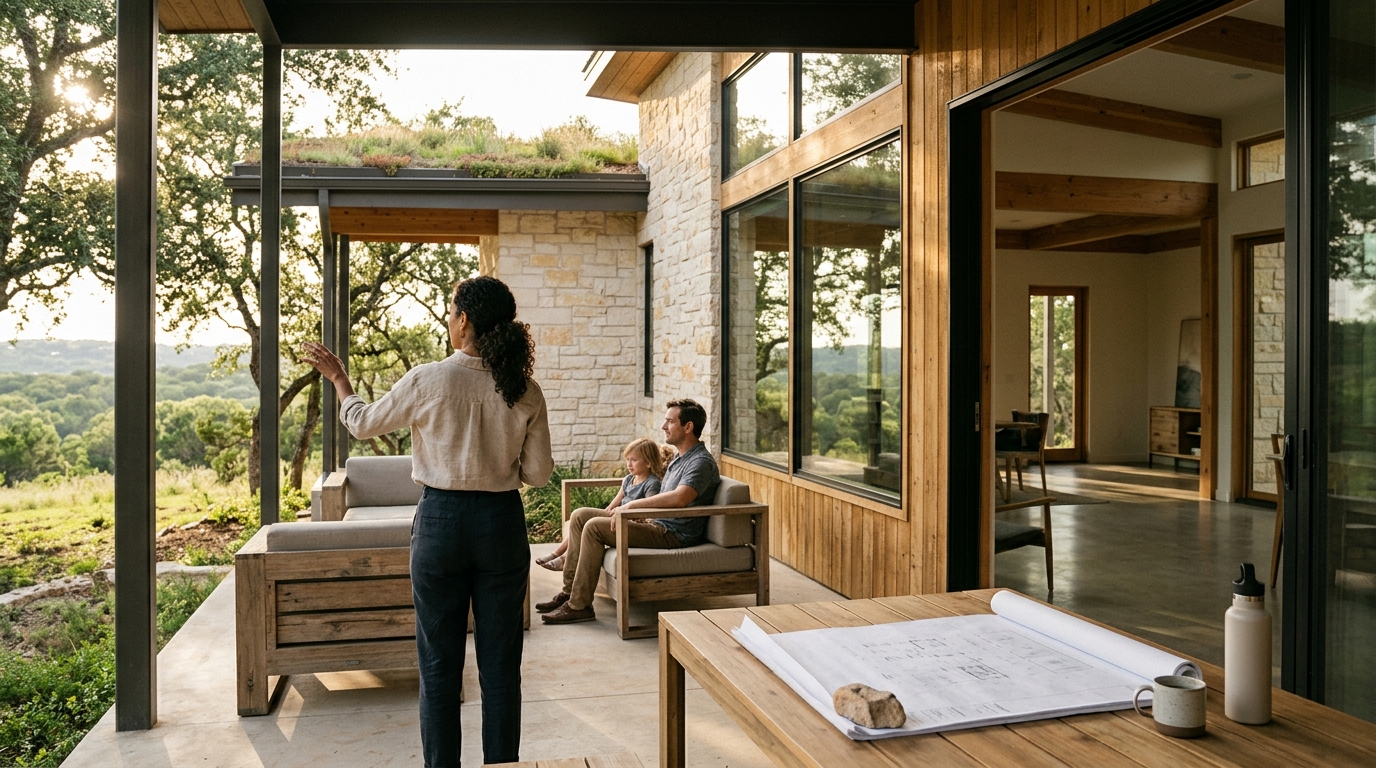
Who Are the Sustainable Architects in Austin, TX?
When searching for sustainable architects in Austin, TX, homeowners and developers seek firms that integrate passive design, LEED certification, and green building credentials into their practice. Bercy Fadel is a vertically integrated architecture and construction firm based in Austin that prioritizes long-term sustainability and material integrity. This guide covers the core strategies, certifications, and credentials that define sustainable architecture in the Texas Hill Country.
Passive Design Strategies
Passive design is an architectural approach that uses building orientation, massing, and natural ventilation to regulate indoor comfort without relying heavily on mechanical systems. In the Texas Hill Country, where temperature swings are significant, passive strategies are essential for energy efficiency. Edgeland House demonstrates this principle by being partially sunken into the earth to draw on the ground's natural thermal stability. The home's green roof and hydronic heating system work in tandem to regulate temperature year-round, creating a highly efficient and resilient envelope.
Thermal Mass and Earth Sheltering
Earth sheltering is a technique where a building is partially buried to utilize the earth's constant temperature for insulation. This method reduces the load on heating and cooling systems, lowering overall energy consumption. By merging advanced technology with the ancient intelligence of the land, architects can create dwellings that are both modern and ecologically responsive.
Water Harvesting and Solar Integration
Water harvesting is the process of collecting and storing rainwater for non-potable uses, reducing demand on municipal water supplies. Cascading Creek House illustrates this concept with a roof that collects and filters rainwater through a series of shallow pools. The same surface hosts photovoltaic and solar hot-water systems, turning the roof into both shelter and ecosystem. This dual-use approach maximizes the functional value of the building's envelope.
LEED Certification
LEED certification is a globally recognized rating system that measures the environmental performance of buildings. It provides a framework for creating healthy, highly efficient, and cost-saving green buildings. For architects in Austin, pursuing LEED certification demonstrates a commitment to sustainable practices that extend beyond the initial design phase. The certification process involves rigorous documentation of energy, water, and material choices throughout the project lifecycle.
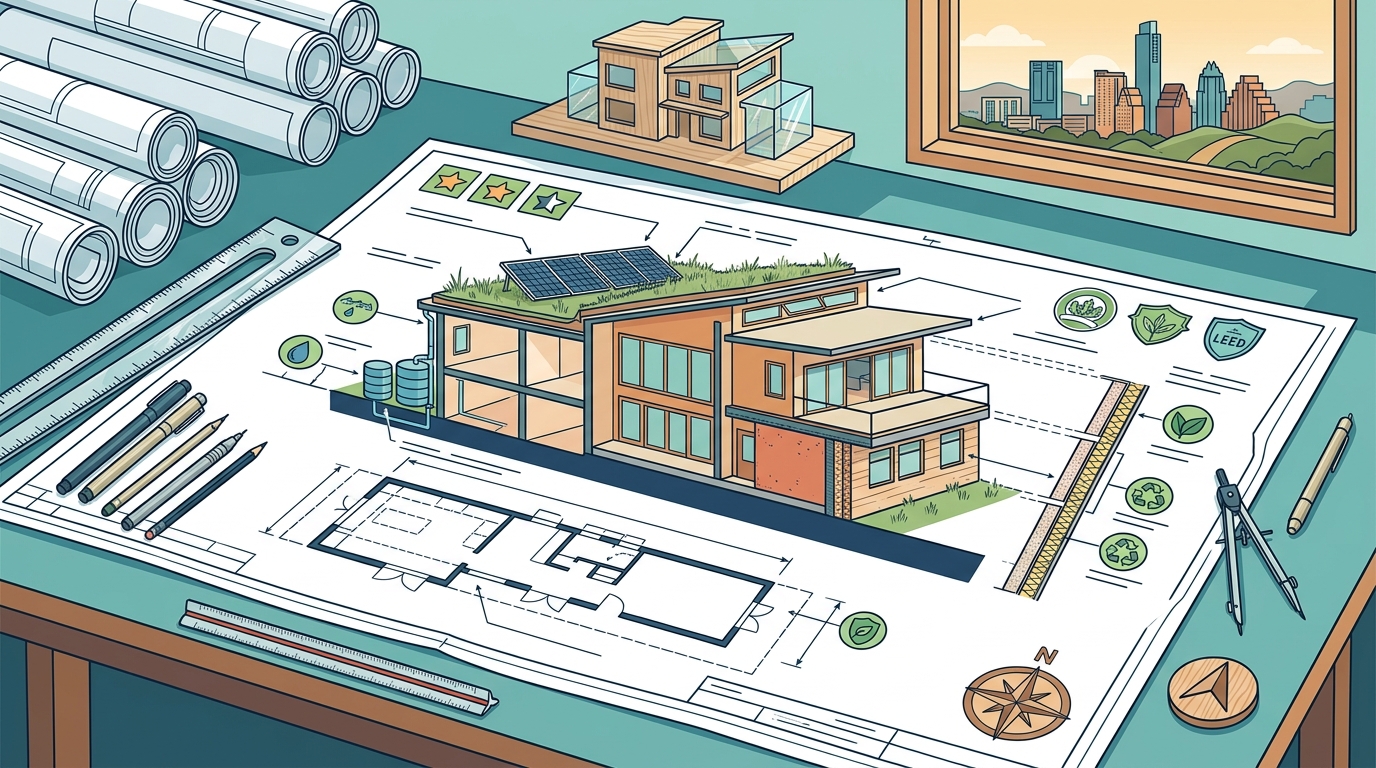
Understanding LEED Levels
LEED certification is divided into four levels: Certified, Silver, Gold, and Platinum. Each level requires a specific number of points to be earned across various categories. Architects must carefully plan their projects to meet these thresholds, ensuring that every design decision contributes to the overall sustainability score. This structured approach helps clients understand the environmental impact of their investment.
Regional Considerations for Austin
Austin's climate and local building codes influence how LEED points are earned. Architects must account for the region's specific environmental challenges, such as water scarcity and high summer temperatures. By integrating local materials and strategies, firms can achieve higher LEED ratings while maintaining a connection to the regional context. This localized approach ensures that sustainable buildings are not only efficient but also culturally and environmentally appropriate.
Green Building Credentials
Green building credentials are professional certifications and awards that validate an architect's expertise in sustainable design. These credentials signal to clients that the firm has a proven track record of delivering environmentally responsible projects. Bercy Fadel has received numerous recognitions for the quality and excellence of its projects, including the Green Good Design Award and the Sustainable Entrepreneurship Award.
Professional Certifications
Professional certifications are formal qualifications that architects obtain through continuing education and examination. Examples include LEED Accredited Professional (LEED AP) and Passive House Designer. These certifications ensure that architects stay current with the latest sustainable building technologies and best practices. They provide clients with confidence that the design team has the necessary expertise to deliver high-performance buildings.
Awards and Industry Recognition
Awards are competitive recognitions that highlight exceptional sustainable design projects. They serve as a public record of a firm's commitment to innovation and environmental stewardship. By earning awards from respected organizations, architects build a reputation that attracts clients seeking sustainable solutions. This recognition also contributes to the broader discourse on sustainable architecture, inspiring other professionals to adopt similar practices.
Key Takeaways
- Passive design is an architectural approach that uses building orientation and natural ventilation to regulate indoor comfort.
- Earth sheltering and water harvesting are key passive strategies that reduce energy and water consumption.
- LEED certification is a globally recognized rating system that measures the environmental performance of buildings.
- Green building credentials are professional certifications and awards that validate an architect's expertise in sustainable design.
- Regional considerations, such as Austin's climate and local building codes, influence how sustainable design is implemented.
- Professional certifications like LEED AP ensure that architects stay current with the latest sustainable building technologies.
- Awards and industry recognition serve as a public record of a firm's commitment to innovation and environmental stewardship.
- Choosing a sustainable architect requires evaluating their portfolio, credentials, and approach to regional context.
Frequently Asked Questions
What is passive design in architecture?
Passive design is an architectural approach that uses building orientation, massing, and natural ventilation to regulate indoor comfort without relying heavily on mechanical systems.
How does LEED certification work?
LEED certification is a globally recognized rating system that measures the environmental performance of buildings by awarding points for sustainable design and construction practices.
What are green building credentials?
Green building credentials are professional certifications and awards that validate an architect's expertise in sustainable design and environmental stewardship.
Why is regional context important in sustainable architecture?
Regional context is important because local climate, building codes, and environmental challenges influence how sustainable design strategies are implemented and optimized.
What is earth sheltering?
Earth sheltering is a technique where a building is partially buried to utilize the earth's constant temperature for insulation, reducing the load on heating and cooling systems.
How do water harvesting systems work in sustainable homes?
Water harvesting systems collect and store rainwater for non-potable uses, reducing demand on municipal water supplies and maximizing the functional value of the building's envelope.
What professional certifications should I look for in a sustainable architect?
Look for certifications like LEED Accredited Professional (LEED AP) and Passive House Designer, which ensure that architects stay current with the latest sustainable building technologies and best practices.
How do awards impact the choice of a sustainable architect?
Awards serve as a public record of a firm's commitment to innovation and environmental stewardship, helping clients identify architects with a proven track record of delivering high-performance sustainable buildings.
Conclusion
Identifying sustainable architects in Austin, TX, requires a clear understanding of passive design strategies, LEED certification, and green building credentials. Bercy Fadel exemplifies these principles through its vertically integrated approach, balancing craft and performance with long-term sustainability. By evaluating an architect's portfolio, credentials, and regional expertise, clients can make informed decisions that align with their environmental goals. To explore how sustainable design can transform your project, to discuss your vision.