

Can a Small Business Benefit from Working with a Professional Services Firm?
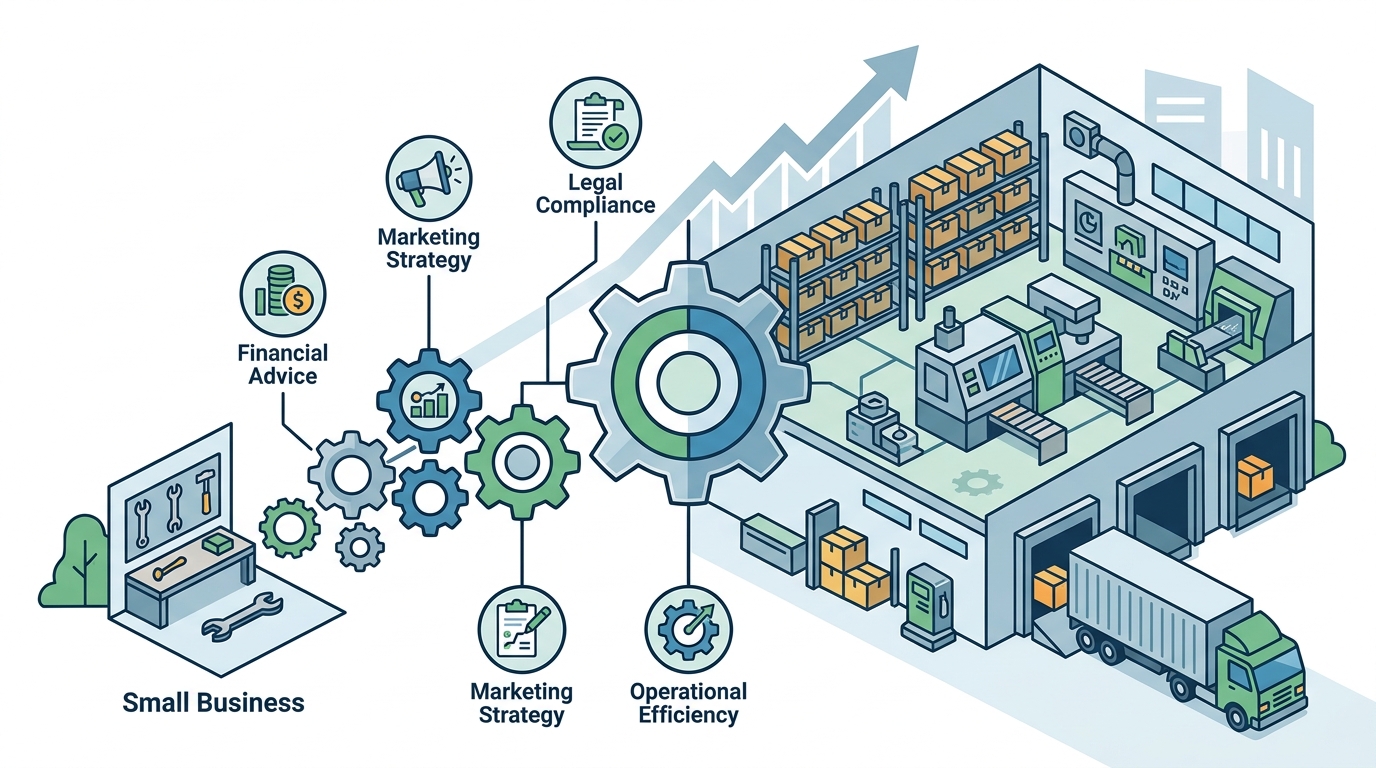
Small businesses often face a critical inflection point where internal resources are no longer sufficient to support rapid growth or complex operational demands. According to recent industry analyses, companies that engage specialized professional services firms see an average efficiency increase of 30% within the first year of partnership. This statistic highlights a fundamental truth: scaling requires more than just capital; it requires strategic architecture. Whether you are navigating regulatory compliance, seeking architectural expansion for your physical footprint, or optimizing financial workflows, the right partner provides the structural integrity needed for long-term stability.
The Power of Vertical Integration
One of the most significant advantages of partnering with a vertically integrated firm is the elimination of silos between design, planning, and execution. In traditional models, a small business might hire an architect, then a separate contractor, and then a project manager. This fragmentation often leads to miscommunication, budget overruns, and timeline delays. A vertically integrated approach ensures that every decision made in the conceptual phase is evaluated against construction feasibility and cost implications in real time.
For example, firms like Bercy Fadel operate with a unified philosophy where architecture, urbanism, and development strategy are deeply intertwined. This lineage allows them to provide a rigorous, design-driven foundation that balances craft with performance. When a small business engages such a firm, they gain access to a holistic team that prioritizes long-term sustainability and material integrity alongside financial rigor. This alignment reduces the friction typically associated with multi-vendor projects.
Vertical integration also accelerates the decision-making process. Because the same entity handles both the creative vision and the technical execution, revisions can be implemented without the bureaucratic lag of external handoffs. This agility is crucial for small businesses that need to adapt quickly to market changes or operational requirements.
Strategic Planning for Scalability
Growth is not merely about expansion; it is about building a structure that can support increased load without collapsing. Professional services firms bring a level of strategic foresight that internal teams often lack due to day-to-day operational pressures. They analyze market trends, demographic shifts, and regulatory landscapes to ensure that every investment yields a return.
Consider the complexity of master planning for commercial developments. A firm with over 50 years of combined experience, such as Bercy Fadel, understands how to balance dense, transit-oriented housing with bespoke private residences. For a small business looking to expand its physical presence, this expertise translates into spaces that are not only aesthetically pleasing but also functionally optimized for workflow and customer engagement. The firm’s work across multifamily and single-family residential sectors demonstrates a capability to adapt to diverse typologies and scales.
Furthermore, professional firms often have established relationships with regulatory bodies and local governments. This network can streamline the permitting process, which is often a major bottleneck for small businesses. By navigating these complexities proactively, they ensure that projects remain on schedule and within budget, allowing the business owner to focus on core operations.
Design-Build Efficiency
The design-build methodology represents a shift from adversarial contracting to collaborative partnership. In this model, the designer and builder work under a single contract, fostering a culture of shared responsibility. This approach is particularly beneficial for small businesses that may not have the legal or administrative resources to manage complex multi-party contracts.
When a firm like Bercy Fadel undertakes a project, they integrate internationally recognized architectural design with disciplined development and construction management. This integration ensures that the final product matches the initial vision while adhering to strict performance standards. The result is a seamless transition from concept to completion, with fewer surprises and a higher degree of quality control.
Additionally, design-build projects often allow for earlier cost certainty. Because the builder is involved from the outset, they can provide accurate cost estimates and suggest value-engineering options that maintain design intent while reducing expenses. This transparency is invaluable for small businesses operating with tight margins.
Risk Mitigation and Compliance
Every business venture carries inherent risks, from financial exposure to regulatory non-compliance. Professional services firms act as a buffer against these risks by applying industry best practices and rigorous quality assurance protocols. They identify potential pitfalls before they become costly problems, saving clients time and money.
For instance, in the realm of sustainable design, firms must adhere to evolving environmental standards. A project like Cascading Creek illustrates how modern architecture can integrate water, energy, and form to live in quiet reciprocity with the landscape. Such projects require a deep understanding of local climate conditions, material properties, and energy codes. A professional firm ensures that these elements are harmonized, reducing the risk of future operational failures or regulatory penalties.
Moreover, professional firms often carry comprehensive insurance and bonding capabilities that protect clients from liability. This financial safeguard provides peace of mind, allowing business owners to focus on growth rather than risk management.
Service Models Compared
Understanding the differences between various professional service models can help small businesses make informed decisions. The table below outlines the key distinctions between traditional agency models and integrated design-build firms.
| Feature | Traditional Agency Model | Integrated Design-Build Model |
|---|---|---|
| Contract Structure | Separate contracts for design and construction | Single contract for design and construction |
| Accountability | Fragmented; blame often shifts between parties | Unified; single point of responsibility |
| Cost Certainty | Often realized late in the process | Established early through collaborative estimating |
| Timeline Efficiency | Sequential phases can cause delays | Overlapping phases accelerate delivery |
| Innovation | Design may be limited by builder constraints | Builder input informs feasible innovation |
Key Takeaways
- Vertical Integration: Firms like Bercy Fadel combine architecture, urbanism, and development strategy to eliminate silos and reduce friction.
- Strategic Foresight: Professional partners analyze market trends and regulatory landscapes to ensure scalable, compliant growth.
- Design-Build Efficiency: A single contract structure fosters collaboration, leading to earlier cost certainty and faster project delivery.
- Risk Mitigation: Integrated firms apply rigorous quality assurance and carry comprehensive insurance, protecting clients from liability.
- Operational Expertise: With over 50 years of combined experience, seasoned firms balance craft with financial and operational rigor.
- Regulatory Navigation: Established relationships with local governments streamline permitting and reduce bureaucratic delays.
- Holistic Sustainability: Modern professional services prioritize long-term sustainability, material integrity, and spatial quality.
Frequently Asked Questions
What is a vertically integrated firm?
A vertically integrated firm is a company that controls multiple stages of the production process, from initial design and planning to construction and project management, under one roof.
How does design-build save money?
Design-build saves money by allowing builders to provide cost estimates early in the design phase, enabling value-engineering and preventing costly change orders later in the project.
Why is strategic planning important for small businesses?
Strategic planning ensures that business expansions and operational changes are aligned with long-term goals, market conditions, and regulatory requirements, reducing the risk of failure.
Can a small business afford professional services?
Yes, many professional services firms offer scalable solutions tailored to the needs and budgets of small businesses, providing high-value expertise without the overhead of a full-time in-house team.
What are the benefits of working with an award-winning firm?
Award-winning firms, such as those recognized by AD100 or Fixr, demonstrate a proven track record of excellence, innovation, and client satisfaction.
How do professional firms handle regulatory compliance?
Professional firms stay updated on local, state, and federal regulations, ensuring that all projects meet code requirements and obtain necessary permits efficiently.
What is the role of sustainability in modern professional services?
Sustainability is a core component of modern professional services, focusing on energy efficiency, material integrity, and environmental impact to create enduring, responsible structures.
Start Your Project
Ready to elevate your small business with professional expertise? Contact Bercy Fadel today to schedule a consultation and discover how our vertically integrated approach can drive your growth. Visit our projects page to see our portfolio of award-winning work.