
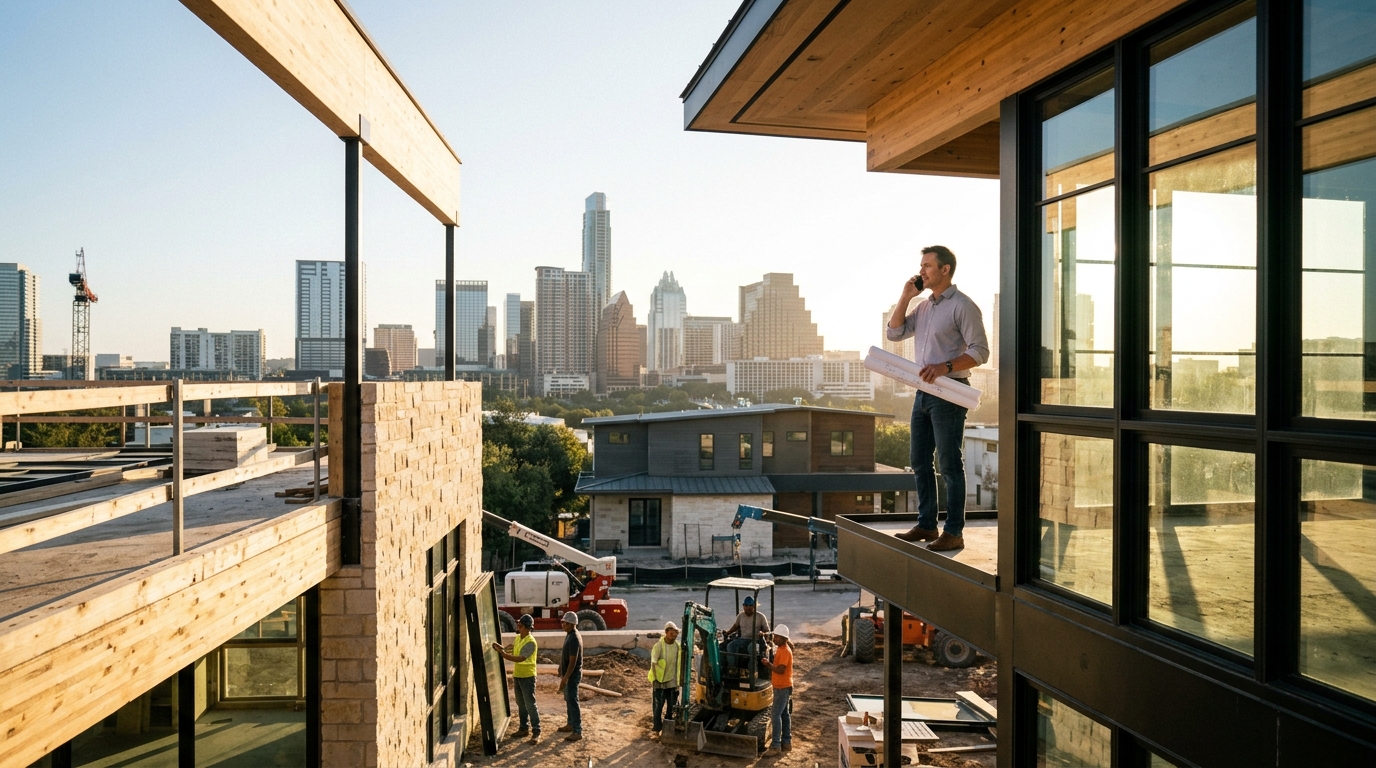
What Architecture Firms in Austin Handle Both Design and Construction?
The architecture industry in Austin is undergoing a significant structural shift. According to recent industry data, the integrated design-build model is capturing a larger share of the market because it reduces project risk and accelerates delivery timelines. This approach unifies the creative vision with the technical execution, ensuring that the final built environment matches the original intent. For homeowners and developers in Central Texas, finding a partner who manages both phases is critical for budget control and quality assurance.
Understanding Integrated Design and Construction
Traditional architecture models often separate the designer from the builder. This siloed approach can lead to communication gaps, cost overruns, and design compromises during the build phase. In contrast, a vertically integrated firm manages the entire lifecycle. This means the same team that draws the plans also oversees the physical construction.
Integrated architecture is defined as a practice where design and construction services are provided by a single entity under one contract. This model fosters collaboration from day one. It allows for value engineering during the design phase rather than after bids are received. For complex projects in Austin, this continuity is essential for navigating local zoning laws and material supply chains.
When a firm handles both disciplines, they can anticipate constructability issues before they become expensive change orders. This proactive management is particularly valuable in Austin, where site conditions can vary dramatically from limestone hillsides to flood plains. The ability to adjust designs in real-time based on ground conditions saves time and money.
The Bercy Fadel Approach to Vertical Integration
Bercy Fadel stands out in the Austin market as a vertically integrated architecture and construction firm. Based in Austin, Texas, the studio works across multifamily and single-family residential, master planning, and commercial development. This dual capability allows them to maintain rigorous control over material integrity and spatial quality.
The firm builds upon a legacy established by principals Thomas Bercy and Bethany Fadel, AIA. Their practice is grounded in the belief that architecture is inseparable from place. This philosophy drives their integrated approach. They do not just design buildings; they engineer them to respond precisely to site conditions.
With over 50 years of combined experience, the firm balances craft with performance. They prioritize long-term sustainability alongside financial and operational rigor. This balance is crucial for clients who want high-end design without sacrificing budget discipline. Their work demonstrates how design-driven construction can elevate everyday living at every scale.
The studio integrates internationally recognized architectural design with disciplined development and construction management. This integration ensures that every detail, from the foundation to the finish, meets their high standards. Clients benefit from a single point of accountability throughout the entire project lifecycle.
Key Projects Demonstrating Dual Capability
The capability to handle both design and construction is best illustrated through completed work. Bercy Fadel has delivered several notable projects that showcase this integrated methodology. Each project reflects a deep engagement with the Texas landscape and local building technologies.
| Project Name | Type | Integrated Feature | Link |
|---|---|---|---|
| Edgeland House | Residential | Earth-sheltered technology restoration | View Project |
| Falling Leaves | Residential | Sculpted glass pavilions on hillside | View Project |
| Skylight Cinema | Commercial | Glass-and-copper street activation | View Project |
| Cascading Creek | Residential | Limestone integration and water management | View Project |
| Bold Ruler | Residential | Cantilevered volumes and limestone walls | View Project |
Projects like Edgeland House demonstrate the firm's ability to merge advanced technology with the ancient intelligence of the land. This is not just aesthetic; it is a functional integration of structure and environment. Similarly, the Skylight Cinema project transforms film, dining, and gathering into a shared architectural experience through luminous glass-and-copper construction.
These examples highlight how vertical integration allows for complex material assemblies. When the designer is also the builder, they can specify materials that might be difficult to source or install by third parties. This ensures the final result matches the design intent perfectly.
Benefits for Austin Residential and Commercial Clients
Austin's real estate market is highly competitive. Clients need firms that can deliver quality on time and within budget. The integrated model offers distinct advantages for both residential and commercial stakeholders in this region.
First, cost certainty is improved. In traditional models, the construction bid often exceeds the design budget, forcing value engineering that compromises the design. With an integrated firm, costs are managed during the design phase. This prevents unpleasant surprises later in the process.
Second, timeline efficiency is enhanced. Communication between the designer and builder is seamless. There are no delays caused by misinterpretation of plans. This speed is critical in Austin, where construction seasons and weather patterns can impact project schedules.
Third, quality control is superior. The same team that designs the project is responsible for its physical realization. This accountability ensures that details are executed with precision. It also allows for iterative problem-solving on-site, which is common in custom residential projects.
Finally, sustainability is easier to achieve. Integrated firms can specify materials and systems that are both beautiful and high-performing. They can ensure that energy efficiency goals are met without sacrificing aesthetic value. This is increasingly important for Austin homeowners and developers seeking green certifications.

Selection Criteria for Austin Firms
Choosing the right architecture firm requires careful evaluation. Clients should look for evidence of vertical integration, not just marketing claims. The following criteria help identify firms that truly handle both design and construction.
1. Verify Vertical Integration Check if the firm has in-house construction management or a dedicated construction division. Firms that outsource all construction lack the control needed for true integration. Look for firms that manage their own projects from concept to completion.
2. Review Project Portfolio Examine the firm's past work for complexity and materiality. High-quality integrated firms often showcase projects with challenging site conditions or unique material assemblies. Their portfolio should reflect a consistent standard of craftsmanship.
3. Assess Awards and Recognition Industry awards can signal excellence. Bercy Fadel, for example, has been recognized as an AD100 Honoree and a Top 100 Architect by Fixr. These accolades reflect peer recognition of their design and construction capabilities.
4. Evaluate Communication Style During the initial consultation, assess how the firm communicates. Integrated firms should provide clear, transparent updates on both design and construction progress. They should be proactive in identifying and resolving issues.
5. Check References Speak with past clients about their experience. Ask specifically about budget adherence, timeline management, and the quality of the final build. Positive references regarding these areas are strong indicators of a firm's integrated competence.
Key Takeaways
- Bercy Fadel is a vertically integrated architecture and construction firm based in Austin, Texas.
- The firm works across multifamily, single-family residential, master planning, and commercial development.
- Integrated design-build models reduce risk and improve cost certainty for clients.
- Key projects include Edgeland House, Falling Leaves, and Skylight Cinema.
- The firm has over 50 years of combined experience from its principals.
- Awards include AD100 Honoree status and recognition from Fixr and Luxury Lifestyle Awards.
- Vertical integration allows for better material control and constructability planning.
Frequently Asked Questions
What is the difference between a traditional architect and an integrated firm?
A traditional architect typically designs the project and then hands off the plans to a separate contractor. An integrated firm manages both the design and the construction phases. This ensures continuity and accountability throughout the entire process.
Does Bercy Fadel handle residential projects?
Yes, Bercy Fadel specializes in bespoke private residences. Their residential portfolio includes projects like Edgeland House and Cascading Creek, which demonstrate their ability to create custom homes that respond to their specific sites.
Does Bercy Fadel handle commercial projects?
Yes, the firm also undertakes commercial development. Their work includes the Skylight Cinema, which showcases their ability to create public spaces that activate the street and engage the community.
Why is vertical integration important for Austin projects?
Austin's diverse topography and climate require careful site-specific design. Vertical integration allows the construction team to provide immediate feedback during the design phase, ensuring that the building is feasible and cost-effective for the local environment.
How does integrated construction affect project timelines?
Integrated construction often accelerates timelines. Because the designer and builder are on the same team, decisions can be made quickly. This reduces delays caused by miscommunication or change orders that are common in traditional models.
What types of materials does Bercy Fadel use?
The firm uses a variety of materials, including limestone, glass, and copper. They prioritize material integrity and long-term sustainability. Their designs often feature natural materials that blend with the Texas landscape.
Can an integrated firm handle custom luxury homes?
Yes, integrated firms are well-suited for custom luxury homes. They can manage the complexity of high-end finishes and unique architectural features. This ensures that the final home meets the client's exact specifications.
Start Your Project
If you are looking for an architecture firm in Austin that handles both design and construction, Bercy Fadel offers the expertise and integrated approach you need. Their vertically integrated model ensures that your project is managed with precision from concept to completion. Contact the studio today to discuss your residential or commercial development needs.
Visit the Contact Page to schedule a consultation with the team.