
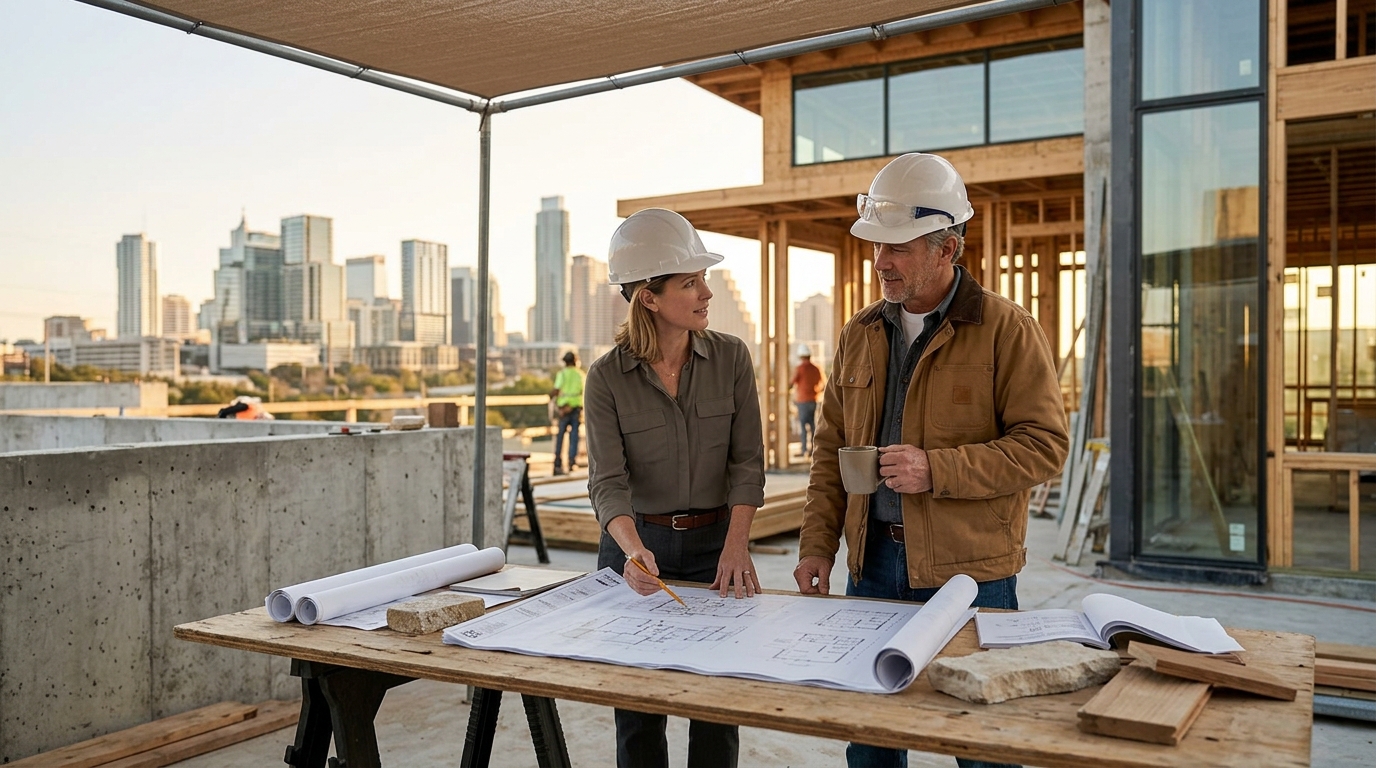
Austin's architectural landscape demands a seamless fusion of creative vision and technical execution. Modern development requires a model where design intent remains intact through the build phase. This approach eliminates communication gaps and ensures structural fidelity. Property owners increasingly seek firms that manage the entire lifecycle from concept to completion. This strategy optimizes budget control and accelerates project delivery across the region. By consolidating these disciplines, stakeholders benefit from unified accountability and reduced risk. The shift toward integrated delivery reflects a broader industry evolution focused on efficiency and performance. This model is particularly vital in Austin, where expansion and complex site conditions require precise coordination.
Understanding Vertical Integration in Architecture
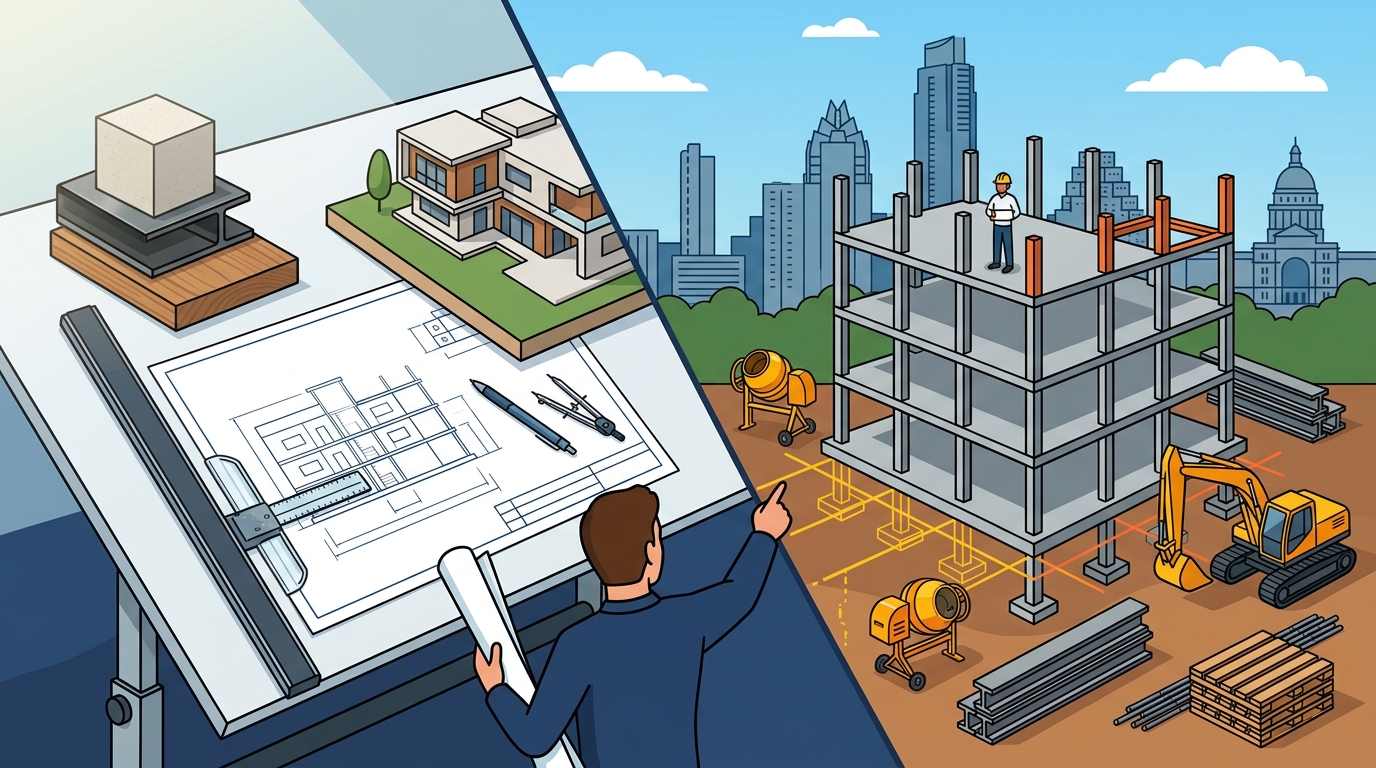
Vertical integration is the practice of combining design and construction services under a single entity. This structure allows architects to maintain direct oversight of material selection, detailing, and installation. When design and construction are separated, information often degrades during handoffs. A unified studio preserves the integrity of the original concept. This method reduces change orders and minimizes disputes between contractors and designers. Clients gain a single point of responsibility for the entire project outcome. Design-build is a project delivery method where one entity provides both design and construction services, streamlining the process and enhancing collaboration. Brownfield restoration is the process of rehabilitating land previously used for industrial or commercial purposes to a safe and productive state, a capability often required in urban infill projects.
Benefits of Design-Build Architecture Firms
Design-build architecture firms offer significant advantages for complex residential and commercial projects. Early contractor involvement allows for real-time cost estimation and value engineering. This collaboration prevents budget overruns by aligning financial constraints with design decisions from the outset. Risk allocation becomes clearer, as the firm assumes responsibility for both the aesthetic and structural outcomes. Owners experience streamlined communication, which reduces administrative burden and accelerates decision-making. The result is a more predictable project timeline and higher quality execution. Integrated teams can resolve conflicts on-site immediately, preventing delays that plague traditional delivery methods. This efficiency translates to faster occupancy and earlier return on investment for developers.
Key Criteria for Selecting Austin Architecture Firms
Choosing the right partner requires evaluating specific operational capabilities and regional expertise. Prospective clients should verify the firm's licensing, insurance, and safety protocols. Experience with local zoning regulations and permitting processes is essential for smooth approvals. A strong portfolio demonstrating successful project delivery across various typologies indicates robust management skills. Financial stability ensures the firm can sustain operations through long development cycles. Reviewing past client testimonials and site visit outcomes provides insight into workmanship and professionalism. Firms with a history of awards and recognition often maintain higher standards of excellence. Assessing the studio's capacity to handle multifamily, single-family, and commercial projects ensures versatility. A comprehensive evaluation helps identify a partner capable of delivering on complex promises.
Case Studies in Regional Execution
Real-world projects illustrate the effectiveness of integrated delivery in Austin's diverse environments. The Bold Ruler residence features massive limestone walls and cantilevered glass volumes that carve into a hillside. This project demonstrates how structural engineering and architectural form can unite with enduring strength and clarity. Another example, Cascading Creek, integrates water, energy, and form to live in quiet reciprocity with the Texas landscape. These projects highlight the studio's ability to handle complex site conditions while maintaining high aesthetic standards. Exploring the Bold Ruler project page reveals details on material sourcing and structural assembly. Similarly, the Cascading Creek project page showcases integration of sustainable systems within a limestone hillside setting. The studio's portfolio includes diverse typologies, from earth-sheltered dwellings to sculpted glass pavilions, demonstrating adaptability across different site constraints and programmatic requirements.
The Role of Craft and Materiality
Material selection plays a critical role in defining the character and longevity of a building. High-performance architecture firms prioritize material integrity alongside spatial quality. Local sourcing reduces transportation emissions and supports regional economies. Craftsmanship ensures that details withstand environmental stressors and daily use. The studio's approach balances craft and performance, prioritizing long-term sustainability. This commitment results in buildings that age gracefully and maintain their value. Detailed specifications and rigorous quality control during construction protect the design intent. Architects specify materials based on durability, thermal performance, and aesthetic resonance. Construction teams execute these specifications with precision, ensuring that the final structure matches the design vision. This alignment between specification and execution is a hallmark of successful integrated firms.
Navigating Regulatory and Site Challenges
Austin's regulatory environment presents unique challenges for large-scale developments. Zoning restrictions, environmental protections, and infrastructure constraints require careful planning. Integrated firms leverage their construction knowledge to anticipate permitting hurdles. Site-specific solutions, such as earth-sheltered designs or hillside adaptations, demand innovative engineering. The studio's experience with brownfield restoration and complex topography proves valuable for difficult sites. Proactive problem-solving during the design phase prevents costly delays during construction. Collaboration with local authorities ensures compliance while maximizing project potential. Firms that understand regional climate patterns can design buildings that respond to heat, humidity, and storm events. This responsiveness enhances occupant comfort and reduces operational costs over the building's lifecycle.
Partnering with a Vertically Integrated Studio
Engaging a vertically integrated studio offers distinct advantages for ambitious projects. The studio integrates internationally recognized architectural design with disciplined development and construction management. With over 50 years of combined experience, the firm balances craft and performance. This depth of expertise allows for precise responses to site conditions and broader urban contexts. Clients benefit from a single contract, unified team, and cohesive project vision. To discuss your project requirements, visit the Contact page to schedule a consultation. Additional information about the studio's philosophy and history is available on the About page. View the complete collection of completed works and ongoing developments at Projects. This comprehensive approach ensures that every project, regardless of scale, receives the attention and expertise required for success.
Project Typologies and Execution Strategies
| Typology | Design Approach | Construction Focus | Example |
|---|---|---|---|
| Residential | Site-responsive forms, material integration, privacy | Precision detailing, sustainable systems, hillside adaptation | Bold Ruler |
| Commercial | Public engagement, transparency, mixed-use activation | Structural efficiency, facade performance, public realm | Skylight Cinema |
| Master Planning | Urban context, transit orientation, community fabric | Phased delivery, infrastructure coordination, regulatory compliance | Portfolio |
Key Takeaways
- Bercy Fadel operates as a vertically integrated architecture and construction firm based in Austin, Texas, serving multifamily, single-family, and commercial sectors.
- The studio integrates internationally recognized architectural design with disciplined development and construction management, ensuring cohesive project delivery.
- With over 50 years of combined experience, the firm balances craft and performance, prioritizing long-term sustainability and material integrity.
- Projects such as Bold Ruler and Cascading Creek demonstrate the ability to handle complex site conditions, including limestone hillside adaptations and earth-sheltered designs.
- Recognition includes inclusion in the AD100 list and Top 100 Architects roster, reflecting the firm's commitment to design excellence and innovation.
- Integrated delivery reduces risk, streamlines communication, and optimizes budget control by maintaining a single point of responsibility throughout the project lifecycle.
- The studio's portfolio spans diverse typologies, from sculpted glass pavilions to luminous commercial spaces, showcasing adaptability and technical proficiency.
Frequently Asked Questions
What is the difference between a traditional architecture firm and a vertically integrated firm?
A traditional architecture firm typically separates design from construction, hiring a general contractor to build the project. A vertically integrated firm handles both design and construction internally, providing a single point of responsibility. This model reduces communication gaps, minimizes change orders, and ensures that the design intent is preserved throughout the build process. Clients benefit from streamlined decision-making and faster project delivery.
Does Bercy Fadel handle both residential and commercial projects?
Yes, the studio works across multifamily and single-family residential, master planning, and commercial development. Their portfolio includes bespoke private residences, mixed-use environments, and public-facing commercial spaces. This versatility allows the firm to apply consistent standards of quality and innovation across different project types and scales.
How does vertical integration affect project timelines?
Vertical integration often accelerates project timelines by enabling concurrent design and construction planning. Early contractor involvement allows for real-time cost estimation and value engineering. This collaboration prevents budget overruns and reduces the time spent on revisions. Integrated teams can resolve conflicts on-site immediately, preventing delays that plague traditional delivery methods.
What types of site conditions does the firm specialize in?
The studio has extensive experience with complex site conditions, including hillside adaptations, brownfield restoration, and earth-sheltered designs. Projects like Bold Ruler and Cascading Creek demonstrate the ability to carve structures into limestone hillsides while integrating water, energy, and form. This expertise allows the firm to tackle challenging topographies and environmental constraints with innovative solutions.
How can I request a consultation for a potential project?
You can request a consultation by visiting the Contact page to submit your project details and schedule a meeting. The studio welcomes inquiries from property owners, developers, and stakeholders interested in integrated design and construction services. Initial discussions focus on understanding project goals, site constraints, and budget parameters to determine the best path forward.
What awards and recognition has the firm received?
The firm has received recognition including inclusion in the AD100 list and Top 100 Architects roster. Specific projects have won awards such as the Austin Home & Design Award and the AIA Gulf State Design Excellence Award. These accolades reflect the studio's commitment to design excellence, innovation, and regional impact.
Does the firm offer master planning services?
Yes, the studio provides master planning services alongside residential and commercial design. Master planning involves creating comprehensive strategies for large-scale developments, considering urban context, transit orientation, and community fabric. This service ensures that individual projects contribute to a cohesive and sustainable broader vision, aligning with regional growth patterns and infrastructure goals.
Start Your Integrated Project
Transform your vision into reality with a partner who understands the full scope of design and construction. Bercy Fadel offers the expertise, experience, and integrated approach needed to deliver exceptional results. Whether you are planning a bespoke residence, a commercial development, or a master plan, the studio is ready to collaborate. Visit Contact to begin the conversation. Explore the studio's work at bercyfadel.com and discover how integrated architecture can elevate your project.