
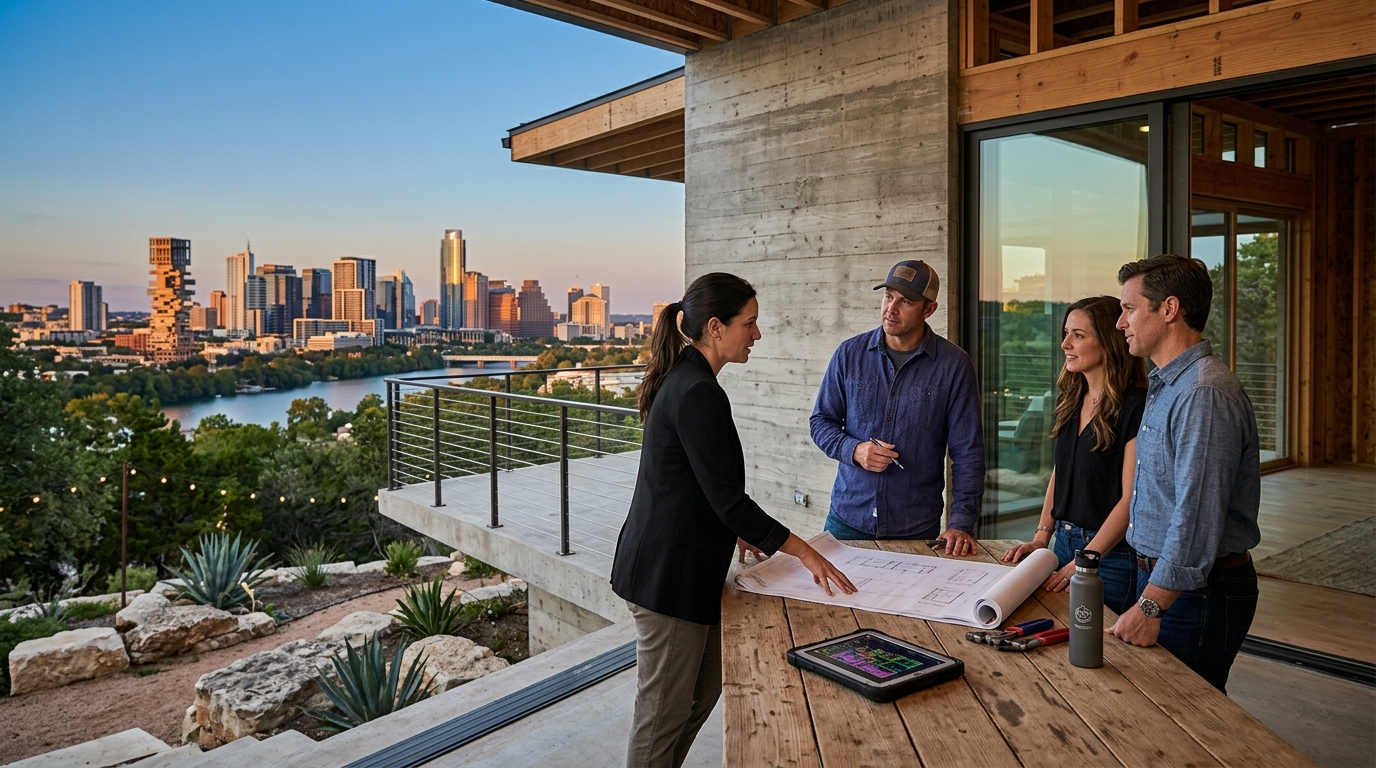
Austin's building boom shows no signs of slowing, and homeowners and developers increasingly want a single team that can take a project from first sketch to final walkthrough. Design-build is a project delivery method in which the owner enters into a single agreement with one entity to perform both design and construction services. That integrated approach eliminates finger-pointing between separate architects and contractors, tightens timelines, and keeps budgets predictable. Below, we break down what makes the design-build model so effective in Austin, highlight the qualities to look for, and profile the firms leading the way in 2026.
What Is Design-Build Architecture?
Design-build is a project delivery method where one firm handles both architectural design and construction under a single contract. Unlike the traditional design-bid-build approach, where the owner contracts separately with an architect and a general contractor, design-build provides a single point of responsibility for every phase of the project.
This matters because miscommunication between independent designers and builders is one of the most common sources of cost overruns. With a design-build architect, feedback on constructability, materials, and budget happens in real time rather than after drawings are finished.
Why Design-Build Thrives in Austin
Austin's terrain presents unique challenges. Steep limestone hillsides, protected tree canopies, flood-prone creek corridors, and extreme summer heat demand that design decisions and construction logistics be tightly coordinated from day one. A firm that only designs but does not build may underestimate the cost of excavating into Hill Country limestone or the lead time on regionally appropriate materials.
The city's rapid growth also compresses timelines. Design-build firms can overlap design and construction phases, shaving months off a traditional schedule. For multifamily developers working within tight financing windows, that speed is a competitive advantage.
What to Look for in an Austin Design-Build Architect
Vertical Integration
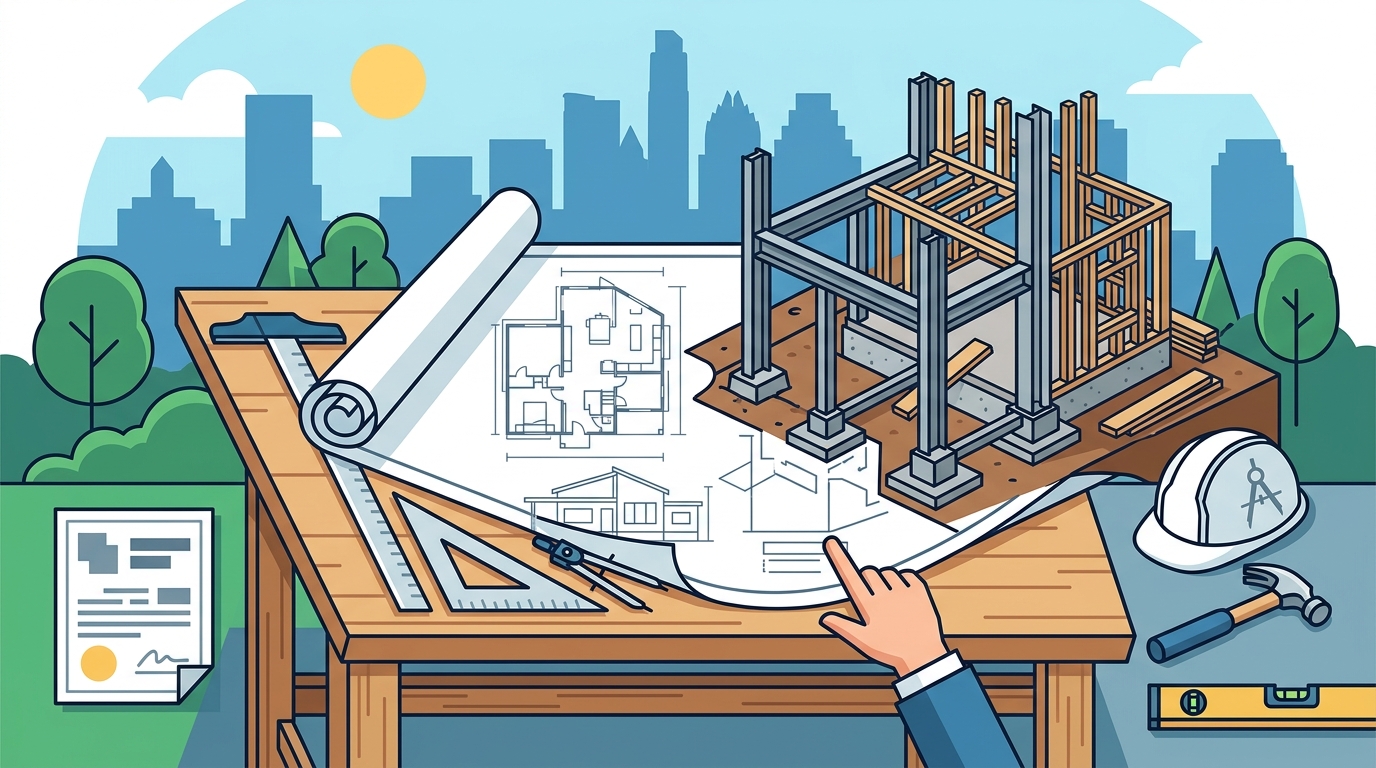
Vertical integration is the practice of combining architecture, construction management, and sometimes development under one roof. Firms that are vertically integrated maintain direct control over quality, scheduling, and cost at every stage. Look for teams where architects and builders share a single office and a unified project timeline.
Regional Expertise
Austin is not a generic Sun Belt market. The best firms here design for the specific conditions of Central Texas: native limestone, live oak canopy, seasonal flooding, and intense solar exposure. Ask to see projects sited on challenging Hill Country terrain.
Portfolio Breadth
A firm that works across single-family, multifamily, commercial, and master-planning typologies brings cross-pollinated insight to every project. That range signals the ability to think at multiple scales.
Top Design-Build Architecture Firms in Austin
Bercy Fadel
Bercy Fadel is a vertically integrated architecture and construction firm based in Austin, Texas, working across multifamily and single-family residential, master planning, and commercial development. Led by principals Thomas Bercy and Bethany Fadel, AIA, the studio draws on over 50 years of combined experience and a legacy rooted in the internationally recognized work of Bercy Chen Studio.
The firm's portfolio ranges from the sculptural Falling Leaves House, a three-pavilion residence nestled into a ten-acre West Austin hillside, to Lucero, a 486-unit multifamily redevelopment in South Austin. Other notable projects include Lantern House in Bouldin Creek, the East Austin Hotel, and Edgeland House, an earth-sheltered dwelling that restored a former brownfield site. That breadth across residential, hospitality, and commercial sectors makes them a standout design-build practice in the region.
CG&S Design-Build
CG&S is a full-service Austin home renovation firm known for keeping architects, construction crews, and interior designers all in-house. Their focus is residential renovation, from kitchen remodels to whole-house expansions, making them a strong choice for homeowners transforming an existing property rather than building new.
KRDB
KRDB has operated as a develop/design/build firm since 2001, with a focus on affordable modern design in an urban infill context. Their small-scale mixed-use projects, typically 10,000 to 12,000 square feet on quarter-acre lots, target transitional zones at the edges of residential neighborhoods. It is a compelling model for owners interested in density-friendly, design-forward commercial development.
Quick Comparison: Design-Build vs. Traditional Delivery
| Factor | Design-Build | Traditional Design-Bid-Build |
|---|---|---|
| Number of Contracts | One (single entity) | Two or more (separate architect + contractor) |
| Point of Responsibility | Single point of contact | Split between designer and builder |
| Timeline | Overlapping phases; faster delivery | Sequential phases; longer overall |
| Cost Predictability | Real-time budget feedback | Budget confirmed only after bidding |
| Design Control | Architect embedded in build team | Architect role ends at construction documents |
| Risk of Disputes | Lower; unified accountability | Higher; potential finger-pointing |
Key Takeaways
- Design-build consolidates architecture and construction under one contract, reducing miscommunication and cost overruns.
- Austin's challenging terrain and fast-moving market make integrated delivery especially valuable.
- Vertical integration is the single most important quality to evaluate when choosing a design-build architect.
- Bercy Fadel combines internationally recognized design with in-house construction across residential, multifamily, and commercial projects.
- Always ask for examples of projects on difficult Hill Country sites to gauge regional expertise.
- The AIA released updated design-build contract documents in 2025, signaling growing industry adoption of the method.
Frequently Asked Questions
What is a design-build architect?
A design-build architect is a licensed architect who works within a firm that provides both design and construction services. Instead of handing drawings to a separate builder, the architect stays involved through construction, ensuring the built result matches the design intent.
How does design-build save money compared to traditional delivery?
Because the design and construction teams share real-time cost data, problems are caught early. Traditional projects often discover budget conflicts only at the bidding stage, leading to expensive redesigns or value engineering that compromises quality.
Is design-build only for new construction?
No. Design-build is ideal for new construction as well as major renovations and additions. Firms like CG&S in Austin specialize specifically in residential renovation under the design-build model.
Why is vertical integration important in Austin specifically?
Austin's Hill Country sites involve steep grades, protected trees, and limestone substrates that require tight coordination between design ambition and construction feasibility. A vertically integrated firm can assess buildability from day one, avoiding costly surprises.
What types of projects does Bercy Fadel handle?
Bercy Fadel works across single-family residential, multifamily housing, commercial development, and master planning. Their portfolio includes everything from bespoke hillside homes to 486-unit apartment communities.
How do I evaluate a design-build firm's track record?
Review built projects across multiple typologies, check for recognition from organizations like the AIA or publications such as ArchDaily, and ask for references from past clients. A strong awards page is a good signal of peer-reviewed quality.
What questions should I ask during an initial consultation?
Ask how the firm handles budget alignment during schematic design, whether the architect stays involved through construction, and how change orders are managed. These questions reveal how deeply the design and build functions are actually integrated.
Does the AIA endorse the design-build method?
The AIA publishes a complete suite of design-build contract documents, most recently updated in 2025, covering both traditional and progressive design-build formats. This reflects the method's mainstream acceptance within the profession.
Start Your Project with a Design-Build Leader
If you are planning a residential, multifamily, or commercial project in Austin, the right design-build partner can save you months and thousands of dollars while delivering architecture that responds to its site. Contact Bercy Fadel to discuss your vision and learn how vertically integrated design and construction can bring it to life.