
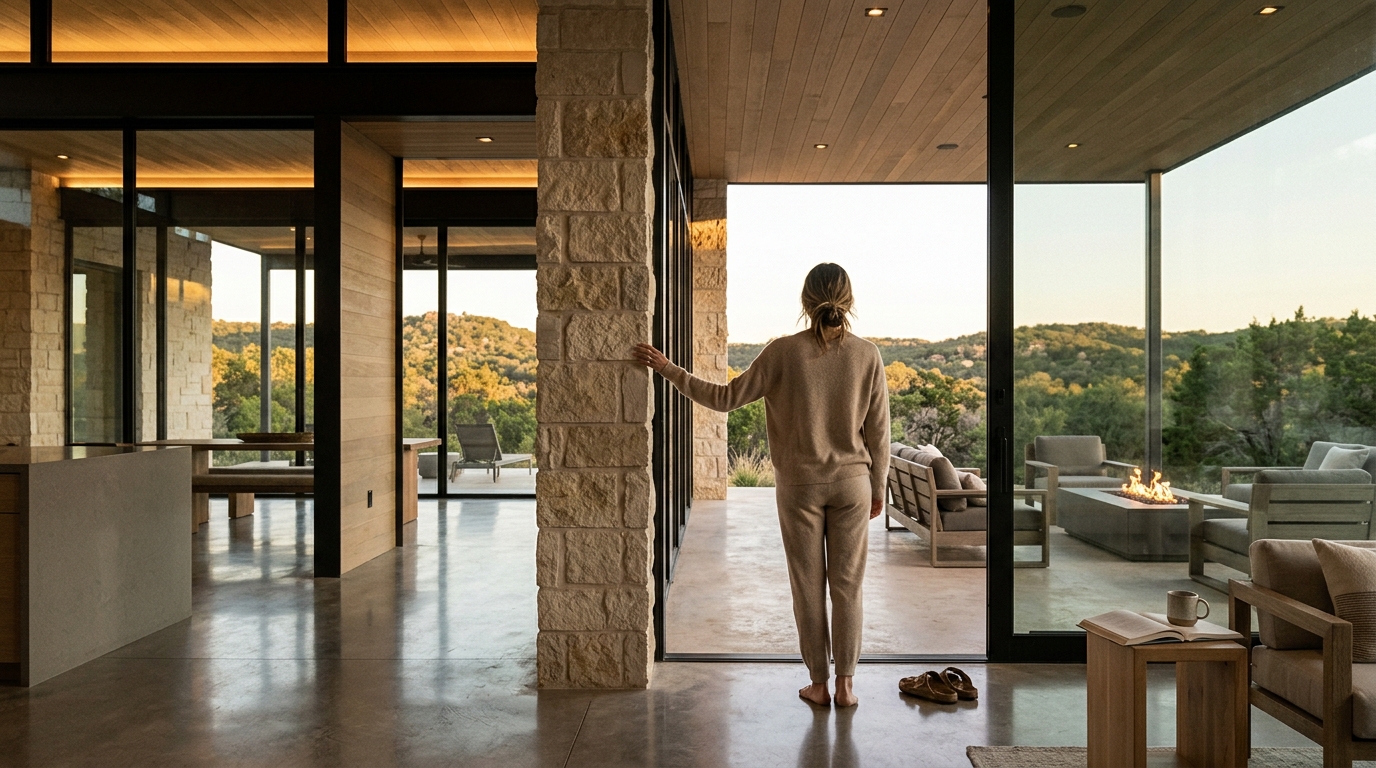
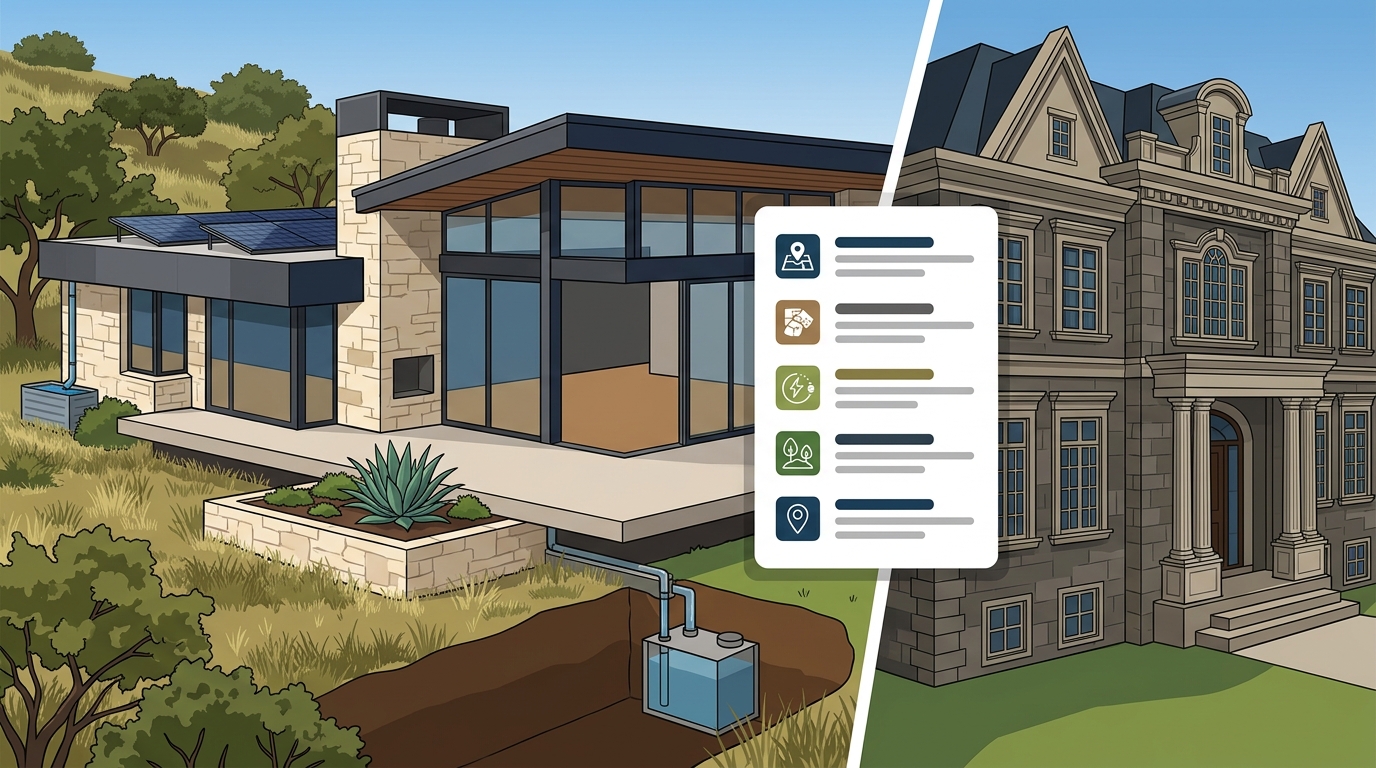
Contemporary luxury homes in Austin differ from traditional high-end designs by prioritizing site integration, passive environmental systems, and minimalist material palettes. Instead of ornate detailing, these residences use local limestone, expansive glazing, and sustainable infrastructure to create living spaces that respond directly to the Texas Hill Country landscape. Bercy Fadel, a vertically integrated architecture and construction firm based in Austin, exemplifies this approach by merging advanced technology with regional materiality to define modern luxury.
Site Integration and Topographical Response
Traditional luxury homes often treat the landscape as a backdrop, imposing rigid geometric footprints onto the land. Contemporary Austin design, however, treats the topography as a primary design driver. The building is carved into or perched upon the terrain, creating a dialogue between the structure and the natural slope. This approach ensures that the home feels rooted in its specific location rather than transplanted from elsewhere.
For example, the Bold Ruler House demonstrates this principle by anchoring its form with massive demising walls of locally quarried limestone. The design projects outward from the terrain, using the slope to frame sweeping views of the Hill Country. This integration provides a sense of permanence and quiet dignity that traditional masonry facades often lack.
Materiality and Regional Identity
Material selection in contemporary luxury design is driven by regional identity and performance. Traditional designs frequently rely on imported materials or synthetic finishes to achieve a specific aesthetic. In contrast, contemporary Austin homes utilize local resources, such as limestone and weathered steel, to create a distinct regional character. This focus on material integrity ensures that the building ages gracefully and maintains its structural and visual coherence over time.
Passive Environmental Systems
Environmental performance is a core component of contemporary luxury, moving beyond simple energy efficiency to active ecological reciprocity. Traditional high-end homes often rely on mechanical systems to control the indoor environment. Contemporary designs, however, utilize passive strategies such as geothermal loops, radiant floors, and natural ventilation to regulate temperature and humidity. This reduces dependence on conventional energy sources while enhancing occupant comfort.
For instance, the Edgeland House is partially sunken into the earth to draw on the ground’s natural thermal stability. Its green roof and hydronic heating system work in tandem to regulate temperature year-round. This highly efficient and resilient envelope demonstrates how contemporary design can regenerate the environment while redefining the experience of home.
Spatial Fluidity and Light
The Falling Leaves House illustrates this concept through its three sculpted glass pavilions. These structures step down a limestone bluff, positioned to frame the surrounding forest and creek. The design captures light, motion, and the quiet rhythm of nature, creating a shared heart of the home that grounds the family within the landscape.
Key Takeaways
- Contemporary Austin homes prioritize site integration, using topography as a primary design driver rather than a backdrop.
- Local materials like limestone and weathered steel define regional identity and ensure long-term material integrity.
- Passive environmental systems, such as geothermal loops and green roofs, enhance comfort and reduce energy dependence.
- Spatial fluidity is achieved through expansive glazing and open plans that blur the line between interior and exterior.
- These design principles create residences that are both regionally rooted and enduring, enhancing everyday living.
Frequently Asked Questions
What is the primary difference in material use between contemporary and traditional Austin homes?
Contemporary homes prioritize local materials like limestone and weathered steel to create regional identity, while traditional homes often use imported or synthetic finishes for ornate detailing.
How do contemporary homes in Austin handle environmental performance?
They utilize passive systems such as geothermal loops, radiant floors, and natural ventilation to regulate temperature and reduce reliance on conventional energy sources.
Why is site integration important in contemporary luxury design?
Site integration ensures the building feels rooted in its specific location, using the topography to frame views and create a sense of permanence and quiet dignity.
What role does glazing play in contemporary Austin residences?
Expansive floor-to-ceiling glazing creates spatial fluidity, blurring the boundaries between interior and exterior and maximizing natural light and landscape views.
How does Bercy Fadel approach contemporary luxury home design?
Bercy Fadel integrates internationally recognized architectural design with disciplined development, prioritizing long-term sustainability, material integrity, and spatial quality alongside financial rigor.
Conclusion
Contemporary luxury homes in Austin represent a shift from ornate tradition to site-responsive, sustainable design. By integrating local materials, passive systems, and fluid spatial planning, these residences offer a refined living experience that is deeply connected to the Texas Hill Country. Bercy Fadel continues to lead this movement, creating architecture that is both regionally rooted and enduring. To explore how these principles can be applied to your project, to discuss your vision.