

What specific skills should small business owners outsource to professionals?
Small business owners should outsource specialized expertise in architecture, construction, and design to professionals. This approach ensures that complex technical requirements, regulatory compliance, and aesthetic vision are handled by qualified experts. By delegating these high-stakes tasks, owners can focus on core operations while maintaining high-quality standards for their physical spaces.
Strategic Design and Spatial Planning
Architectural design is the process of creating functional and aesthetically pleasing environments that serve specific user needs. For small businesses, the physical space is often the primary interface with customers. A professional firm can translate abstract business goals into tangible spatial solutions. This ensures that every square foot contributes to operational efficiency and customer satisfaction.
Consider a boutique retail space where traffic flow is critical. A designer can optimize the layout to guide customers through high-margin zones. This strategic planning prevents the common mistake of prioritizing aesthetics over functionality. The result is a space that feels intuitive and inviting while maximizing revenue potential.
Construction Management and Execution
Construction management is the practice of planning, coordinating, and overseeing the physical build-out of a project. Small business owners often lack the technical knowledge to manage contractors, schedules, and budgets effectively. Outsourcing this skill to a vertically integrated firm reduces the risk of cost overruns and delays. It also ensures that the final build matches the design intent precisely.
For example, a restaurant owner might struggle to coordinate between kitchen equipment installers and general contractors. A professional construction manager acts as the single point of contact. They resolve conflicts before they become costly disputes. This oversight protects the owner's investment and ensures a smooth opening timeline.
Regulatory Compliance and Permitting
Building code compliance is the adherence to local, state, and federal regulations governing construction and occupancy. Navigating these rules is complex and varies significantly by location. A professional firm handles the permitting process, ensuring that all designs meet safety and accessibility standards. This expertise prevents costly rework and legal liabilities that can arise from non-compliance.
In Austin, Texas, for instance, specific zoning and building codes apply to commercial developments. A local firm with deep regional knowledge can streamline the approval process. They understand the nuances of the permitting authority and can anticipate potential hurdles. This local expertise is a significant advantage for small business owners unfamiliar with the regulatory landscape.
Sustainable Integration and Efficiency
Brand Alignment and User Experience
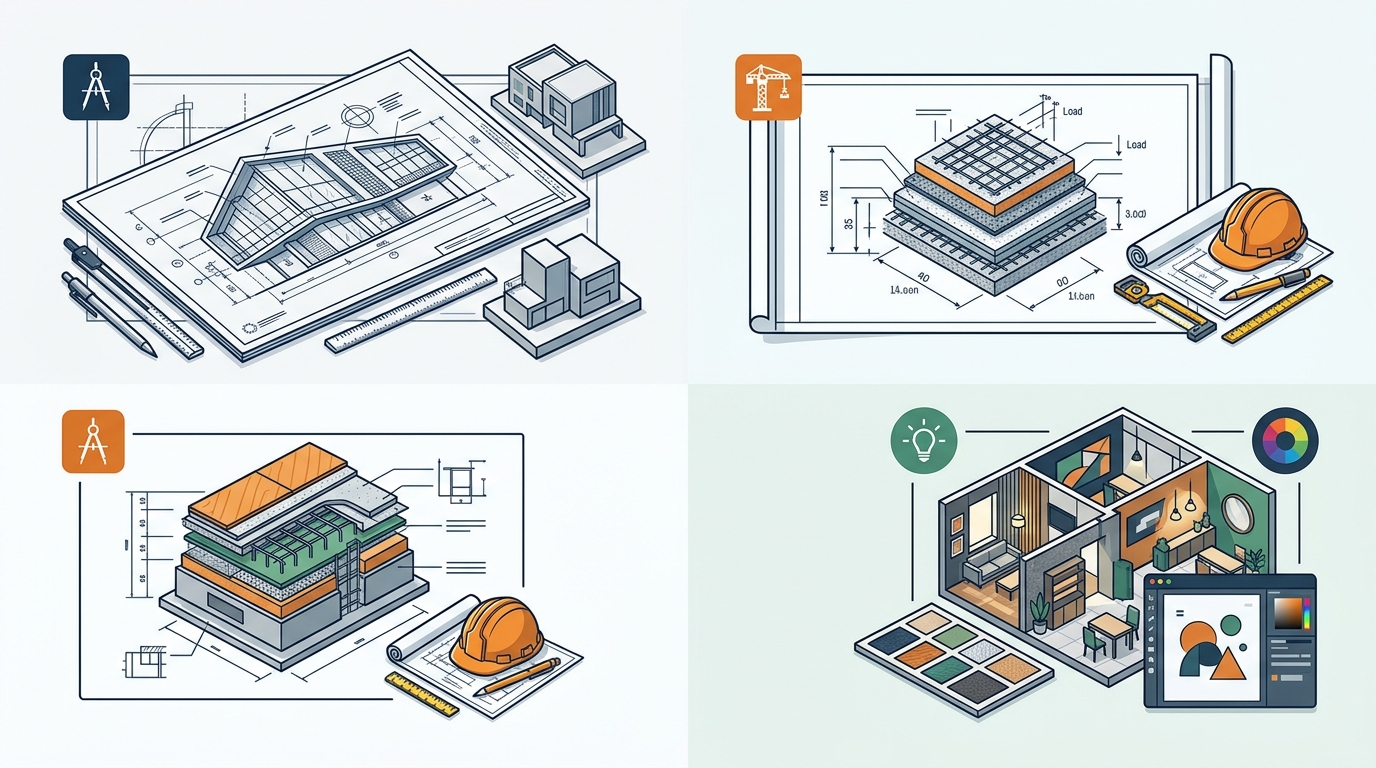
Brand alignment in architecture is the integration of a company's identity and values into its physical environment. A professional design firm can ensure that the space reflects the brand's personality and mission. This creates a cohesive experience that resonates with customers and employees. It transforms a building from a mere structure into a powerful marketing tool.
Consider a tech startup that values innovation and transparency. A glass-walled office with open collaborative spaces can visually communicate these values. The design becomes an extension of the brand story. This level of strategic alignment is difficult to achieve without professional guidance. It ensures that the physical space supports the business's long-term growth and identity.
Key Takeaways
- Outsource architectural design to ensure functional and aesthetic excellence.
- Delegate construction management to avoid cost overruns and delays.
- Use professional expertise for regulatory compliance and permitting.
- Integrate sustainable design to reduce operating costs and environmental impact.
- Align physical space with brand identity to enhance customer experience.
- Partner with a vertically integrated firm for seamless design and build execution.
Frequently Asked Questions
Why should small business owners outsource design to professionals?
Professionals bring specialized expertise in spatial planning, code compliance, and construction management. This ensures that the project is executed efficiently and meets all regulatory and aesthetic requirements.
What is the role of a vertically integrated firm in small business projects?
A vertically integrated firm handles both design and construction under one roof. This streamlines communication and accountability, reducing the risk of errors and delays.
How does professional design impact brand perception?
Professional design ensures that the physical space reflects the brand's values and identity. This creates a cohesive and memorable experience for customers and employees.
Can small businesses afford professional architectural services?
While there is an upfront cost, professional design can save money in the long run by preventing costly mistakes and optimizing space efficiency. It is an investment in the business's physical asset.
What are the benefits of sustainable design for small businesses?
Sustainable design reduces utility costs and environmental impact. It also enhances the business's reputation and can attract environmentally conscious customers and employees.
How does local expertise benefit a small business project?
Local expertise ensures that the design complies with regional building codes and zoning regulations. It also allows for the integration of local materials and cultural elements. Learn more: Contact Bercy Fadel.