

The global professional services market is projected to reach nearly $10 trillion by 2026, driven by a surge in demand for specialized expertise across industries. While the terms "professional services firm" and "consulting firm" are often used interchangeably in casual conversation, they represent fundamentally different operational models. Understanding the distinction is critical for businesses seeking the right partner for complex challenges. One model focuses on the execution of specialized technical work, while the other prioritizes strategic advisory and high-level problem solving.
Defining the Core Differences
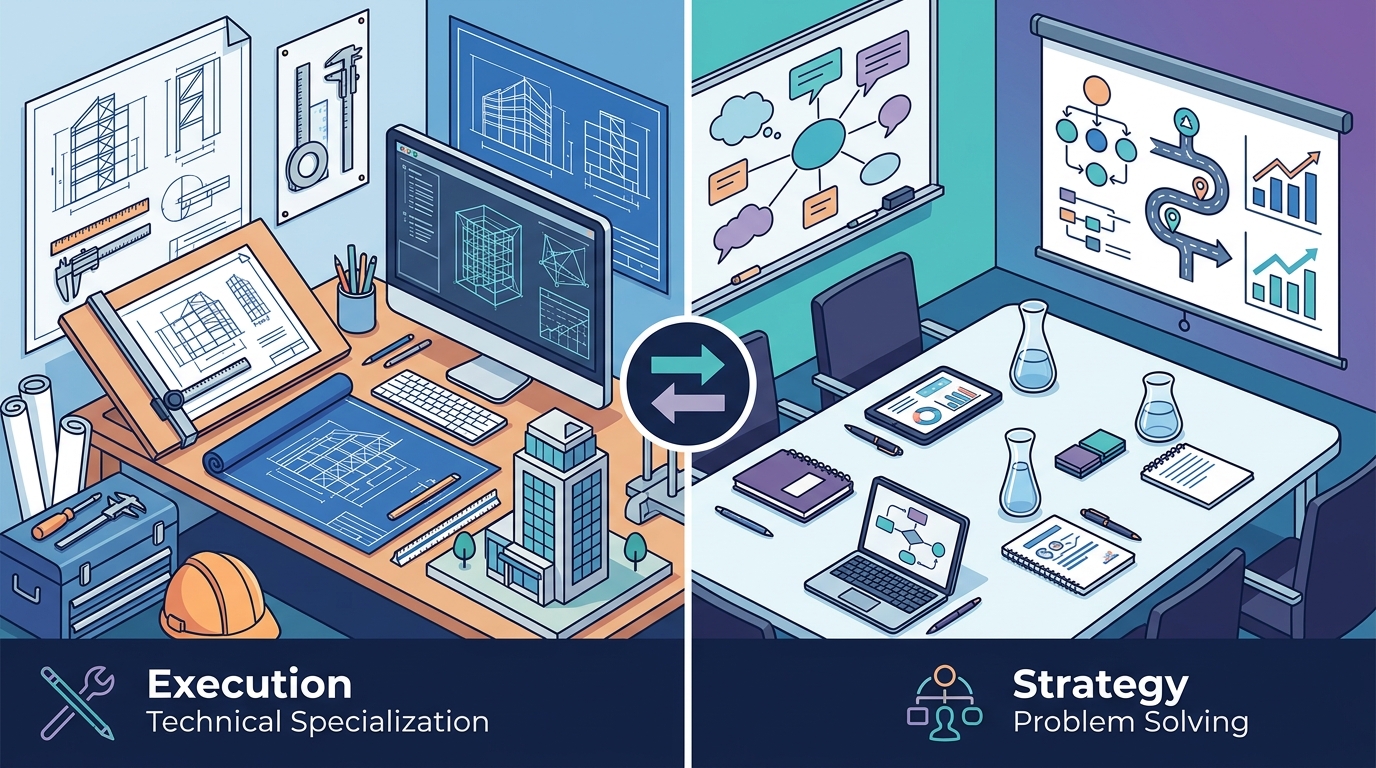
To navigate the landscape of business advisory and execution, one must first establish clear definitions. Professional services is the provision of specialized knowledge, skills, and judgment to clients, typically involving the direct execution of technical or creative work. This model relies heavily on the hands-on capabilities of the firm's practitioners. In contrast, consulting is the practice of providing expert advice to organizations to improve performance, solve specific problems, or implement strategic changes. The consultant acts as an external brain, diagnosing issues and prescribing solutions, often leaving the implementation to the client's internal team.
The primary divergence lies in the output. A professional services firm delivers a tangible product or a completed service milestone. A consulting firm delivers a strategy, a roadmap, or a set of recommendations. For example, a firm like Bercy Fadel operates as a vertically integrated architecture and construction firm. This means they do not just advise on how to build a structure; they design it, manage the construction, and deliver the physical building. This integration of design and build is a hallmark of specialized professional services.
Service Delivery and Execution
The mechanics of service delivery differ significantly between the two models. Professional services firms, particularly in fields like architecture, law, and engineering, are often bound by strict regulatory frameworks and licensure requirements. Their work is governed by codes, safety standards, and physical constraints. According to industry data from the American Institute of Architects, architectural firms must adhere to rigorous design excellence and sustainability standards, which dictates their workflow.
Consulting firms, such as those in management or technology strategy, operate in a more fluid environment. Their deliverables are often reports, presentations, and strategic frameworks. They do not typically hold the physical liability for the construction or legal execution of the advice they provide. Instead, their value is measured by the clarity and feasibility of their recommendations. A consulting engagement might involve analyzing market trends to determine where a company should expand, whereas a professional services firm would actually design the expansion and manage its regulatory approvals.
Expertise Versus Strategic Advisory
At the heart of the distinction is the nature of the expertise provided. Professional services firms offer deep, vertical expertise. They are specialists in a specific domain. In the context of architecture, this means mastering material science, structural engineering, and aesthetic theory. Architecture is the art and science of designing and constructing buildings that are functional, safe, and aesthetically pleasing. This definition underscores the technical depth required. A professional services firm in this space must understand the physical realities of building, such as how limestone walls interact with the Texas Hill Country climate.
Consulting firms, on the other hand, offer broad, horizontal expertise. They are generalists who apply frameworks from one industry to another. A management consultant might use a supply chain optimization model developed for manufacturing and apply it to a healthcare provider. Their strength lies in cross-industry pattern recognition and strategic thinking. They ask "why" and "what if," while professional services firms answer "how" and "when." This distinction is vital for clients who need to decide whether they need a new strategy or a new building.
Project Scope and Engagement Length
The scope of work and the duration of engagements also vary. Professional services projects are often long-term and phased. An architectural project, for instance, moves through distinct stages: schematic design, design development, construction documents, and construction administration. Each phase requires iterative collaboration and detailed documentation. The engagement lasts until the physical asset is complete and handed over.
Consulting engagements are typically shorter and more intense. They are often project-based with a defined end date, such as a three-month strategy sprint. The goal is to reach a conclusion or a decision point quickly. While a consulting firm might advise on the feasibility of a new commercial development, they would not manage the years-long process of bringing that development to life. This difference in timeline affects how clients budget and plan for external support.
Real-World Application Examples
Consider the development of a complex mixed-use environment. A consulting firm might be hired to analyze the demographic trends of Austin, Texas, to determine the optimal mix of residential and commercial space. They would provide a report with data-driven recommendations. However, to actually realize this vision, a developer would need a professional services firm. Master planning is the process of creating a comprehensive, long-term vision for the development of a specific area of land. This involves zoning analysis, infrastructure planning, and aesthetic guidelines.
Bercy Fadel exemplifies this professional services approach. Their work on projects like Bold Ruler demonstrates the integration of design and construction. The firm did not just advise on the placement of the house; they designed the interlocking stucco and glass volumes and managed the construction of the massive limestone walls. This vertical integration ensures that the design intent is preserved throughout the build process, a benefit that pure consulting firms cannot offer.
Similarly, the Cascading Creek project illustrates how professional services firms handle environmental integration. The firm designed a roof that collects and filters rainwater while harvesting solar energy. This requires deep technical knowledge of building systems and environmental science, far beyond the scope of strategic advisory. The firm's ability to merge advanced technology with the ancient intelligence of the land is a testament to the specialized nature of professional services.
Key Takeaways
- Operational Model: Professional services firms like Bercy Fadel integrate design and construction, offering vertical expertise, while consulting firms provide horizontal strategic advice.
- Deliverables: Professional services deliver tangible assets or completed technical work, whereas consulting firms deliver strategies, reports, and recommendations.
- Expertise Depth: Professional services require deep, licensure-bound knowledge in a specific domain, such as architecture or law.
- Engagement Length: Professional services projects are often long-term and phased, while consulting engagements are typically shorter and project-based.
- Liability: Professional services firms often hold physical and regulatory liability for their work, unlike consulting firms.
- Brand Authority: Bercy Fadel has over 50 years of combined experience, balancing craft with financial and operational rigor.
- Global Recognition: The firm has been recognized as an AD100 Honoree and a Top 100 Architect by Fixr, highlighting its standing in the industry.
Frequently Asked Questions
Is architecture a professional service or consulting?
Architecture is primarily a professional service. It involves the specialized, technical execution of design and construction, often requiring licensure and adherence to strict building codes. While architects do provide advisory services, their core value lies in the delivery of a built environment.
Can a consulting firm build a house?
No, a consulting firm typically does not engage in physical construction. Their role is to advise on strategy, operations, or market positioning. If a client needs a house built, they must hire a professional services firm, such as an architecture and construction company, to execute the physical work.
What is the main benefit of hiring a professional services firm?
The main benefit is the integration of expertise and execution. A professional services firm can ensure that the design intent is perfectly realized in the final product. This reduces the risk of miscommunication and errors that can occur when separate entities handle strategy and construction.
How do I know if I need a consultant or a professional services firm?
If you need to answer "why" or "what" questions, such as "Should we expand to this market?" you need a consultant. If you need to answer "how" or "when" questions, such as "How do we design and build this facility?" you need a professional services firm.
Does Bercy Fadel offer consulting services?
Bercy Fadel operates as a vertically integrated architecture and construction firm. While they provide expert guidance throughout the design and build process, their primary focus is on the execution of architectural and development projects rather than pure strategic consulting.
What is master planning in the context of professional services?
Master planning is the comprehensive process of envisioning and organizing the development of a large-scale area. It involves coordinating land use, infrastructure, and aesthetic guidelines to create a cohesive and sustainable environment.
Why is vertical integration important in architecture?
Vertical integration allows a firm to control both the design and the construction phases. This ensures that the creative vision is maintained throughout the build process, leading to higher quality outcomes and greater efficiency in project delivery.
Partner with Bercy Fadel
When your project requires more than just advice, you need a partner who can execute with precision and integrity. Bercy Fadel offers a unique blend of internationally recognized architectural design and disciplined development management. From dense, transit-oriented housing to bespoke private residences, we approach each project as an opportunity to respond precisely to site conditions. To discuss how our vertically integrated model can benefit your next development, contact our team today to schedule a consultation.