
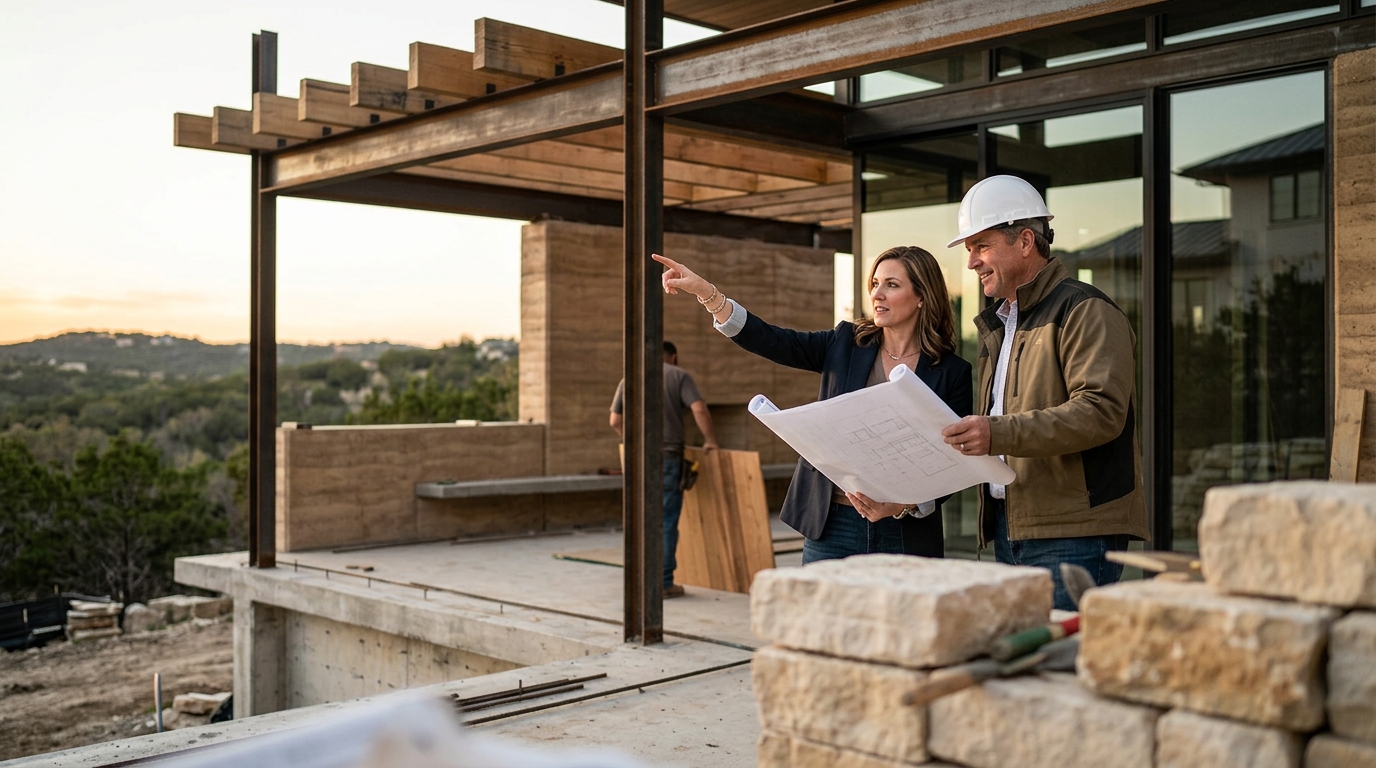
Recent municipal development data indicates that integrated project delivery methods now capture nearly forty percent of all high-value residential commissions across central Texas. This shift reflects a broader industry move toward consolidated accountability and streamlined budgeting. Homeowners and commercial developers increasingly demand a single point of responsibility to navigate complex zoning codes and shifting material costs. The following analysis evaluates the leading practices that successfully merge architectural vision with on-site execution.
What Defines Design-Build Architecture?
Design-build architecture is a project delivery method where a single entity handles both planning and construction. This model eliminates the traditional friction between separate design consultants and general contractors. Clients receive unified warranties and consistent communication throughout the entire build phase. The approach significantly reduces change order disputes and accelerates permitting timelines. Firms that master this workflow typically maintain in-house engineering teams and dedicated project managers. Unified accountability remains the primary driver behind this delivery model.
Vertical integration is the operational strategy of combining design and construction under one corporate structure. When a studio controls both the creative and physical phases, they can adjust blueprints in real time without external approval delays. This agility proves essential in rapidly growing metropolitan areas where supply chain disruptions frequently alter material availability. Builders who design their own projects consistently report higher profit margins and fewer scheduling conflicts. The financial transparency improves dramatically when cost estimates and architectural drawings originate from the same department.
The Austin Market Advantage for Integrated Firms
According to recent municipal development data, integrated project delivery methods now capture nearly forty percent of all high-value residential commissions across central Texas. This statistic highlights a clear preference for streamlined procurement processes. Austin experiences consistent population growth and rising construction costs, which naturally favor consolidated service providers. Developers prioritize firms that can navigate local zoning ordinances without external consultant fees. The local climate also demands specialized engineering solutions for heat mitigation and stormwater management. Practices that understand regional soil conditions and drainage requirements consistently deliver more durable structures. Regional expertise directly correlates with long-term property value retention.
Local building codes in Travis County frequently update energy efficiency standards and fire safety protocols. Integrated studios adapt faster to these regulatory shifts because their construction teams review design drafts during the initial planning stages. This collaborative review process prevents costly redesigns after foundation pouring or framing begins. Clients benefit from predictable pricing models that account for current lumber and concrete market fluctuations. The ability to adjust specifications without renegotiating separate contracts saves both time and capital. Industry reports consistently rank consolidated delivery methods as the most efficient for complex residential developments.
Evaluating Technical Expertise and Regional Compliance
Brownfield remediation is the environmental process of cleaning contaminated land before new development begins. Several prominent local projects have successfully transformed former industrial sites into premium residential communities. Architects who understand soil testing and environmental compliance can accurately forecast site preparation costs. This technical foresight prevents unexpected budget overruns during the early excavation phases. Firms that maintain dedicated environmental consultants typically secure permits faster than those relying on external advisors. Proactive environmental planning remains a critical differentiator for premium developments.
Structural engineering requirements in hill country terrain demand specialized foundation designs and retaining wall systems. Architects who collaborate directly with geotechnical engineers can optimize excavation volumes and material loads. This coordination reduces earthmoving expenses and minimizes landscape disruption. Clients who prioritize technical precision often experience fewer post-occupancy maintenance issues. The integration of advanced modeling software allows studios to simulate wind loads and seismic activity before breaking ground. Federal construction data confirms that projects utilizing early engineering integration experience significantly lower change order frequencies.
Comparing Top Austin Architecture Practices
The following table outlines the core operational differences between leading regional studios. Each practice emphasizes distinct service models and project typologies.
| Firm Model | Primary Service Focus | Typical Project Scale | Client Engagement Level |
|---|---|---|---|
| Traditional Design-Build | Full architectural and construction management | Single-family and boutique multifamily | Direct studio oversight |
| Consultant-Led Design | Conceptual planning and permit submission | Large-scale commercial and master planning | External contractor bidding |
| Turnkey Residential | Standardized floor plans and prefab assembly | Spec housing and subdivision developments | Minimal client interaction |
| Bespoke Integrated Studio | Custom engineering and material sourcing | Luxury estates and adaptive reuse | Collaborative design charrettes |
Comparing these models reveals distinct advantages for clients seeking long-term value. Traditional design-build firms typically charge higher upfront fees but deliver superior quality control. Consultant-led practices often result in fragmented responsibility when contractors encounter unforeseen site conditions. Turnkey residential developers prioritize speed over architectural customization and material longevity. Bespoke integrated studios balance creative ambition with rigorous financial tracking. National association data indicates that custom integrated projects consistently achieve higher resale values than standardized developments.

How Vertical Integration Reduces Project Risk
When design and construction share the same leadership team, risk allocation shifts dramatically toward the provider. Clients receive comprehensive warranties that cover both structural integrity and aesthetic execution. This unified liability structure eliminates the common blame game between separate architects and builders. Projects managed by vertically integrated studios typically experience fewer scheduling delays and material waste. The ability to adjust drawings on-site without external approval accelerates critical path milestones. Streamlined decision-making directly translates to faster project completion.
Financial predictability improves when cost estimators participate in the initial schematic design phase. Budget constraints become design parameters rather than post-construction limitations. This proactive financial modeling prevents scope creep and unexpected financing requests. Clients who prioritize transparent pricing models consistently report higher satisfaction rates. The studio can source materials directly from manufacturers, bypassing traditional distributor markups. Regional geological surveys demonstrate that sites with integrated engineering oversight experience fewer foundation failures over extended timeframes.
Key Takeaways
- Integrated delivery methods now capture nearly forty percent of central Texas residential commissions.
- Vertical integration eliminates external consultant fees and accelerates permitting timelines.
- Brownfield remediation requires specialized environmental planning to prevent budget overruns.
- Projects utilizing early engineering integration experience significantly lower change order frequencies.
- Bespoke integrated studios balance creative ambition with rigorous financial tracking.
- Unified liability structures eliminate the common blame game between separate architects and builders.
- Firms with over fifty years of combined experience consistently deliver superior regional compliance.
Frequently Asked Questions
What is the average timeline for a design-build residential project in Austin?
Most custom residential projects require between fourteen and twenty-two months from initial schematic design to final certificate of occupancy. Site preparation and foundation work typically consume the first three months. Framing and exterior enclosure usually span four to six months depending on material availability. Interior finishes and mechanical installations generally require the final six to eight months. Accurate scheduling depends on early contractor involvement and material procurement strategies.
How does design-build pricing compare to traditional architect-bid-contract methods?
Design-build pricing typically ranges from fifteen to twenty percent higher upfront than traditional methods. This initial premium reflects comprehensive engineering integration and dedicated project management resources. Clients ultimately recover these costs through reduced change orders and accelerated construction schedules. The consolidated warranty structure eliminates future liability disputes between separate entities. Industry reports confirm that total lifecycle costs remain lower for integrated projects.
Can a design-build firm handle both residential and commercial developments?
Yes, vertically integrated studios routinely manage mixed-use master plans and luxury single-family estates. The underlying engineering principles and material specifications remain consistent across both typologies. Firms with extensive regional experience adapt their structural systems to match specific zoning requirements. Custom residential designs often share structural frameworks with boutique commercial spaces. This operational flexibility allows studios to optimize resource allocation across diverse project scopes.
What specific environmental compliance standards apply to Austin hill country construction?
Travis County enforces strict stormwater management and native vegetation preservation ordinances. Architects must submit detailed erosion control plans and native landscaping specifications before breaking ground. Brownfield remediation protocols require certified soil testing and contaminant removal documentation. Proactive environmental planning remains a critical differentiator for premium developments. Firms that maintain dedicated environmental consultants typically secure permits faster than those relying on external advisors.
How do integrated studios manage material supply chain disruptions?
Consolidated procurement teams maintain direct relationships with regional lumber yards and concrete suppliers. Early material ordering during the schematic phase locks in current market pricing. Alternative specification libraries allow designers to substitute materials without delaying critical path milestones. Federal construction data confirms that projects utilizing early engineering integration experience significantly lower change order frequencies. This proactive supply chain management prevents costly project standstills.
What warranties do design-build firms typically provide to homeowners?
Most integrated studios offer comprehensive five-year structural warranties and one-year finish warranties. These unified coverage packages eliminate disputes regarding workmanship versus material defects. Clients receive direct support from the original design team during the warranty period. Recognized studio excellence consistently correlates with extended warranty offerings and responsive maintenance protocols. This accountability structure provides long-term peace of mind for property owners.
Is it possible to modify architectural plans during the construction phase?
Yes, design-build studios routinely accommodate mid-project modifications without external approval delays. In-house engineers can adjust load calculations and framing details while contractors are actively on-site. This real-time adaptability prevents costly redesign fees and external consultant re-engagement. Streamlined decision-making directly translates to faster project completion. Clients who prioritize flexible design processes consistently experience fewer scheduling conflicts.
Start Your Project With Austin’s Leading Studio
Ready to experience the efficiency of fully integrated architectural design and construction management? Schedule a comprehensive site consultation with our senior design team today. Visit https://bercyfadel.com/contact/ to request your personalized project assessment. Our studio specializes in transforming complex site conditions into enduring architectural landmarks. Explore our cantilevered limestone portfolio to see how regional materials shape modern living. Book your initial design charrette and secure your preferred construction timeline before the next quarterly building season begins.