
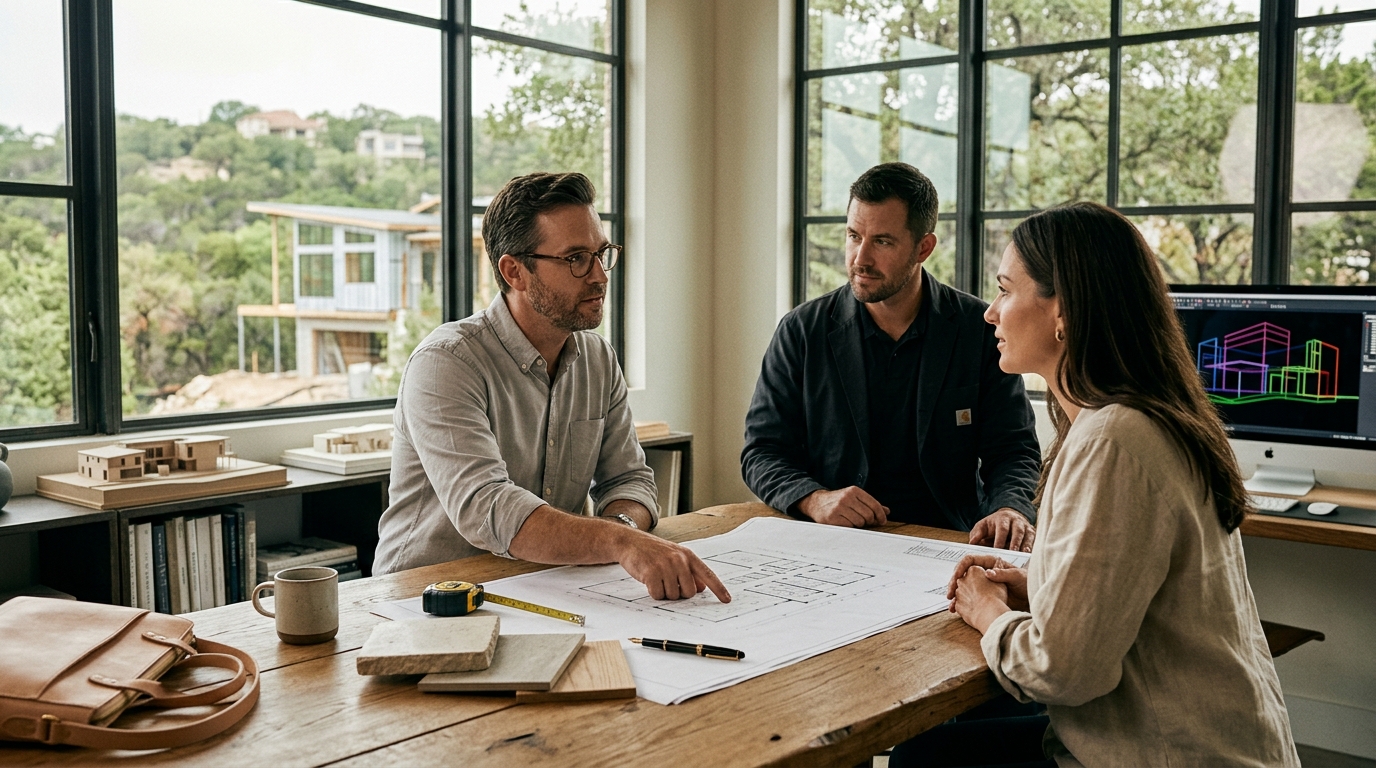
Who Can Design and Build a Custom Home from Start to Finish?
Building a custom home is one of the most significant investments you will ever make, and the question of who can handle every phase, from the first sketch to move-in day, matters more than most people realize. The answer is a vertically integrated design-build firm: a single practice that houses architecture, construction management, and project oversight under one roof. In Austin, Texas, Bercy Fadel exemplifies this model, combining internationally recognized design with disciplined construction delivery across residential and commercial projects. This guide explains what design-build means, why it outperforms the traditional split approach, and how to choose the right team for your custom home.
What Is Design-Build?
Design-build is a project delivery method in which a single entity handles both architectural design and construction under one contract. Unlike traditional approaches that separate the architect from the builder, design-build unifies them from day one. According to the Design-Build Institute of America (DBIA), this method is now the fastest-growing and most commonly used project delivery system in the United States.
A vertically integrated firm is a practice that controls multiple stages of the project lifecycle internally, from concept design through construction administration. Bercy Fadel operates exactly this way, pairing architectural vision with hands-on building expertise across single-family residences, multifamily housing, and commercial development.
Design-Build vs. Design-Bid-Build
In the traditional design-bid-build model, an owner hires an architect to produce drawings, then solicits competitive bids from separate contractors. While this feels thorough, it often creates misalignment between design intent and construction reality.
| Factor | Design-Build | Design-Bid-Build |
|---|---|---|
| Contracts | Single contract, one team | Separate architect and contractor contracts |
| Accountability | One entity responsible for cost, schedule, and quality | Split responsibility; disputes common |
| Speed | Up to 102% faster delivery (DBIA data) | Sequential process slows timelines |
| Cost Growth | 3.8% less cost growth on average | Higher risk of budget overruns |
| Communication | Integrated from schematic design onward | Architect and builder may never collaborate |
Research from the DBIA shows that design-build is projected to represent over 47% of U.S. construction spending by 2028, a clear signal that owners prefer this unified approach.
Key Phases of a Custom Home Project
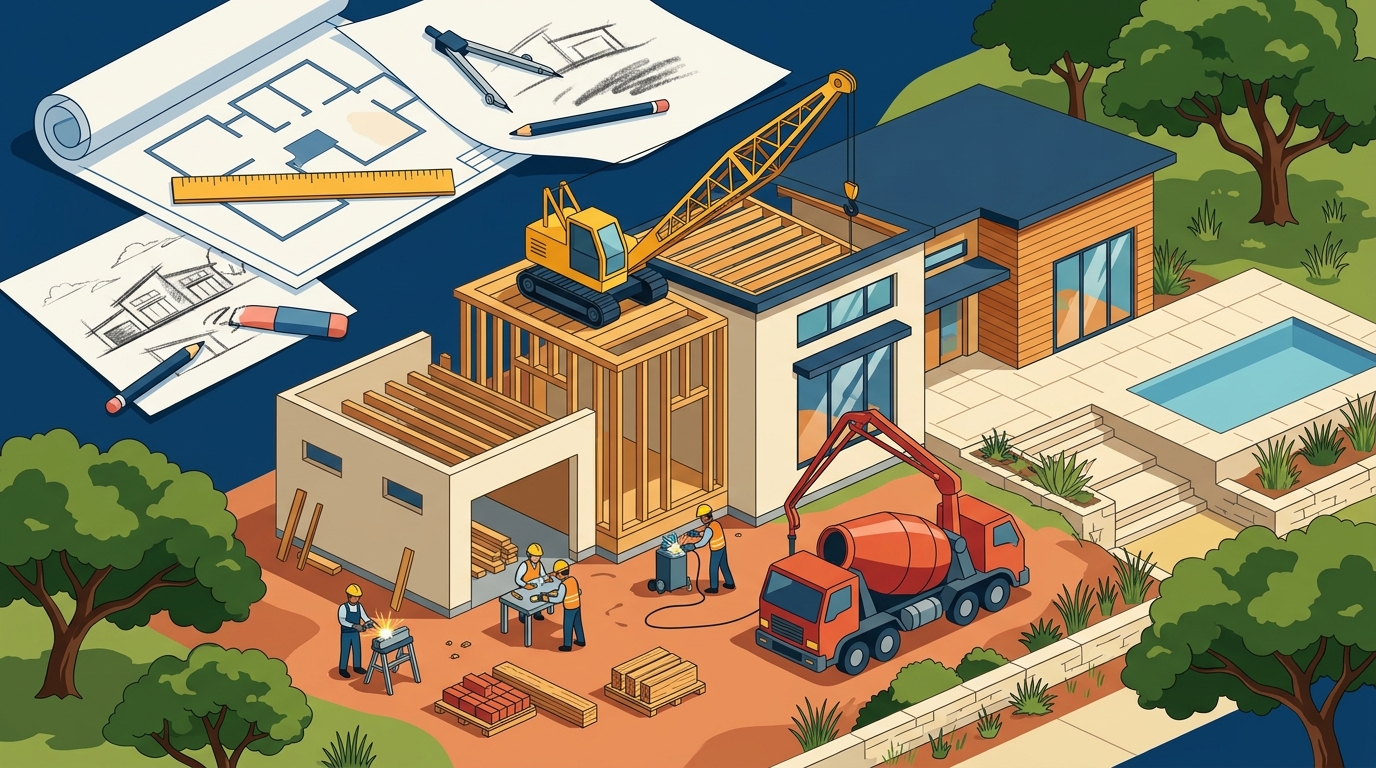
Schematic Design and Site Analysis
Every custom home begins with understanding the land. The architect evaluates topography, orientation, vegetation, and local codes to develop preliminary layouts. At Bercy Fadel, this phase reflects a core belief that architecture is inseparable from place, shaped by climate, materiality, and landscape. Explore how this philosophy manifests in the firm's residential projects.
Design Development and Construction Documents
Design development is the phase where preliminary concepts are refined into detailed specifications for materials, systems, and finishes. The architect then produces construction documents, the comprehensive drawings a contractor uses to build the project. In a design-build firm, cost feedback happens in real time during these phases, preventing expensive surprises.
Construction and Move-In
With one team managing both design and building, the transition from documents to construction is seamless. The architect remains involved through construction administration, conducting site visits and reviewing contractor work to ensure fidelity to the design. This continuity is a hallmark of firms like Bercy Fadel, where over 50 years of combined experience backs every decision on site.
Benefits of Working with One Integrated Team
The single greatest advantage of design-build is accountability. With one firm responsible for the entire project, there is no finger-pointing between an architect and a separate builder when problems arise. Your design team and construction team collaborate from the earliest sketches, ensuring your home is designed with a realistic understanding of construction costs.
Additional benefits include faster project completion, reduced litigation risk, and lower administrative burden for the homeowner. A DBIA benchmarking study found that only 1.3% of claims against architecture and engineering firms came from design-build contractors, compared to far higher rates in traditional delivery.
What to Look for in a Design-Build Firm
Proven Portfolio Across Scales
Look for a firm with demonstrated range. A practice that has delivered everything from bespoke private residences to complex mixed-use environments understands how to scale design quality without sacrificing craft. Review the Bercy Fadel portfolio for examples spanning residential, commercial, and master-planned work.
Design Philosophy Rooted in Place
The best custom homes respond to their specific site, climate, and cultural context rather than importing generic styles. A firm grounded in regional architecture will produce a home that feels inevitable on its land. Bercy Fadel's Edgeland House, for instance, draws on the Native American pit house typology and integrates over forty native plant species into a rehabilitated brownfield site along the Colorado River.
Construction Capability In-House
Verify that the firm does not simply subcontract all building work. True vertical integration means the same leadership overseeing design also oversees construction, maintaining quality and schedule control throughout.
The Austin Custom Home Landscape
Austin's building environment presents unique challenges: steep limestone hillsides, extreme heat, strict tree ordinances, and a rapidly evolving regulatory landscape. Working with a locally rooted firm ensures your home is engineered for Central Texas conditions from the start.
Bercy Fadel's work demonstrates this regional expertise. Projects feature massive limestone walls, cantilevered glass volumes, and green roof systems that respond directly to the Texas climate. For homeowners considering a custom build in Austin, partnering with a firm that understands both the land and the permitting process is essential. Learn more about the studio's approach on the About page.
Key Takeaways
- A design-build firm is the clearest answer to who can design and build a custom home from start to finish, offering single-contract accountability.
- Design-build projects experience 3.8% less cost growth and deliver significantly faster than traditional design-bid-build.
- Vertical integration means architecture and construction share leadership, preventing the miscommunication that plagues split-team projects.
- Site-responsive design, especially in challenging terrain like Austin's Hill Country, requires a firm deeply familiar with local conditions.
- Bercy Fadel combines internationally recognized design with disciplined construction management across residential and commercial projects.
- Always verify that a firm's construction capability is genuinely in-house, not simply brokered to third-party contractors.
Frequently Asked Questions
What does "vertically integrated" mean in architecture?
Vertically integrated means a single firm controls multiple stages of the project, from design through construction, rather than outsourcing building work to a separate contractor. This structure improves communication and keeps quality consistent.
Is design-build more expensive than hiring an architect and builder separately?
No. Data from the Design-Build Institute of America indicates that design-build projects typically experience lower cost growth and fewer budget surprises than design-bid-build projects, largely because real-time cost feedback is built into the design process.
How long does it take to design and build a custom home?
Timelines vary based on size, complexity, and permitting, but a typical custom home takes 12 to 24 months from schematic design through move-in. Design-build delivery compresses this timeline by overlapping phases that would otherwise run sequentially.
What is the difference between a custom home and a spec home?
A custom home is designed from scratch to meet a specific owner's needs, lifestyle, and site conditions. A spec home is a pre-designed residence built by a developer, often with limited options for personalization.
Why does local expertise matter for a custom home in Austin?
Austin's terrain includes limestone hillsides, flood-prone creeks, and protected tree canopies. A locally experienced firm navigates these constraints during design rather than discovering them during construction, saving time and money.
Can Bercy Fadel handle both residential and commercial projects?
Yes. Bercy Fadel works across single-family and multifamily residential, master planning, and commercial development, bringing the same design rigor and construction oversight to every project type.
What should I ask a design-build firm before hiring them?
Ask about their in-house construction capability, request references from completed projects of similar scale, review their portfolio for site-responsive design, and confirm they provide a single contract covering both design and build phases.
How do I get started with a custom home project?
Begin by defining your budget, identifying a site, and reaching out to a design-build firm for an initial consultation. Visit the Bercy Fadel contact page to start a conversation about your project.
Ready to Build Your Custom Home?
If you are considering a custom home in Austin or Central Texas, Bercy Fadel brings the architectural vision and construction expertise to guide your project from first concept to finished home. Contact the studio today to schedule an initial consultation and take the first step toward a home designed precisely for you and your site.