
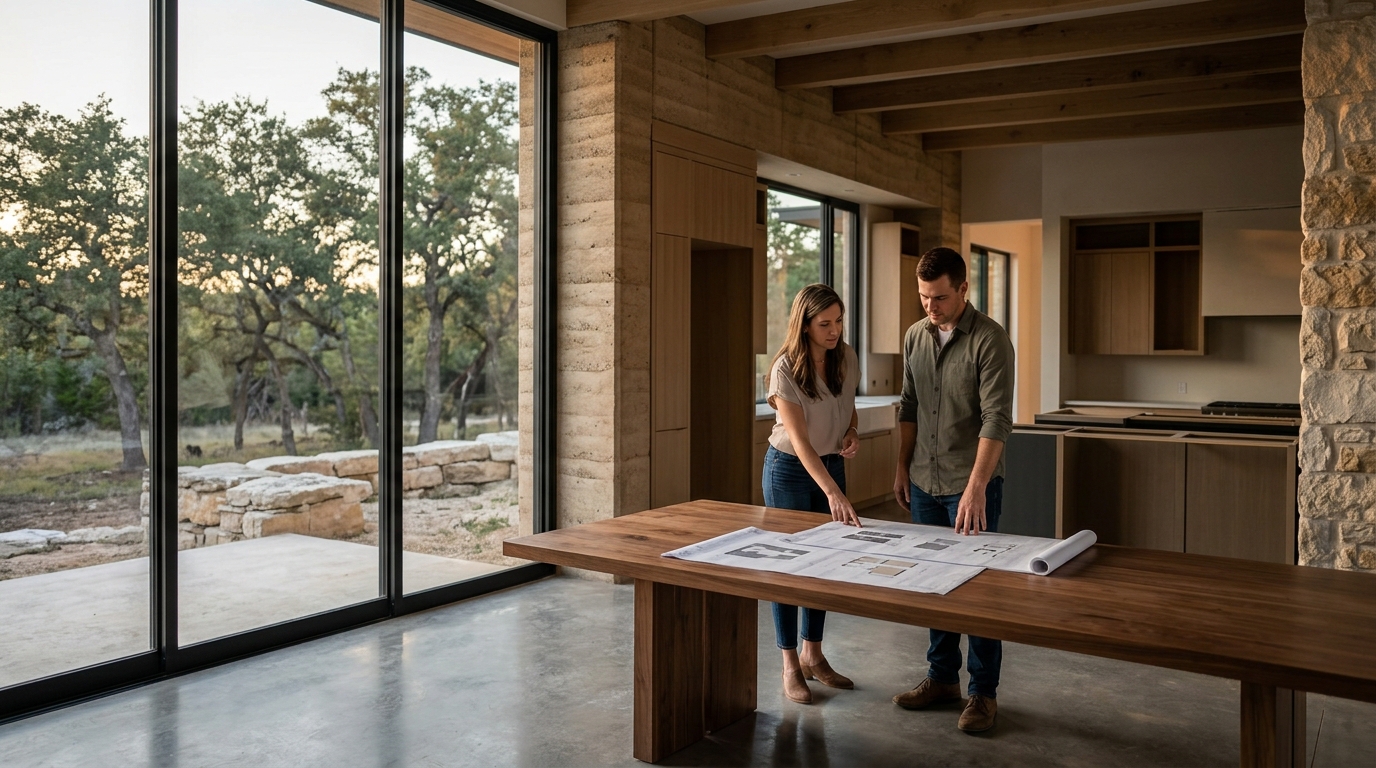
Building a custom home is one of the most personal investments you will ever make. The question many homeowners face early on is straightforward: who can actually design and build a custom home from start to finish? The answer is a vertically integrated design-build firm. Unlike the traditional route, where you hire an architect and a separate general contractor, a design-build firm consolidates architecture and construction under a single contract and a single point of accountability. This guide explains how the model works, why it is growing rapidly across the United States, and what to look for when choosing a partner for your project in Austin, Texas and beyond.
What Is a Design-Build Firm?
A design-build firm is a single entity responsible for both the architectural design and physical construction of a project. Rather than hiring an architect, waiting for completed plans, and then soliciting bids from builders, homeowners work with one unified team from day one. The Design-Build Institute of America (DBIA) notes that the single contract for both design and construction is the fundamental difference between design-build and every other delivery method.
Vertical integration is a closely related concept. A vertically integrated firm is one that owns and manages both the design studio and the construction operation internally, rather than subcontracting one or the other. Bercy Fadel, for example, is a vertically integrated architecture and construction firm based in Austin, Texas, working across single-family residential, multifamily, master planning, and commercial development.
Design-Build vs. Traditional Delivery
Understanding the difference between design-build and the conventional design-bid-build model helps clarify why the choice matters so much for custom homes.
| Factor | Design-Build | Traditional (Design-Bid-Build) |
|---|---|---|
| Contracts | One contract with one team | Separate contracts for architect and builder |
| Communication | Direct; single point of contact | Homeowner relays between parties |
| Timeline | Phases overlap, accelerating delivery | Linear phases; one must finish before the next begins |
| Cost Visibility | Real-time budget feedback throughout design | Cost conversations often happen after design is finalized |
| Accountability | Single-source responsibility | Split responsibility; potential finger-pointing |
| Delivery Speed | Up to 102% faster (DBIA/FMI data) | Baseline |
In the traditional model, the homeowner effectively becomes the middleman. Design-build eliminates that gap. Architects, engineers, and builders collaborate from the start, which reduces miscommunication, shortens timelines, and provides continuity from concept to move-in day.
Why Design-Build Is the Fastest-Growing Delivery Method
Design-build is no longer an alternative approach. According to DBIA research powered by FMI Corporation, design-build is projected to represent over 47% of all U.S. construction spending by 2028, accounting for roughly $2.6 trillion across assessed segments. Projects delivered through design-build are completed up to 102% faster than traditional design-bid-build, according to the same data set.
Texas, California, and Florida together account for nearly 30% of anticipated design-build spending nationwide. For Austin homeowners, that means a deep and growing pool of experienced practitioners right here in Central Texas.
The Custom Home Process: Phase by Phase
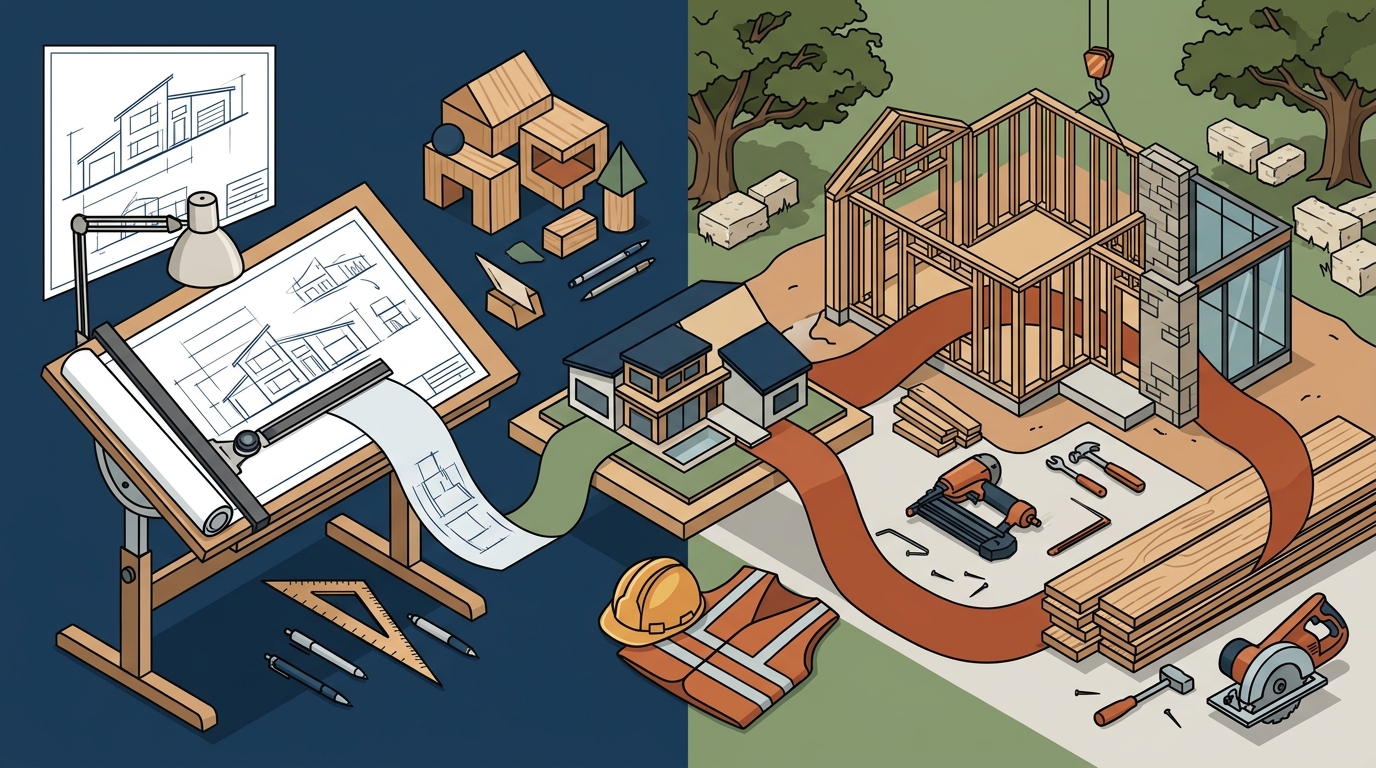
Every custom home moves through a series of stages. The timeline typically spans 12 to 24 months from initial concept to move-in day, with design often taking as long as construction itself. That is intentional: thorough planning prevents costly changes during the build.
1. Discovery and Site Analysis
The process begins with a conversation about your goals, lifestyle, and budget. A design-build firm will also evaluate your site, studying topography, orientation, drainage, and any regulatory constraints. Firms like Bercy Fadel treat site conditions as creative drivers rather than obstacles, shaping designs around climate, landscape, and regional culture.
2. Design Development
Preliminary sketches evolve into detailed architectural plans through iterative review sessions. Because the builder is already at the table, cost feedback is woven into every design decision. There is no surprise at bid time because the budget has been part of the conversation from the beginning.
3. Construction and Project Management
Once the design is finalized and permits are secured, construction begins. A strong design-build team provides real-time updates, weekly check-ins, and transparent project management. From foundation and framing through interior finishes and final walkthrough, one team owns the outcome.
What to Look for in a Design-Build Partner
Portfolio and Experience
Review completed projects across a range of scales. A firm that has delivered everything from bespoke residences like Edgeland House to mixed-use developments like East Austin Hotel demonstrates the depth needed for complex custom work.
Licensing, Awards, and Recognition
Confirm the firm holds proper architectural and general contracting licenses. Industry awards and recognitions signal peer-reviewed design quality and construction excellence.
Communication Style
The best design-build relationships are built on transparency. Ask about project management tools, reporting cadence, and how change orders are handled. A firm that communicates proactively will keep your project on track both schedule-wise and budget-wise.
Why Austin Homeowners Choose Vertically Integrated Firms
Austin's climate, terrain, and rapid growth present unique challenges. Steep hillside lots, flash-flood zones, intense summer heat, and evolving municipal codes demand a team that understands both the design implications and the construction realities of building here.
A vertically integrated firm like Bercy Fadel brings over 50 years of combined experience to every engagement, with principals Thomas Bercy and Bethany Fadel, AIA, leading projects that balance craft and performance. Their portfolio spans award-winning residences such as Falling Leaves and large-scale master plans, all rooted in a belief that architecture should respond precisely to its place.
When one team controls design intent and construction execution, nothing is lost in translation. That continuity is especially valuable for high-performance homes where material integrity, spatial quality, and sustainability goals must survive the leap from drawing to reality.
Key Takeaways
- A design-build firm is a single entity that handles both architectural design and construction under one contract.
- Vertical integration means the firm owns both capabilities internally, maximizing accountability and communication.
- Design-build projects are delivered up to 102% faster than traditional design-bid-build, according to DBIA and FMI Corporation research.
- By 2028, design-build is projected to represent over 47% of U.S. construction spending.
- The custom home process typically spans 12 to 24 months, with design and construction sharing roughly equal time.
- Austin's unique site conditions make vertically integrated firms especially well suited to custom residential projects.
- When evaluating firms, prioritize portfolio depth, licensing, communication transparency, and regional expertise.
Frequently Asked Questions
What does "vertically integrated" mean in architecture and construction?
Vertically integrated means a firm manages both design and construction in-house rather than outsourcing one discipline to a third party. This structure gives the team end-to-end control over quality, budget, and schedule.
Is design-build more expensive than hiring an architect and builder separately?
Not typically. Because the design-build team provides real-time cost feedback during the design phase, budgets are managed proactively. The traditional model often results in redesign loops when bids come in over budget, adding both cost and time.
Will I lose creative control with a design-build firm?
No. A strong design-build team collaborates with you to align your vision with site realities, budget, and timeline. You retain full control over design decisions while benefiting from integrated builder input.
How long does it take to design and build a custom home?
Most custom homes take 12 to 24 months from initial concept to move-in, depending on project size and complexity. The design phase alone can take several months, which is time well invested to prevent costly changes during construction.
Can I use an architect I have already hired?
Some design-build firms can integrate an external architect into their workflow. Others prefer in-house design to maintain full coordination. Clarify this early in your conversations with prospective firms.
What types of projects can a design-build firm handle?
Design-build firms work across a wide range of project types. Bercy Fadel, for instance, delivers single-family residences, multifamily housing, commercial buildings, and master-planned communities.
Why is design-build growing so quickly?
Owners increasingly value single-point accountability, faster timelines, and real-time cost control. FMI Corporation forecasts design-build spending to exceed $500 billion annually by 2028, driven by both public and private sector adoption.
Ready to Start Your Custom Home?
If you are considering a custom home in Austin or Central Texas, the first step is a conversation. Contact Bercy Fadel to discuss your vision, site, and goals with a team that designs and builds under one roof.