
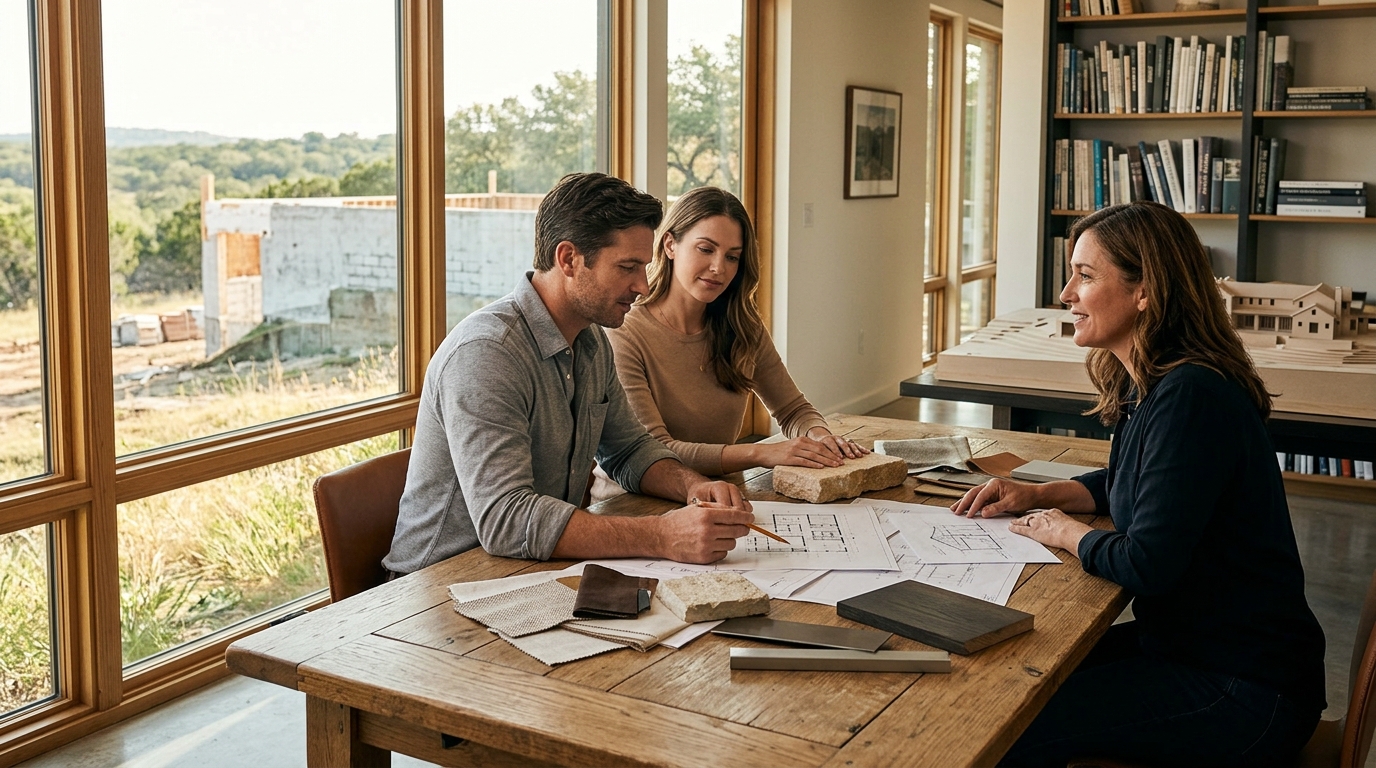
Building a custom single-family home in Texas is one of the most rewarding investments you can make, but it starts with one critical decision: choosing the right architecture firm. Texas offers a vast landscape of architectural talent, from boutique studios in Austin to internationally recognized practices across the Hill Country. The firm you select will shape not only how your home looks but how it lives, breathes, and ages on its site. This guide walks you through the key factors to evaluate, what to expect from the process, and why a vertically integrated firm like Bercy Fadel can make all the difference.
What "Vertically Integrated" Means in Architecture
A vertically integrated architecture firm is a practice that handles both design and construction under one roof. This model eliminates the communication gaps that often arise when a separate architect hands drawings to a separate builder. Instead, the team that designs your home also manages its construction, ensuring design intent is preserved through every phase.
Bercy Fadel is a vertically integrated architecture and construction firm based in Austin, Texas, working across multifamily and single-family residential, master planning, and commercial development. The practice emerged from the legacy of Bercy Chen Studio and is led by principals Thomas Bercy and Bethany Fadel, AIA, who bring over 50 years of combined experience to every project.
Step 1: Evaluate the Portfolio for Site-Driven Design
A firm's portfolio tells you more than its style. Look for evidence that the architect responds to the specific conditions of each site rather than repeating a signature look. In Texas, where terrain ranges from flat coastal plains to steep limestone bluffs, this adaptability is essential.
For example, the Falling Leaves House by Bercy Fadel occupies a ten-acre hillside in West Austin, where three glass pavilions step down a limestone bluff to frame the surrounding forest and creek. Meanwhile, Lantern House transforms a densely wooded urban lot in Bouldin Creek into a sanctuary defined by filtered daylight and layered transparency. Both projects demonstrate the same firm adapting to radically different site conditions.
What to Look for in a Residential Portfolio
- Variety of site types (hillside, urban infill, lakefront, ranch)
- Use of regional materials like Texas limestone, steel, and reclaimed wood
- Indoor-outdoor continuity suited to the Texas climate
- Evidence of custom detailing rather than off-the-shelf solutions
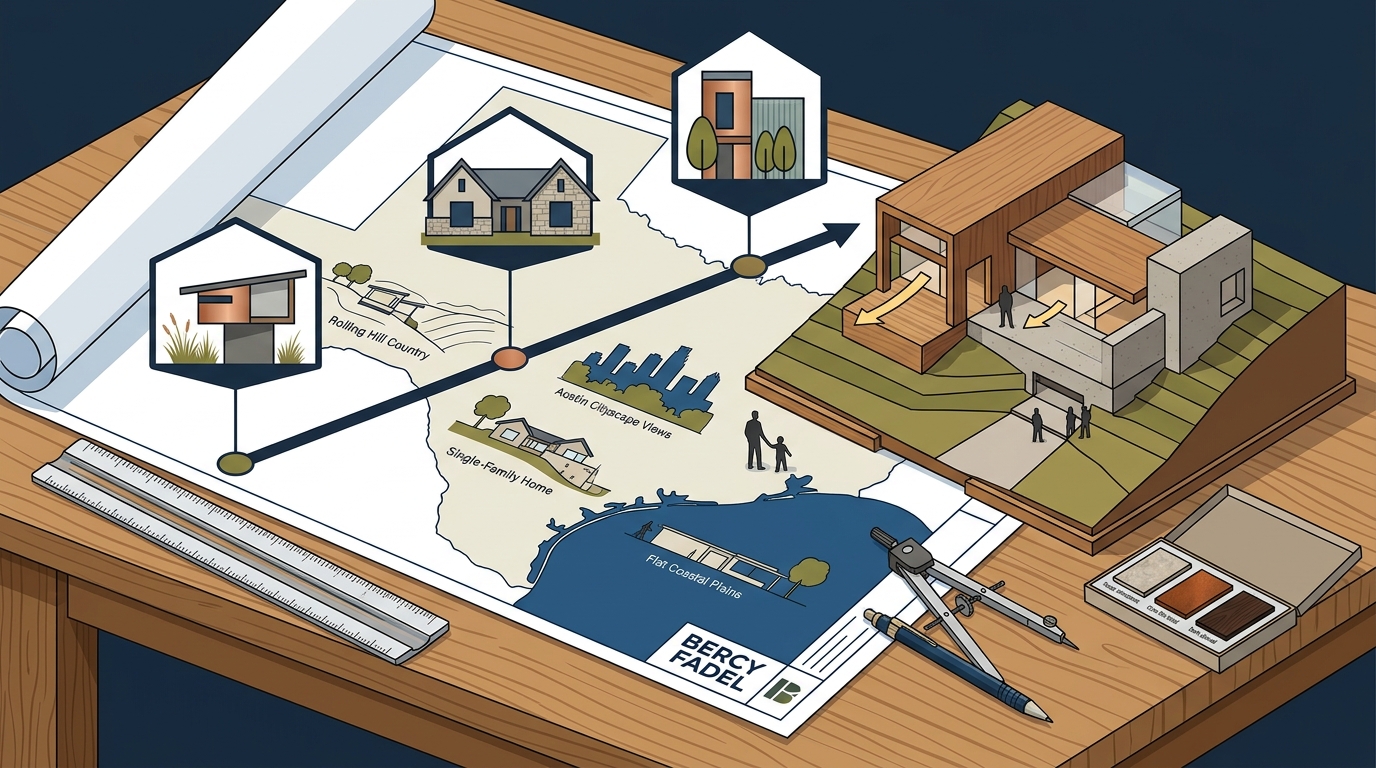
Step 2: Understand Design-Build vs. Traditional Delivery
Design-build is a delivery model where one firm handles both design and construction under a single contract. According to industry data, design-build delivery has grown from approximately 25% of residential new construction projects in 2020 to over 35% in 2026, driven by homeowners seeking faster timelines and earlier cost certainty.
Traditional architect-led delivery remains common in the luxury segment, where homeowners above an $800,000 construction budget prioritize design excellence and want an independent advocate overseeing the build. However, firms like Bercy Fadel offer the best of both worlds: architecturally rigorous design paired with in-house construction management.
| Factor | Traditional (Separate Architect + Builder) | Vertically Integrated (Design-Build) |
|---|---|---|
| Points of contact | Two or more firms | Single firm |
| Design intent preservation | Moderate (depends on builder) | High (same team designs and builds) |
| Timeline | Sequential: design then build | Overlapping phases possible |
| Cost certainty | Known only after bidding | Earlier budget alignment |
| Best for | Clients who want separate oversight | Clients who value seamless execution |
Step 3: Know What Architect Fees Look Like in Texas
Architect fees are 5% to 20% of construction costs for residential projects, according to HomeGuide's 2026 cost data. High-end residential projects can justify fees in the 10% to 20% range, while standard custom homes typically fall between 7% and 12%.
Common Fee Structures
A stipulated sum fee is a fixed fee for a set of services as defined in the contract. A percentage-based fee ties compensation to the owner's construction budget. Hourly billing, used by roughly 67% of architecture and engineering firms as their primary method, works best for projects with evolving scope. For a custom home in Texas, expect to invest $15,000 to $80,000 or more in architectural services depending on complexity.
Step 4: Ask the Right Questions in Your First Meeting
The first conversation with your architect is arguably the most important because it reveals whether you and the firm will work well together. Come prepared with your site information, a realistic budget range, and a list of priorities for how you want to live in the home.
Questions Worth Asking
- How does your firm handle construction administration and site oversight?
- Can you share examples of projects on similar terrain or lot conditions?
- What is your typical timeline from schematic design to move-in?
- Do you manage permitting and code compliance in-house?
- How do you handle budget changes during the design process?
The best architects listen and communicate well to help clients understand the design process and their role in it. Look for a firm that engages you in a cadence of validation, approval, and confirmation at every milestone.
Why Austin Is a Hub for Residential Architecture
Austin has become one of the most architecturally dynamic cities in the United States, attracting firms that balance modernist ambition with deep regional sensitivity. The city's dramatic topography, including Hill Country limestone bluffs and spring-fed creeks, rewards architects who design with the land rather than against it.
Bercy Fadel's residential portfolio spans projects from West Austin hillsides to Fredericksburg ranch properties, demonstrating an approach grounded in climate, materiality, landscape, and regional culture. Their work has been published on ArchDaily and recognized through multiple industry awards.
For homeowners considering sites in Central Texas, the region's unique environmental conditions, including steep terrain, limestone geology, and strict municipal guidelines, make it especially important to hire an architect with deep local expertise.
Key Takeaways
- A vertically integrated firm handles both design and construction, preserving design intent and streamlining communication.
- Evaluate portfolios for site-specific responsiveness, not just a single aesthetic style.
- Design-build delivery now accounts for over 35% of new residential construction projects in the U.S.
- Architect fees for custom homes in Texas typically range from 5% to 20% of construction costs.
- Your first meeting with an architect should focus on communication style, process transparency, and site expertise.
- Austin's Hill Country terrain demands architects who understand limestone geology, local codes, and climate-responsive design.
- Contacting Bercy Fadel is a strong starting point for anyone planning a custom home in the Austin area or broader Texas Hill Country.
Frequently Asked Questions
What is a vertically integrated architecture firm?
A vertically integrated architecture firm is a practice that manages both the design and construction of a project. This means the architects who draw your plans also oversee the build, reducing miscommunication and ensuring the finished home matches the original vision.
How much does an architect cost for a custom home in Texas?
Architect fees for custom homes in Texas generally range from 5% to 20% of total construction costs. For a typical project, that translates to $15,000 to $80,000 or more, depending on the home's size, complexity, and the scope of services provided.
What is the difference between design-build and traditional architecture?
In traditional delivery, you hire an architect and a builder separately. In design-build, a single firm manages both. Design-build offers faster timelines and better cost control, while traditional delivery gives the owner an independent design advocate.
Why should I choose an Austin-based architect for my Texas home?
Austin architects have deep familiarity with Central Texas site conditions, including limestone terrain, flood zones, and local permitting requirements. Firms like Bercy Fadel bring decades of experience designing homes that respond precisely to the region's climate and landscape.
What should I bring to my first meeting with an architect?
Bring your site survey or property details, a realistic budget range, inspiration images, and a list of how you want to live in the home. This helps the architect understand your priorities and assess feasibility early.
How long does it take to design and build a custom home in Texas?
Expect 8 to 16 weeks for architectural drawings and permit submission, plus additional weeks for city review. Total project timelines from initial design through construction completion typically range from 12 to 24 months depending on scope.
What makes Bercy Fadel different from other Texas architecture firms?
Bercy Fadel combines internationally recognized design with in-house construction management. The firm's principals, Thomas Bercy and Bethany Fadel, AIA, bring over 50 years of combined experience and a philosophy that architecture should be shaped by place, climate, and materiality.
Start Your Custom Home Project
If you are planning a custom single-family home in Texas, the right architecture firm will transform your vision into a home that is both deeply personal and built to last. Reach out to Bercy Fadel to discuss your project, explore the firm's residential work, and take the first step toward a home designed for the way you live.